
Scale Your Chiropractic and Healthcare Practice?

chiropractic practice growth graph

 And what does this really mean – to scale?

I’ve been seeing ads all over social media blasting away about “scaling” your practice – chiropractic, dental, any service business.

But what does it mean?

The online Webster’s dictionary does not have a definition for it as it is used in business.

It’s really a math term.

Scaling is keeping the basic proportions of an object the same but just increasing its size by multiplication. “Growing,” as opposed to scaling, is just adding things. For example, you may add more new patients, but you also add to your expenses.

More for Less

Scaling is getting more for less.

When we launched our multiple clinic centers here in Wisconsin in the 90s, we did add locations, doctors, and front desk staff.

But, we were careful not add the same number of billers, managers, or marketers. We developed systems to keep our growth limited in most areas while increasing production.

Scaling is driven internally. Scaling is improving what you have – your people and your systems.

So how do you scale?

You improve your people and systems each month.

And improvement is done through coaching.

The Best Coaches

Vince Lombardi, former Green Bay Packers coach, is credited with focusing on fundamentals in training camp, and is reported to have said:

Practice does not make perfect. Only perfect practice makes perfect.

And what did Dr. Clarence Gonstead say – while he was adjusting 300-400 visits or more a day?

I need more new patients?

No! He said:

Practice. Practice. Practice. Never stop.*

If coaching improves what you already have, and this produces scaling, what gets in the way of coaching and practicing?

The Biggest Barrier to Scaling Your Chiropractic and Service Practice

Your biggest barrier to scaling is not new patients. It’s that you don’t have enough time to practice and improve your business.

That is the hidden reality with nearly all competent and decently run practices. The clinic director does not have enough time to work ON the business.

Michael Gerber’s The E-Myth is practically required reading in chiropractic. Every doctor nods at his advice to work ON the business, not just IN it. And then goes back to adjusting.

Why? Because something is missing.

A manager and a management system that supports improvement.

The research by Gallup reveals:

“Gallup finds that the quality of managers and team leaders is the single biggest factor in your organization’s long-term success.” *

The manager takes care of business operations so that the doctor can:

1) focus on improving patients, and then,

2) focus on improving the business.

Most practice/office managers I have worked with are willing and capable, but not quite sure about what to do or how far to go. Good management is a skill, just like doctoring.

If you have a manager, encourage them to read our Tuesday Goal Driver newsletters. Coach them so they improve!

And stay tuned for more information about our practice MBA this fall. You can also sign up for our Practice MBA Waitlist where we will offer special info on practice management.

Fall 2026 Practice MBA Waitlist

== == ==

Scaling is generating more production with the same or less resources.

The key to scaling is improving your systems and people.

And the key to improvementis a competent and motivated manager.

Keep Driving,

Ed

References

*It’s The Manager, Clifton/Harter

*Clarence Gonstead, Wikipedia

Communication: The Real Practice Builder in Your Chiropractic and Service Business

chiropractor understanding patient

Seek to Understand First

Last week we reviewed the Japanese concept of Ichi-go Ichi-e – “One Time, One Meeting.”

The lesson was simple: Be present. Be interested.

But why is that so important?

Because communication creates relationships. And relationships create practices.

But you think you already know this, right? Well, yes and no.

Intellectually, perhaps you do. But in real life… a practice is busy, and life is full. So, communication often devolves into a text or is abbreviated.

Authentic human communication takes time — time that busy people don’t always make.

Communication with Your Chiropractic Patients

Doctors rightfully focus on adjusting and treating patients. Staff members believe their primary job is scheduling, collections, insurance, or even marketing.

The Clinic Director is looking at the bottom line.

But underneath it all — is communication.

Communication is the operating system that allows all the other “applications” in your practice to function.

Every patient who walks through your door is asking a question:

“Do you understand me?”

Not necessarily with words. But they are asking it, nonetheless.

Patients want competent care. They also want to be heard, understood, and valued.

When patients feel understood, trust grows. Trust is the foundation of every successful relationship.

And when trust grows, recommendations are accepted more readily, appointments are kept, referrals occur naturally, and relationships strengthen.

Communication Within the Chiropractic and Service Team

The same principle applies inside the practice.

Your practice is composed of people. Staff, chiropractic associate doctors, and providers often wonder why things are managed the way they are, why something was changed, or… whether their work is any good or appreciated.

Over the years, I have seen staff members leave practices not because of pay, benefits, hours, or workload.

They left because they didn’t feel understood. Their questions went unheard, and their accomplishments went unrecognized.

And people don’t always get up and just leave a relationship. They usually leave mentally first – months ahead of time.

I bet right now, you can think of how this applies to you and your situation.

This applies to any team. It applies to family and family members as well.

And it certainly applies to your patients.

__ __ __

Communication is more than talking. It is more than giving instructions. It is more than conducting meetings.

Communication requires being there — with attention and genuine interest. Then it needs understanding the other person’s point of view well enough that they know you understand.

It also requires time, but it is time well invested.

When the quality and quantity of communication in your practice improves, the practice numbers will go up!!!

As Stephen Covey says, in his 7 Habits of Highly Effective People, Habit #5 is:

Seek First to Understand, Then to Be Understood

Stay present. Stay interested. Listen to understand.

The results may surprise you.

People stay, and are happy and productive, where they feel understood.

Patients.

Staff.

Providers.

Family.

Keep driving – what you are doing is important!

Ed

P.S We work this concept strongly on our Practice MBA course this fall – with tough but fun exercises!

And remember,

A practice is a network of relationships – created and sustained through communication and service.

Ichi-go Ichi-e in Your Chiropractic and Service Business

ichi-go ichi-e

For better case acceptance and retention in your chiropractic and service business
–be present and be interested.

________________________________________

We live in a fast and shallow world.

We spend more time in front of screens than we do with people. Conversations are reduced to texts.

In the office, scripts are learned, smiles are trained, and interest is manufactured.

Everyone does their best, but staff and doctors are often rushed. And our culture has become used to a kind of electronic operating system that insulates us from one another.

But in the end, we are people, not systems. We are social beings.

Your patients want to be seen. They want to be heard and understood. They want an honest relationship.

Remember that:

A practice is a network of relationships – created and sustained through communication and service.

A relationship is created through communication. The requirements for communication include attention and interest.

Be Present

Years ago, I spent some time in Japan. While I was there, I attended a traditional Japanese Tea Ceremony with a few others. On the wall was a plaque, like the one at the top of this article.

It translates to “One time, One meeting.”

The idea is that, at this moment, this moment is its own. It will never happen again. Therefore, respect this moment, this time, with this person.

Just be here. Don’t think about what to say next. Respect this time.

Be Interested

Every person who walks through your door has lived an entire life you know nothing about. Each has a hobby, a loss, a dream, a funny story. It is always there.

People, your chiropractic and service business patients are interesting. You can always find something interesting about another person. And when you show interest – genuine interest, the other person feels it immediately.

They can also sense if it is fake!

When practicing “scripts”, or what to say and when to say it, rehearse being present with your patient. Practice being interested in them.

Real interest is never faked.

In every successful practice and healthcare business I have visited over the last nearly 40 years, these two qualities were naturally demonstrated by the doctors and staff.

And when it was present, there was a lightness and happiness that pervaded the practice – and it showed up in the numbers!

Practice MBA

This September, we will go deep into this subject and practice these points in our next Practice MBA program. We are putting the program details together now. Stay tuned for more info coming, and if you really want the inside scoop, you can sign up for our Waitlist below.

And thank YOU for being a subscriber and reader. Please forward to a colleague or friend if you want.

We are interested in you, so feel free to contact us anytime.

Stay present, stay interested, and

Keep drivin’ to your goals,

Ed

Do You Have ADHD — Most Chiropractic Entrepreneurs Show the Signs

If you own a chiropractic practice, or any other type of service business you likely have some degree of ADHD.

How do I know this? Experience!

We have worked with business owners, and especially chiropractors, for 40 years. You all have the American entrepreneurial spirit our ancestors had — go West, homestead, start a business, make a claim!

WHAT IS ADHD?

ADHD — Attention Deficit Hyperactivity Disorder — is officially defined as a condition characterized by persistent patterns of inattention, hyperactivity, and impulsivity that interfere with daily functioning.

That’s the clinical version. But I wouldn’t call it a “disorder.” In fact, for many entrepreneurs, it might be closer to a gift.

Research consistently finds ADHD traits at significantly higher rates among entrepreneurs than in the general population.* Here are a few you may recognize:

  • You can see the big picture, but become impatient with the details.
  • You get excited about starting things, but follow-through is weak — “shiny” new programs and equipment draw your attention, while maintaining systems and procedures drift away.
  • You struggle with time management and organization.
  • You get bored easily, especially with tasks that require prolonged mental effort.

ADHD and the Chiropractic and Healthcare Entrepreneur

On the plus side, these same characteristics often help a business owner:

  • High risk tolerance lets you bet on yourself and act before all the information is in.
  • Creativity — I have been genuinely impressed by the sometimes genius-level solutions of many chiropractors.
  • High energy and urgency create a driven intensity that people find both exhausting and magnetic.
  • Comfort with chaos makes the startup environment feel natural rather than threatening.

But these same traits can stall the growth of a practice:

  • Starting things is easy — finishing them is hard.
  • Detail and administration are not strong suits.
  • Structure, routine, and repetition are exactly what the ADHD brain resists — yet consistency is what a growing business requires.
  • Impulsivity and changing directions can confuse and demoralize staff who need steadiness from leadership.
  • The practice remains dependent on the owner’s daily presence and energy.

Whether you have an ADHD brain or not, you are still an entrepreneur, and some of these traits just come with the job.

I am sure this is why Michael Gerber wrote The E-Myth, and it is why I wrote The Goal Driven Business. There are plenty of other books and researched solutions to this business dilemma.

IF THESE AE THE SOLUTIONS, WHO WILL IMPLEMENT THEM?

The big question is — who is going to implement the solutions? The entrepreneur?

Doubt it.

THE ENTREPRENEURIAL BRAIN — AND WHY IT NEEDS A MANAGER

Gallup put it plainly in It’s the Manager — the quality of managers and team leaders is the single biggest factor in an organization’s long-term success.

Many of the traits associated with ADHD are noble and admirable, and I applaud the courage it takes to build something.

But passion without structure stalls. And structure — is management — putting systems in place, keeping them in place, and steadily improving them.

The most honest advice I can give you is this: get a trained manager — someone whose brain complements yours — who loves the structure you resist and maintains what you build.

This September, I’m opening a small cohort of 20 managers and their entrepreneur doctors for our next Practice MBA Program – our 4th.

If that interests you, stay tuned. We will be putting up a Waitlist next week with more information.

Ed

* Research on ADHD traits among entrepreneurs has been documented extensively, including studies by Johan Wiklund et al., published in the Journal of Business Venturing. Wiklund et al., Entrepreneurship Theory and Practice, 2025. Estimated 29% of entrepreneurs meet ADHD criteria versus 4-5% of the general adult population.

Playing to Win in Chiropractic and Healthcare

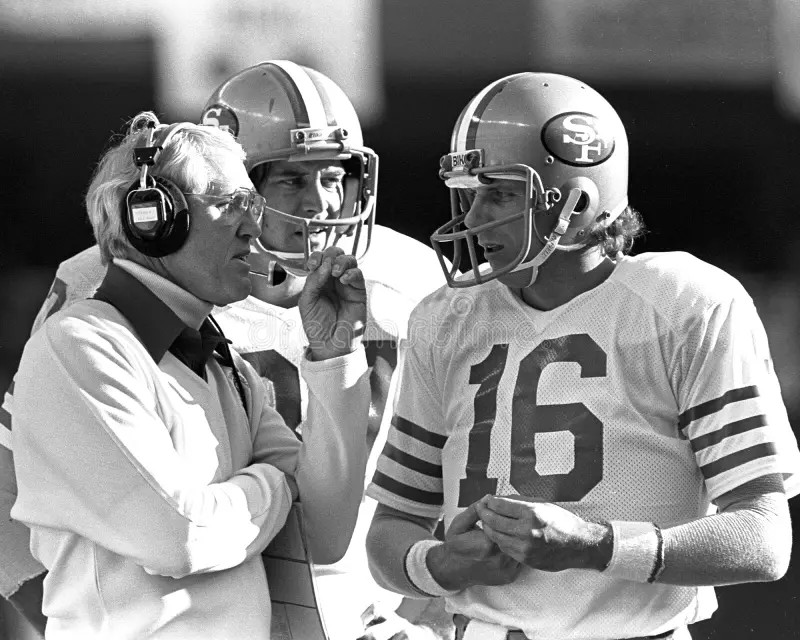
Bill Walsh, Head Coach of the 49ers, conferring with Joe Montana

Bill Walsh, Head Coach of the 49ers, conferring with Joe Montana.

Practice Management as a Sport in Your Chiropractic and Healthcare Business

I enjoy sports.

Well, enjoy isn’t quite right… Enjoy is too passive. I don’t think you can just “enjoy” sports.

It is an activity you play to win.

That summarizes it. You embark on a pursuit where you want to achieve something — but you may not. You may lose! So, you have a goal – to win. And not to lose.

But I think the keyword is…”PLAY.”

I will come back to this.

All Kinds of Sports

Many of you have kids or grandkids involved in some kind of sport — baseball, track, chess, even online games. Maybe you play yourself.

I recently bought a book for my grandson who pitches. It’s called Ninety Percent Mental by Bob Tewksbury, a former Major League pitcher. Reading it, I realized his tips apply just as well to running a practice — because where you work has all the elements of a sport:

  • A scoreboard
  • Plays and routines
  • Teammates and coaches
  • A playbook
  • A time limit
  • Goals and obstacles to overcome

Tips on Winning in Your Chiropractic Healthcare Practice

Tewksbury talks about two things that stuck with me:

The “Little Man” — the inner voice that tries to derail your performance with negative thoughts. Learn to recognize it and silence it.

Pre-game Routines — controlled breathing, visualizing success, positive affirmations. These help players stay calm and focused when it counts.

Here are two of my own:

1. Stay focused on your Goals. This means both the big ones — your purpose, your why — and the practical ones, like what you want to achieve by the end of the week. Visualize them. Commit to them.

But then…play!

2. The importance of Play.

A sport is an activity you play to win. The keyword is PLAY. Not fight, not stress —but play.

When work becomes too serious, mistakes multiply and stress fills the room. In a chiropractic practice, patients feel that. Trust me — I’ve seen it work both ways. A too-serious office, and numbers go down. A focused but playful office, and numbers go up.

Bill Walsh

When I lived in San Francisco, I was a huge 49ers fan. Before Super Bowl XVI in 1982, coach Bill Walsh arrived at the team hotel in Detroit a day early — and paid a bellhop $20 to borrow his uniform.

When the team bus arrived, Walsh — in full bellhop attire — tried to grab Joe Montana’s luggage (Montana was the starting quarterback). Montana, not recognizing him, brushed off the “silver-haired bellhop” and told him to get lost. When the team finally recognized their coach, the place erupted in laughter.

The relaxed 49ers went on to win their first Super Bowl, beating the Bengals 26-21.

Regardless of your role — doctor, owner, front desk, or bellhop — be goal driven.

But playfully.

Ed

This weeks cool tune is from the Playing for Change series: The Weight, with Ringo Starr and Robbie Robertson.

By the way, Joe Montana said this about chiropractic: “Chiropractic care works for me. I’ve been seeing a chiropractor and he’s really been helping me out a lot. Chiropractic’s been a big part of my game.”

2 Powerful Drivers of Your Chiropractic and Healthcare Practice

looking to the futureLooking to the Future

In 10 years, where will your chiropractic and healthcare practice be? And why?

Two vital elements that drive your practice may seem so obvious that they are overlooked—or taken for granted.

There is ample evidence in management studies that attests to better business performance if you and your team fully engage these two factors. I discuss both in my book The Goal Driven Business.

They may seem theoretical, but they are, in fact, hardcore leadership and management tools that can improve the quantity and quality of your services — now!

PRACTICE DRIVER #1: YOUR PURPOSE

This is the overriding reason you are in practice.

In his book, It is Not What You Sell, It’s What You Stand For, Roy Spence, Jr says

“Purpose is a reason for being that goes beyond making money — and it almost always results in making more money than you ever thought possible.” — Roy Spence.

Christine Arena, in her book, The High Purpose Company, which I also refer to in my book, found a similar result. She studied 75 major companies with strong social and environmental responsibility and concluded that “purpose” is not a feel-good add-on — it is a core driver of profitability and performance.

PRACTICE DRIVER #2: YOUR LONG-TERM BUSINESS GOAL

This is where you want to take the practice and where you and your team want to be in 10 years.

Jim Collins calls this a BHAG, a Big Hairy Audacious Goal. For example, in 10 years, your practice will be so popular that it will require 3 (or more) doctors, and most patients will be returning for wellness. Or, in 10 years, 50% of all mothers in the area will be bringing their kids in for a checkup by at least their first year. Or all the local sports teams will request your services.

There are plenty of examples of these two success drivers in business and in sports teams.

But these elements also find their parallel in physics. When everyone (or everything) is moving in the same direction for the same reason — a “flow” state is achieved.

You may have felt it before.

But it doesn’t usually last. Staff change, you change, computer software needs to be updated, backlog found in insurance, and so on. Issues crop up.

By providing consistent leadership every month, you can find new ways to personally stay engaged with the purpose of the chiropractic or healthcare practice — and help your team do the same.

So:

  1. What is the greater purpose of your practice? What is its why?
  2. What will your practice look like in 10 years, and what will it have achieved?

Keep working on these, and you and your team will forever be—

— Goal Driven.

Ed Petty

P.S. This Friday and Saturday, at a resort here in Wisconsin, the Chiropractic Society of Wisconsin, in conjunction with the Illinois Prairie State Chiropractic Association, is sponsoring 2 days of the most amazing line-up of speakers I have seen in recent times. The event is called VAXCON!

Make it if you can. (I will see you there!) Here is a link to the CSW page for more info and registration: VAXCON LINK

And here is a line-up of the speakers (more info can be found linked to their names).

Each one of these individuals has had an extraordinary journey. Listen to their stories, and you will be amazed at what they have gone through and accomplished.


Maybe You Are Focusing On the Wrong Thing in Your Chiropractic Healthcare Practice

chiropractors looking at chiropractic x-rays

Your best marketing tool may surprise you

I was asked to help an office a few years back with their marketing. It was a three-doctor office.

Did we work on discount ads, promotions, talks, and social media? No! I am all for these approaches, but I wanted to look at something else first.

== == ==

Marketing begins with what you are putting into the market — your product or your service outcome.

In this practice’s case, it was a “person who was healthier, relieved of pain, and had a great experience.” A person who had a “Wow!” experience.

THAT is what we worked on. We role-played, reviewed Days 1 and 2, and discussed different cases with the senior doctor. We trained on techniques and reviewed clinical procedures.

The focus was on the doctor’s services.

There was nothing really wrong with the quality of their service — they had been in business for many years. But after a while, I figured it would help to “sharpen the saw.”

Yes, we also worked with the staff and ran some promotions, but the primary effort was to refocus the doctors’ attention on their skills, training, and patient care.

And their numbers went up!

== == ==

I have seen this go both ways more than once.

Another example is a long-time client who has been using a new chiropractic technique for the last couple of years. He has told me how he finds this technique very effective and that he is getting the best results ever. His office has grown and stayed steady.

On the other hand, I see doctors too often become focused on scripts, office policies, or promotions. While these need to be addressed, they are not the purpose of the practice.

That is why I always stress the importance of getting one of your team members trained as a manager — even part-time. This allows you to delegate much of your management and marketing work so you can focus on providing superior service and generating extraordinary results.

If you focus on the quality of your care and get great results — if you get “Wow!”s from patients who exclaim about not only their outcome but the care they receive from you and your team — your numbers WILL go up.

== == ==

Take a few minutes to think about this. It is easy to get caught up in statistics and the latest management “operating system.” Fine — that is part of running a business.

But first and foremost, review the quality of your completed cases — not just “visits.” Then improve them.

== == ==
The Goal Driven System for Your Chiropractic, Healthcare, and Service Business

Our Goal Driven System includes a manager who supports the team, the doctors, and the patients — and the marketing! We cover this in our book, The Goal Driven Business, which you can grab on Amazon.

You don’t need a manager if you are at 50% capacity or less. But once you start hitting 60% or more, or have multiple doctors and providers, you should have someone to help with marketing and team support. It is not a bossy type of role, but someone who can pick up the odds and ends so you to keep your attention on patient results.

In the meantime, your best marketing is constantly improving the delivery of service to your patients.

That is your #1 goal.

Keep the “End in Mind,” as Dr. Stephen Covey said!

Ed

P.S. We are rolling out our new and updated Practice MBA program for practice managers and clinic directors this fall — stay tuned!

Ask Lisa: Front Desk and Insurance Departments Hook Up for Start of New Year!

balance scale between aesthetics and your bottom line in the chiropractic profession

Balance Between Aesthetics and Your Bottom Line

Greetings!

I’m condominium and cat sitting from December into January and am looking out of a window of natural beauty. If you are familiar with the Kettle Moraine areas of Wisconsin, affectionately referred to as “The Kettles”, you’ll deeply appreciate the beauty balanced with serene livability. The Condo complexes are built on a solid but interesting foundation of intertwining drumlins and kames of deposit sediment from glacial melts, making it challenging to keep your footing if you hike these.

Which brings me to you, and the balance between the sometimes hilly, lose-your-footing areas of your office and the beauty of it when you help a patient return to their own footing. And such is the time for your Front Desk and Insurance Department roles to intertwine at the start of the New Year!

Here is a simple New Year Checklist for your front office and your insurance departments to maintain balance of beauty and your bottom line:

1)  Obtain all patient’s insurance cards and make a copy for scanning into your practice management software. This is also the time to verify patient’s current address, cell phone number, and email address. Both areas of your office – front desk and insurance, need this information, and need it to be current. Maintain a pleasant, aesthetic reception area that is welcoming for patients and creates an amicable environment for patients, who will now be more likely to be kinder in providing you their personal insurance information. I know the difficulty this request can pose.

2)  Team up to discuss and decide who will be holding patient financial consultations post-insurance verifications on new patients or change of insurances. Remember these need to be done at the very minimum, in a semi-private, to fully-private area. Will it be the front desk? Will it be an insurance staff? CT? Will it be you, the doctor, conducting these in the treatment area? We’ve seen it done all four ways and sometimes combined. Whatever works best, with the framework of respecting and staying compliant with the patient’s privacy and finances.  What have you done regarding communicating benefits to patients up until now? Has it worked? If so, keep doing it. If not, how can you tweak this process to make it better for you and the patient? See last month’s article* on process improvement while not necessarily focusing on efficiency improvement.

3)  Working and following up on Patient Receivables. As with financial consultations, it needs to be done. Your prep work is to decide who will do the patient receivables follow-up: front desk, insurance, a combination? Consider updating your office policies to almost always collect at time of service to prevent the need for future follow-up on aged receivables.  Insurance follow-ups are best done by your insurance department. Consider sourcing out your insurance billing to someone who will do the insurance follow ups for you if you do not have internal insurance staff.  And…

4)  Make it a great, serene start to 2026!

And I have more great news for you! Our newly updated Welcome to Wellness* program is ready for purchase. As a special bonus this version includes:

  • 15 minute telephone consultation with the author, Dave Michel, on how to implement this class in your office. This includes sample versions of the most recent classes.
  • 90 Day Subscription to thePMA Members Library of over 500, helpful, customizable documents and articles.  You can read more about it here. [LINK]
  • Additional add on services for the Welcome to Wellness are also available.

We are currently in the process of updating our Patient Financial Consultation Kit for early Spring delivery.

Just Ask…

Lisa
920-334-4561
lisa@pmaworks.com

Pain is the Last to Show and the First to Go in Chiropractic Healthcare

Previously published on The Goal Driven Business

pain level of a subluxation

An Important Chiropractic Patient Education Tip

I recently visited a highly successful practice that had its usual issues and wanted to expand to the “next level.”

What did they need? More marketing, more staff training, more associates!

Sure.

But they also needed to tend to the basics, and here is one that is simple but easily overlooked:

Chiropractic Patient Understanding of Symptoms

I learned this early on: subluxations and other dysfunctions of the spine and joints can be present long before pain or other symptoms show up.

Finally, the individual drags themselves in to see you, and you begin care. After a few visits, the pain subsides. Yahoo!

Are they fixed? Probably not.

They have moved from acute care to corrective care. (You may call it something different, but the idea is the same.)

Your patient may not be familiar with this distinction. Hence, the report of findings and the importance of future patient education.

“How are You Feeling?”

So it was with some dismay that, visiting this office with excellent doctors, I kept overhearing them greet the patients with “how are you feeling?”

What!! What did you say?

Nooo!

Patient thinks, “Hey, I’m feeling pretty good. No need to come in anymore. Bye!”

Two months later, they hobble back in: “Doc, I have the same problem.”

So, what should you say? You want to be nice and show interest. You do care, and would like an update, right? So what do you say?

Just be genuinely interested and ask them how they are doin’? Or better, try these:

  • “How are you moving this week?
  • “What improvements have you noticed?”

I am not a doctor and would not presume to suggest care procedures. But this is a matter of patient education, marketing, and business development.

You want to improve their function, structure, and health. Maybe their mindset as well.

And of course, you want them pain-free.

Just remember that pain shows up last, and usually leaves before your work is done.

Get this on your chiropractic and healthcare patient care checklist and for a reminder, review it often. I bet you’ll see an improvement in outcomes and retention. Even a 10% increase in patient retention can significantly impact your practice outcomes and bottom line.

If your goal for your patients includes pain relief AND better function, this can help.

Stay Goal Driven,

Ed

Ask Lisa: It All Goes Back to the Goal!

theory of constraints the goal by Eliyahu M. Goldratt for the chiropractic office

I recently took a book off my bookshelf to re-read …

The Goal by Eliyahu M. Goldratt is one of my favorite business books. I love that Eli drives home being human, while at the same time having great capacity to improve systems and procedures in the workplace. As a business owner this relates directly to you.

Keep reading to learn how.

A few key takeaways from the book and how this ongoing process can help YOU improve your collections and income include:

Keeping in mind that the true goal of any for-profit company is to make money now and in the future. Two features of this are:

All operational decisions are evaluated based on whether they help achieve this goal.
Performance measurement is framed around three metrics:

  1. Throughput, or productivity (Service productivity is reflected in your NP, PV, charges, and collections stats)
  2. Inventory (making purchases intended to sell, such as supplements, pillows, exercise rehab supplies; and
  3. Operational Expense, which is money you spend to turn your inventory into productivity. This can include your practice management program and billing program’s monthly payments, maintaining and enhancing the office space, and maintaining functional chiropractic equipment such as your adjusting tables.

So, what specific actions can help you achieve the true goal for your business?

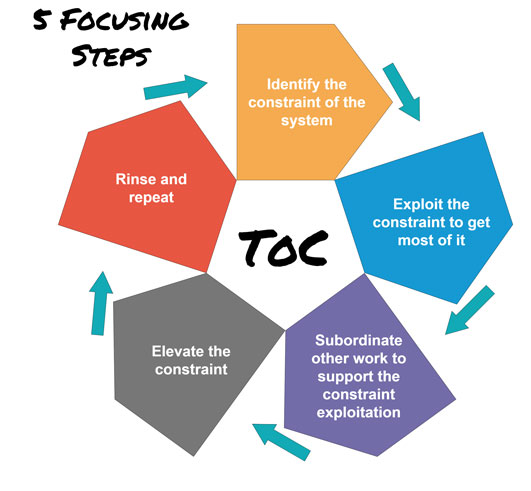
1. Identify constraints or bottlenecks in the office.

a. Look at time studies of the doctor(s) and staff. Can scheduling be done differently to open up blocks of time for more patients and/or paperwork.

b. Look for a breakdown in policies and procedures. How can it be done more effectively with better results?

2. Second, maximize and support the constraint,

a. decrease interruptions;

b. delegate tasks that are not directly clinical;

c. work on office flow for greater capacity.

3. Take note of variables. When a variable is presented such as doctor or staff
vacation and holidays , make adjustments to accommodate and still maintain your
goals.

4. Repeat steps 1 through 3, and you’ll find another constraint/bottleneck to work
through.

It may not feel good at first, but each time you cycle through the steps, according to the theory of constraints, you actually are improving the quality of your practice and its value!

Want to learn more about specific action steps for identifying bottlenecks and improving your collections and income? Give us a call. We’ve got your back. Just Ask . . .

Lisa
lisa@pmaworks.com

PS: Another great book that directly relates to this topic is “The Goal Driven Business” by Ed Petty.

Ask Lisa: Actions you can implement now to reach your Goals in 2026 and Beyond!

It All Goes Back to the Goal!

Greetings!

I recently took a book off my bookshelf to re-read …

The Goal by Eliyahu M. Goldratt is one of my favorite business books. I love that Eli drives home being human, while at the same time having great capacity to improve systems and procedures in the workplace. As a business owner this relates directly to you.

Keep reading to learn how.

A few key takeaways from the book and how this ongoing process can help YOU improve your collections and income include:

Keeping in mind that the true goal of any for-profit company is to make money now and in the future.  Two features of this are:

  1. All operational decisions are evaluated based on whether they help achieve this goal.
  2. Performance measurement is framed around three metrics:

1)  Throughput, or productivity (Service productivity is reflected in your NP, PV, charges, and collections stats)

2)  Inventory (making purchases intended to sell, such as supplements, pillows, exercise rehab supplies; and

3)  Operational Expense, which is money you spend to turn your inventory into productivity.  This can include your practice management program and billing program’s monthly payments, maintaining and enhancing the office space, and maintaining functional chiropractic equipment such as your adjusting tables.

So, what specific actions can help you achieve the true goal for your business?

  1. Identify constraints or bottlenecks in the office.

a.  Look at time studies of the doctor(s) and staff.  Can scheduling be done differently to open up blocks of time for more patients and/or paperwork.

b.  Look for a breakdown in policies and procedures. How can it be done more effectively with better results?

2.  Second, maximize and support the constraint,

a.  decrease interruptions;
b.  delegate tasks that are not directly clinical;
c.  work on office flow for greater capacity.

3.  Take note of variables. When a variable is presented such as doctor or staff vacation and holidays , make adjustments to accommodate and still maintain your goals.

4.  Repeat steps 1 through 3, and you’ll find another constraint/

bottleneck to work through.

It may not feel good at first, but each time you cycle through the steps, according to the theory of constraints, you actually are improving the quality of your practice and its value!

Want to learn more about specific action steps for identifying bottlenecks and improving your collections and income? Give us a call. We’ve got your back.  Just Ask . . .

Lisa

lisa@pmaworks.com

PS: Another great book that directly relates to this topic is “The Goal Driven Business” by Ed Petty.

Keep Hope Alive in Chiropractic and Healthcare Offices

Previously published at GoalDriven.com

two young teens visiting an older gentleman with thanksgiving dinner.

A Message from the “Head Office” ?

Early Thursday morning, I drove to a suburban high school with two of my grandkids. We were participating with others involved with a service organization called Community Projects for Seniors here in Milwaukee.

When we pulled into the expansive parking lot, we saw hundreds of cars and people driving through designated stations, receiving boxes of hot Thanksgiving dinners to deliver to seniors across Southeast Wisconsin.

The loading was well organized and ran smoothly, despite everyone being volunteers. Everyone looked to be having a good time, smiling and high-fiving in the early morning, freezing temperatures!

The two grandkids and I delivered 51 meals to residences in a low-income section of Milwaukee. It was a good experience for them, knocking on apartment doors, wishing seniors a happy Thanksgiving, and sometimes offering short expressions of care and interest or best wishes for the Packers (professional football team) later in the day.

As we were getting to the end of our route, a senior gentleman, must have been 6′ 4″ or more, after accepting the meal, looked dead at my grandkids and said, “Keep Hope Alive.”

Keep Hope Alive

“Keep Hope Alive” was a phrase Rev. Jesse Jackson often used when he ran for president in 1988. Jackson participated in the Selma marches in 1965 and became a close aide to Dr. Martin Luther King Jr.

The Selma marches included Bloody Sunday, when 600 unarmed peaceful civil rights protesters were violently attacked and beaten, some unconscious, by state troopers in March of 1965 in Selma. The Voting Rights Act of 1965 was signed into law by President Johnson, guaranteeing the right to vote for African-Americans, especially in the South.

But here we are in 2025. What did this resident mean when he said “Keep Hope Alive” as he accepted the Thanksgiving dinner? Why did he say it to two suburban kids this Thanksgiving?

Unlike most of the other people we handed dinners to, he was the most cheerful. Perhaps, for him, an elder and certainly not well-off, he had hopes for a better future.

A better future for himself — and maybe for others.

Keep Goals for Your Chiropractic and Healthcare Practice Alive

The word “hope” is defined as the feeling of trust that something wished for can or will happen. The derivation of the word “hope” traces back to Old English “hopian,” meaning to expect, or look forward with confidence in a positive outcome.

Hope is more than just wishing… it is expecting what you want will happen.

Kinda sounds like a goal, doesn’t it?

You know, you can receive messages that are meant for you – from others.

Someone I know calls these “Memo’s from the Head Office!”

I think that, for me, the “message” from the senior gentleman was that any hope, or goal, for a better future must be actively kept alive.

That means, your dreams and goals for the New Year, including your chiropractic and healthcare practice, can’t be made and then parked.

They need to be kept alive.

Maybe his message was meant — for you too!

😊

Keep Hope — and Your Goals — Alive.

Ed

Preparing for a Powerful New Year in Your Chiropractic Healthcare Business

Previously posted on (Goal Driven.com)

petty michel and associates end of year business preparation checklist

42 more days until a New Year is here.

Before we know it, it will be at our morning doorstep. Like a happy eager dog ready to be taken for its morning walk, tail a wagin’.

But before we look at all what is coming, we have the next few weeks to wrap up 2025. This includes the Holidays, both in business and in our personal lives. We also have all the year-end admin details to complete.

NOW is the time to nail everything down — to plan the events and complete the admin tasks.

And while doing this, filling the end of the year with Christmas cheer, ready for 2026 — your best year yet!!

We’ll prepare for the New Year in a few weeks, but let’s finish off this year with a flourish. Consider these 4 actions:

  • Relationships. Focus on re-bonding with all your patients and supporters from this last year.
  • End of year care. Encourage them to come in and get care.
  • Referrals. Bring in their family and friends for an end of year check-up.
  • Year end admin checklist. Review and complete all year end admin duties that need to be done.

Most important is your connection with current and past patients and supporters.

Remember:

a practice is a network of relationships that is created and sustained through communication and service.

Be ready to take a little extra time to chat, to communicate, and to listen — and an extra “a cup of kindness, yet.”

Marketing. I gave a list of some marketing activities you can do for November and December in a recent newsletter. You can review them here. Get those planned and going.

End of Year Administrative Checklist for Chiropractic and Healthcare Businesses

In addition, we have put together a short list of administrative items that should be reviewed and completed by year end for your chiropractic and healthcare office. It is by no means complete, but the idea is you want to get them taken care of as soon as possible, or at least scheduled, so you can focus your creative energies on launching your 2026.

Block 2-3 hours in early December to work through this list. Delegate sections to your manager, billing staff, and bookkeeper.

You can also contact Lisa who is an expert in these subjects. You can contact her anytime.

Just Ask Lisa! (Lisa@pmaworks.com)

The checklist covers these categories:

2025 ADMIN WRAP UP CHECKLIST

  • FINANCIAL & TAX
  • CREDENTIALING & LICENSING
  • EMPLOYEE ADMINISTRATION
  • INSURANCE & PATIENT ACCOUNTS
  • COMPLIANCE & OPERATIONS
  • BUSINESS ENTITY & LEGAL

Download the ADMIN LIST below and tend to the admin.

Meanwhile, have a great time with your patients over the next 6 weeks.

And let’s prepare for your best year ever – in practice, in business, and in life!

And stay…Goal Driven,

Ed

Download the Checklists HERE

Ask Lisa – Compliance 201: Your Shield Against Bad Risk

compliance in the health care field for chiropractorsAs a follow-up to our previous compliance articles, I thought what I’d do this month is put together a FAQ list for my dear readers and call it Compliance 201. Keep reading to learn about upcoming new requirements in the compliance/cybersecurity world to keep you at least safe-guarded when you are hit with a cybersecurity incident. Special thanks and credit goes out to ChiroArmour and Dr. Scott Muensterman for his research and presenting at the Chiropractic Society of Wisconsin Fall Experience last month on some of the content in my FAQ.

Q: What is HIPAA and HITECH?
A: HIPAA is the acronym for Health Insurance Portability and Accountability Act of 1996, in which uniform standards and requirements for the electronic transmission of certain health information were put into place and made into law. HITECH is the acronym for Health Information Technology for Economic and Clinical Health Act of 2009, a countrywide adoption and standardization of information technology to securely support the sharing of clinical data.

Q: What is Cybersecurity?
A: Cybersecurity is the practice of protecting digital systems, networks, and data from malicious attacks, damage, and unauthorized access.

Q: Is there a checklist available to ensure we are in compliance?
A: Yes. Current and Active PM&A clients have access to our HIPAA/HITECH compliance checklist, on the PMA Members Site, and compliance services are included upon request from the client.  If you are currently inactive or not a client, we can provide you with the checklist for a nominal fee. Please keep in mind your staff are already very busy, so ask yourself who is going to take on ensuring compliance at your office and going through the checklist? We can help.

Q: Isn’t it a matter of IF a cyberattack at my office occurs, not WHEN as you stated above?
A: On average there are 11 to 12 cyberattacks happening per minute in the US. So in today’s world yes, it is a matter of when, not if. And after research, it has been found that small businesses are more of a target for an attack than large organizations mainly because large organizations can put more dollars into security measures.

Q: What does Windows 10 and Windows 11 have to do with compliance?
A: Windows 10 no longer supports the security patches it used to support, effective 10/25/2025, so all of your computers must be operating on Windows 11 at minimum by this time. You CAN extend your Windows 10 protection for 1, 2, or 3 years at a significant price, but your software vendor may not honor the upgrade.

Q: I heard that there is something called an OIG Exclusions report – what is this and does it affect me and my practice?
A: The OIG Exclusions database is a reporting site listing every individual who is prohibited from seeing Medicare/Medicaid patients due to prosecution of a criminal activity, which can include being found guilty of fraud against Medicare/Medicaid, non-compliance of court-ordered child support payments, and illegal drug convictions. It is and will be a requirement to run a report MONTHLY on every person in your office including owners, subcontractors, and upon a new hire.

Here’s the link to check names: https://exclusions.oig.hhs.gov/
If you don’t see your name, that’s a good thing. Some of you are already running and checking this report due to insurance contract requirements. Save or print and file the results page.

Q: How can I confirm if my practice management program is fully compliant?
A: The website for verifying compliant healthcare software programs is down as of this writing, so for peace of mind if you are not 100% certain, call your software company or IT person.

Q: When do changes/new requirements occur?
A: As of now, no date has been set by HHS, but if you are doing the above steps and have written policies in place, you should not worry, but watch for future communications. You can subscribe to HHS email notifications here: https://cloud.connect.hhs.gov/subscriptioncenter

Q: What does Medicare documentation have to do with cybersecurity?
A: To avoid a documentation audit and subsequent potential visit from the OIG to further audits on compliance with HIPAA and your cybersecurity policies, keep your documentation and billing practices solid per Medicare chiropractic documentation standards, and make sure to securely send your notes to Medicare upon audit (and any other payer group who requests) to ensure you are staying HIPAA compliant.

Q: Can my staff be our Security officer?
A: By law, yes, but you as the doctor owner are always ultimately responsible for any attack or breaches, and payments to the government, so it is strongly recommended that the doctor owner be the compliance security officer for the business.

That concludes our FAQ for now. I know you’ll have additional questions. Feel free to reach out with those we’ll respond within three calendar days!

Stay Secure,

Lisa

References: ChiroArmour


cards

Powered by paypal

Fun and Effective Promotions for November and December

food drive grocery cart for chiropractic and healthcare facilities

Spark Some Magic in Your Chiropractic Practice This Season!

Special Promotions for November and December 2025! These are loud and lively events that engage the entire team!

Why do them?

  • Increase new patients with great offers.
  • Energize less active patients and get them back.
  • Build greater team spirit for a shared purpose.
  • A reason to promote your office and let patients and your community know how active you are!
  • Increase your presence as the Health Hero’s in your community.

Even without an offer, just the fun of giving back will boost your visits and instill greater loyalty.

Read the full Goal Driver Newsletter at Goal Driven.com and checkout the fun, festive promotions that will spark magic in your office this holiday season!

Why Clear Roles Build a Stronger Chiropractic & Healthcare Practice

team players wearing staff hats front desk billing promotion marketing

Better teamwork, smoother operations, and improved patient care all start with clarity.

Years ago, I visited a chiropractic office where the doctor was frustrated: patients weren’t keeping appointments, and he blamed his front desk staff, “Sue.” The problem wasn’t effort—Sue was polite and friendly—but she had no clear job description, no checklist, and no real understanding of her responsibilities.

Once we clarified her role, outlined simple procedures, and scheduled regular reviews, the practice quickly improved. Patients kept their appointments, and both the doctor and Sue felt more confident and motivated.

This is a common issue: when roles are vague, results suffer. But when roles are clear, teams thrive.

The Three Elements of Every Role

According to the Goal Driven System, each role should include:

  1. Purpose – Why the role exists.
  2. Outcome – The measurable result it should achieve.
  3. Procedures – The specific actions to reach the outcome.

Example – Front Desk Role:

  • Purpose: Help patients achieve health goals by ensuring they stay on schedule.
  • Outcome: Patients consistently keeping appointments.
  • Procedures:
    • Greet every patient with a smile.
    • Answer the phone warmly.
    • Confirm each patient leaves with their next appointment scheduled.

 Action Steps for Your Practice

  1. Have every team member list their roles.
  2. Define the purpose, outcome, and 5–10 key procedures for each.
  3. Add measurable indicators (e.g., % kept appointments, total visits).
  4. Review and rehearse roles regularly, just like a winning sports team practices.

Clear roles create accountability, boost morale, and drive better patient care. Keep it simple, keep it consistent, and keep it fun.

Stay Goal Driven,

Ed

Want More New Patients in Your Chiropractic or Healthcare Practice? Start Here.

chiropractic team going over stats to improve care and service

Most doctors think the first step to getting more new patients is marketing. But that’s not always true.

Years ago, a large chiropractic office asked for help because their new patient numbers were slipping. After analyzing their situation, it was clear their promotions were weak—but the real problem went deeper.

The senior doctor, in practice for 20+ years, had become bored. Patient visits felt routine. Long-time staff were stuck in old habits. Meanwhile, the two younger doctors had enthusiasm but lacked confidence and experience.

We started by focusing on quality of care, not ads. The senior doctor began coaching the new doctors on cases and patient communication. Staff refreshed their service procedures and rehearsed ways to create a stronger patient experience.

The result? Without launching a single new promotion, new patients and visits went up. Only after that did we create a marketing calendar—because now they had something truly worth promoting.

The Lesson

Before you spend time and money on external promotions, make sure your practice delivers the kind of care that inspires patients to return and refer. Quality care and continuous improvement are the foundation of real growth.

As Stephen Covey said, “Sharpen the Saw”—renewal and improvement keep the drive alive.

Stay Goal Driven

Ed

Read the full article here: Goal Driven Blog

Don’t Get Left Behind

3 children playing football. Their goal is to play, win and have fun

Football Season, Chiropractic, and Winning Strategies

Football season is here—and it’s a perfect time to highlight chiropractic. Every professional football team has a chiropractor, proving that even million-dollar athletes rely on it to perform at their best.

Top athletes agree

  • Aaron Rodgers credits chiropractic (and his chiropractor father) for helping him stay at peak performance.
  • Tom Brady says adjustments make him feel taller and better aligned.
  • Joe Montana calls chiropractic a key part of his game.

If chiropractic works for them, imagine what it can do for local athletes and weekend warriors.

How to Market Your Services with a Sports Theme

Position your office as the place for athletes of all ages to boost performance, recover faster, and prevent injuries.

Ideas to promote chiropractic through sports:

  • Workshops:
    • The Injury-Proof Playbook: 8 Moves That Keep Athletes in the Game
    • Weekend Warrior Survival Guide: 8 Strategies for Active Families
  • Business Talks: Offer lunch-and-learns, screenings, or mini-chair massages.
  • Athlete Recovery Days: Host Monday Morning Quarterback Recovery sessions for post-game soreness.
  • Community Partnerships: Team up with schools, youth leagues, and local teams for education, sideline care, or screenings.

Promotion Tips:
Use your newsletter, office fliers, social media, and table talk. Assign a part-time Marketing Coordinator (3–5 hrs/week) and hold monthly planning meetings so every staff member contributes.

Build Your Own Winning Team

Think of your practice like a football team:

  • Have a game plan.
  • Play 4 quarters each month.
  • Work as a team.
  • Keep score (track progress).
  • And most importantly—keep it fun.

Chiropractic helps athletes win on the field. With the right marketing and team mindset, it can also help your practice win in the community.