Chiropractic and Earth Day

It was 40 years ago when Senator Nelson, from Wisconsin, helped start Earth Day.  (It started in March, 1970 with teach-ins at the University of Calif. Davis and San Francisco. I was there!)   Since then, there has been a battle between natural health, and chemicals and toxins.

Chemicals in Our Environment

  • 1972:  DDT, an organochlorine pesticide, was banned
  • 1976:  The Environmental Protection Agency (EPA) establishes the Toxic Substance Control Act (TSCA)

62,000 chemicals were grandfathered in as being safe.  Two chemicals have been banned since 1976.

  1. 1978 Polychlorinated Biphenyls (PCB)
  2. 1989 Asbestos

There has been no attempt to ban a toxic chemical since 1989.
The amount of chemicals produced or imported by the United States in one day would fill up 623,000 tanker trucks with a capacity of 8,000 gallons each. (Taken from Dr. Dan Murphy who quotes: The Body Toxic How the Hazardous Chemistry of Everyday Things Threatens Our Health and Well-being. By Nena Baker 2008)

Not counting the chemicals Americans take in from hormones, pesticides, herbicides, and other poisons in our fast food, super-sized nation, we pound prescription drugs in to our bodies.

American Prescription Drug Use

  • The average number of prescriptions [drugs] per person, annually, in 1993 was seven.
  • The average number of prescriptions [drugs] per person, annually, in 2000 was eleven.
  • [The average number of prescriptions drugs per person], annually, in 2004 was twelve.

The total number of annual prescriptions [drugs] in the United States now stands at about 3 billion. The cost per year is about $180 billion, headed to and estimated $414 billion by 2011.  (taken from Dr. Dan Murphy who quotes:How Prescription Drugs Are Altering American Lives, Minds, and Bodies Greg Critser 2005)

This is actually old data and the average number by 2010 is probably much higher. I have seen patients walk in with pages of 20 “’scripts”, and heard of even as many as 50. I am sure you have too.

In Our Drinking Water
A vast array of pharmaceutical including antibiotics, anti-convulsants, mood stabilizers and sex hormones have been found in the drinking water supplies of at least 41 million Americans, an Associated Press investigation shows.  in the course of a five-month inquiry, the AP discovered that drugs have been detected in the drinking water supplies of 24 major metropolitan areas _ from Southern California to Northern New Jersey, from Detroit to Louisville, Ky.   (USAToday)

Our Babies Swim Now In A Soup Of Chemicals.
287 human-made chemicals – most of them hazardous – in the blood of infants

According to a study released by the Environmental Working Group, a policy research and activist organization, tests measuring the so-called “body burden” of industrial chemicals, conducted on ten random samples of umbilical cord blood, detected 287 chemicals.

The samples, supplied by the American Red Cross, registered 180 chemicals known to cause cancer in adults, 217 that are linked to brain and nervous system damage, and 208 that have been shown to affect fetal or child development in animal tests. For 209 of the contaminants, this was the first time researchers had identified the chemicals in newborn blood.                                (Environmental Working Group)

What Should Be Done?
What do the so called health care leaders say about the poisons we feed to our planet, our people, and eventually our unborned children?  Where are the medical doctors or health insurers or pharmaceutical CEO’s speaking out against this. Or, our elected officials?

No one is talking, or if so, their voices are not heard.

And you know why?  Simple: because for the most part, they are not HEALTH Leaders.

And who are the health leaders?

You are! The chiropractor and the chiropractic professional. A healthy populace needs more than just “providers.” Your community needs leadership. The members of your town are bombarded with ads for drugs, for fast food, for industrial corporate food, for the easy “no effort way” to what they want. Add in natural human laziness, and you will find that your patients are getting sicker.

Health is a word which has been hijacked by the drug and insurance companies. But the chiropractor is the true health leader.

Earth Day gives you an easy avenue to extend your reach as a health leader into your community as well.  Well educated patients and community will seek to have a healthy town and a healthy body without the use of chemicals.

Ed

Sample posters. Link

Come celebrate with us on Earth Day by attending our seminar in Minneapolis.

Printable version of this article to give to patients. Chiropractic and Earth Day-for patients

Chiropractic and Earth Day

A healthy earth has a lot to do with a healthy body. But over the years, we keep pouring chemicals into the atmosphere and earth as well into our bodies.

Chemicals in Our Environment

  • 1972: DDT, an organochlorine pesticide, was banned
  • 1976: The Environmental Protection Agency (EPA) establishes the Toxic Substance Control Act (TSCA)
  • 62,000 chemicals were grandfathered in as being safe Two chemicals have been banned.
  1. 1978 Polychlorinated Biphenyls (PCB)
  2. 1989 Asbestos

“There has been no attempt to ban a toxic chemical since 1989.
“The amount of chemicals produced or imported by the United States in one day would fill up 623,000 tanker trucks with a capacity of 8,000 gallons each.” (taken from Dr. Dan Murphy who quotes: The Body Toxic How the Hazardous Chemistry of Everyday Things Threatens Our Health and Well-being. By Nena Baker 2008) Not counting the chemicals Americans take in from hormones, pesticides, herbicides, and other poisons in our Fast Food, Super Sized nation, we pound prescription drugs in to our bodies.

American Prescription Drug Use

  • “The average number of prescriptions [drugs] per person, annually, in 1993 was seven.
  • The average number of prescriptions [drugs] per person, annually, in 2000 was eleven.
  • [The average number of prescriptions drugs per person], annually, in 2004 was twelve.

The total number of annual prescriptions [drugs] in the United States now stands at about 3 billion. The cost per year is about $180 billion, headed to and estimated $414 billion by 2011.” (taken from Dr. Dan Murphy who quotes:How Prescription Drugs Are Altering American Lives, Minds, and Bodies Greg Critser 2005)

This is actually old data and the average number by 2010 is probably much higher. I have seen patients walk in with pages of 20 “’scripts”, and heard of even as many as 50.

In Our Drinking Water
A vast array of pharmaceutical including antibiotics, anti-convulsants, mood stabilizers and sex hormones have been found in the drinking water supplies of at least 41 million Americans, an Associated Press investigation shows. in the course of a five-month inquiry, the AP discovered that drugs have been detected in the drinking water supplies of 24 major metropolitan areas from Southern California to Northern New Jersey, from Detroit to Louisville, Ky. http://www.usatoday.com/news/nation/2008-03-10-drugs-tap-water_N.htm

Our Babies Swim Now In A Soup Of Chemicals.
287 human-made chemicals – most of them hazardous – in the blood of infants .

According to a study released by the Environmental Working Group, a policy research and activist organization, tests measuring the so-called “body burden” of industrial chemicals, conducted on ten random samples of umbilical cord blood, detected 287 chemicals.

The samples, supplied by the American Red Cross, registered 180 chemicals known to cause cancer in adults, 217 that are linked to brain and nervous system damage, and 208 that have been shown to affect fetal or child development in animal tests. For 209 of the contaminants, this was the first time researchers had identified the chemicals in newborn blood. http://www.usatoday.com/news/nation/2008-03-10-drugs-tap-water_N.htm

Earth Day is Health Day
Learn more. Read books. Talk to your chiropractor. Eat natural and organic food. Get regular spinal adjusts to support your spine and nervous system. Educate others. You can help your family and friends find relief and better health without the use of toxins by encouraging them to come in for an initial consultation with the doctor to see if chiropractic can help. Chiropractic is 100% organic and always has been. No drugs or toxins. The chiropractic lifestyle supports a healthy spine, nervous system and body.

Chiropractors: Never Work Another Day in Your Life!

Did you know that 73% of chiropractors can make all the money they want without ever working?

This is proven by 83% of studies.

Yes, that’s write. You two can make all the money you want, and even more, without even working.

Honest.  No more talks, letters, or yellow pages or even internets.  You don’t even have to sea patients.

moneyman

With this SECRET system I was able to make lots ‘o bucks.  (Doctre Phulo Vit)

Am I talking to you?  Yes, we are.

I have just discovered 6.3 steps on how to make all the money you want with out hardly working ever and getting all the love you need.   Honest.

Yea. Baby.

So, call us now at 800 APR-FOOL

=================================================

Don’t be fooled.   Get the real stuff.   Come to our seminar in Minneapolis and Milwaukee this spring.

See you there.

Happy Easter to you all.

Love,

The PM&A Team

Chiropractor to Chiropractor: Reclaim the Joy of Practice

Being a chiropractor can be a lonely job.

Who knows what it is like to adjust patients late in the afternoon while one patient is going on and on and the next one is dirty from work and smells?  And yet another just called in who has been under care for two weeks and is in pain and wants to be seen right away – who knows what that is like?

Someone who has been there and done that – another doctor.

You aren’t looking for advice, that can wait. You don’t need a lecture.  It would just be good to talk with someone who has been there before and survived, or better, thrived.

Let me introduce Dr. Tom Potisk.  He is not the overbearing charming salesman type of a doctor that you often see in consulting programs.   Actually, not too many doctors are really like that.  In fact, most doctors are very similar to Dr. Tom.

Dr. Tom and Dave, Phyllis and myself have been discussing an additional ingredient to practice success that that we feel doctors need. Simply, another doctor to talk to.  They have us, of course. But we are managers and marketers and practice builders.  That is our specialty.  And we too have been there and done that, since the 1980’s.  But as managers – not as doctors.

We feel doctors need both for practice success: a professional manager to help build a profitable and self sustaining business AND the support and perspective of a professional, experienced chiropractor.

So we are very happy to partner with Dr. Tom Potisk in providing services to our wonderful wonderful clients.

We are pleased to announce that Dr. Tom will be giving a number of presentations at our upcoming seminars this year.  One of the classes will be on Doctor to Doctor: Reclaiming the Joy of Practice.  This is his basic theme: how, as a doctor, you can truly enjoy each day doing what you do as a doctor.  His approach is simply – doctor to doctor. Not as a coach, but as a fellow doctor who has been through what you are going through and made it to the other side – very successfully.

Listen to this his first teleclass you – you will find it very motivating and reassuring.

Hope to “see” you there,

Ed

Here is what others have said who have listed to his full presentation:

“Dr. Tom’s program was fantastic! I laughed, I cried, and I went back to my practice with a new, deeper sense of dedication and confidence. All DCs need to hear his message!” – Dr. Donna Stackpool, Lake Geneva WI

“Reclaim the Joy of Practice was an amazing presentation!  Dr. Potisk made the evening fun and enlightening with great tips on how to stay happy and truly enjoy Chiropractic.  I loved the history references with BJ.  It was a great reminder of how generations past fought for Chiropractic and how we need to honor them and the profession AND continue the passion.  Thanks Dr. Potisk for lighting the fire again!” – Tara Gill DC, Delevan WI

“After nearly 40 years of practice, I thought I heard the last of the great, authentic, and sincere chiropractic programs years ago; then along comes Dr. Tom Potisk with his Reclaim the Joy of Practice presentation. He brought me right back to what I remembered as the good-ole-days with an adjustment between my ears. High pi Dr. Tom !”  – Jerry Zelm DC, Oconomowoc WI

And you can read more about Dr. Tom Potisk here.

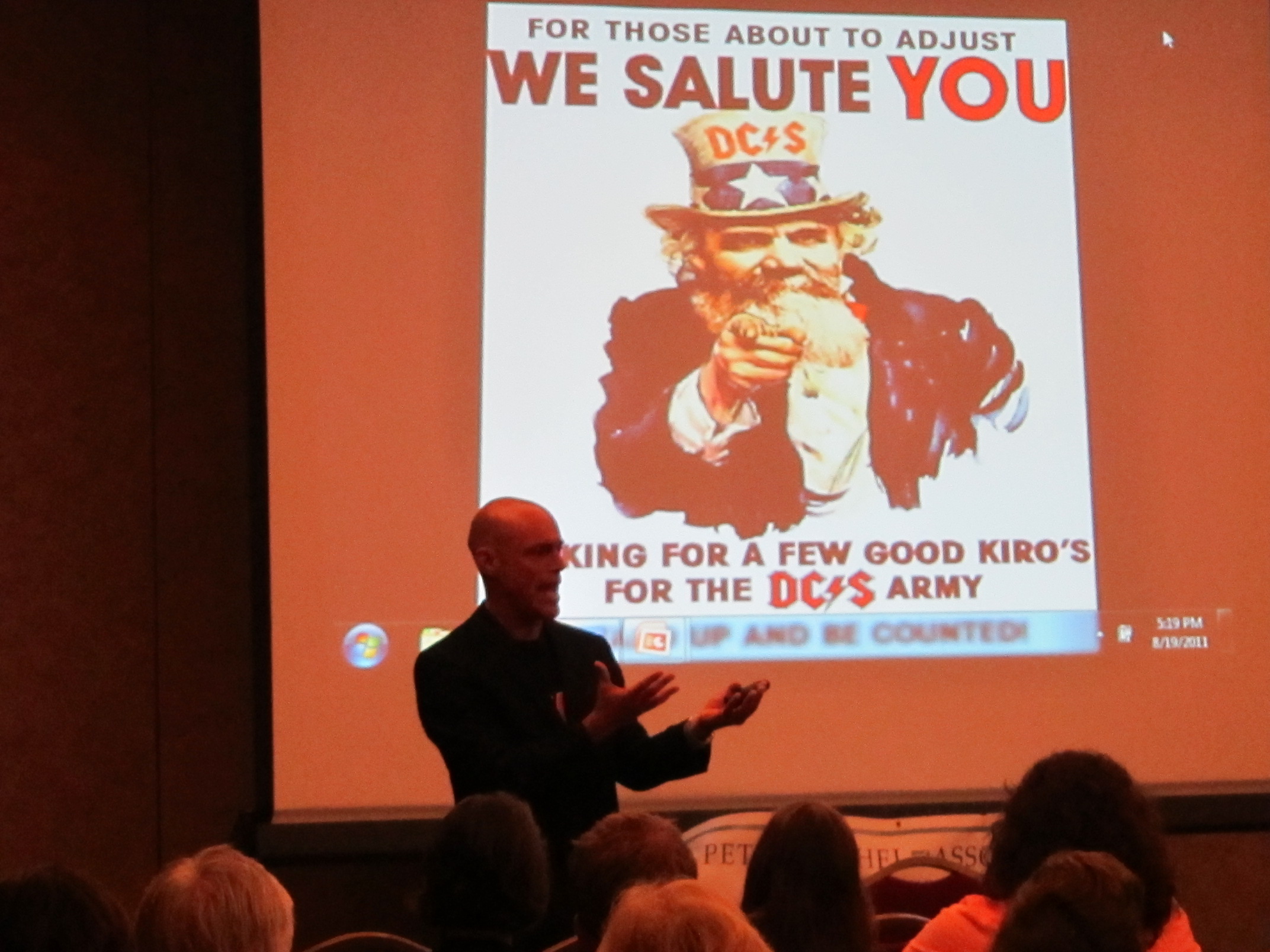
More Videos and Photos from PM&A’s Adventure to the Chiropractic California Jam 2010

Dr. Tom Potisk gives a succinct and complete accounting and review of our travels to, and as it turned out, through Southern California. (see earlier post)

Here are some various videos and photos if you want more, though rough and candid, reporting. (Some videos may need the volume turned up.)

Walking to Cal Jam

Opening – Don’t Back Down – Chiropractor

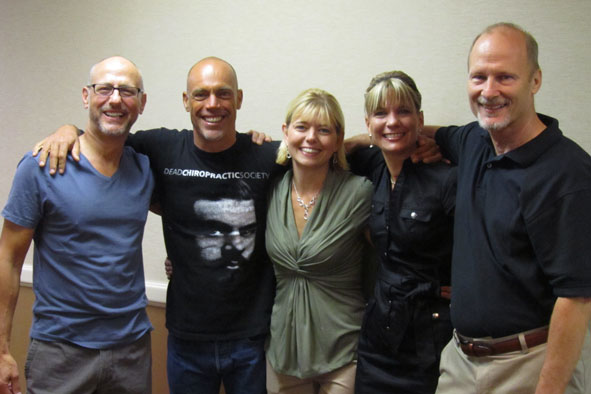
Some photos

Cal Jam 2010 Chiropractic, Petty Michel - Associates

Clips from various talk. May have to turn up volume.

Dr. Brian Porteous – a clip from his talk on the hyperstension study. LINK

Dr. Dan Murphy – talks about recent research on toxic chemicals and how they affect nervous system and adjusting – (9 min) LINK

Dr. Dan Murphy – talks about cervical spine, referencing the hypertension study. LINK (5 min)

Dr. Dan Murphy – refers to book by M.D. references Innate. LINK

Dr. Fabrizio Mancini – applying chiropractic is not complicated. (2 min)   LINK

Motorcycles, Natural Hot Springs, Sushi, and Chiropractic Philosophy – Wowee! What a Weekend!!

In the natural hot springs.

In the natural hot springs.

I just returned from a few days in Costa Mesa CA.  I attended CalJam, a chiropractic philosophy/music convention, with Ed Petty from PM&A.   It was refreshingly different because of the focus on chiropractic’s unique philosophy combined with music.

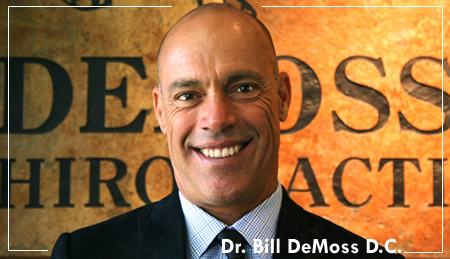
The man behind it all is Dr. Billy DeMoss and his fun-loving personality really shows in the event. Check out my video of BJ Palmer resurrected[Longer Version]

Of course, I had to give Ed a lesson about why I’m called the “down-to-earth” doctor (www.thedowntoearthdoctor.com), a big part of it is going on adventures, so I took him on a high desert search for a natural hot spring called Deep Creek Spring. Yes, those are my feet in the picture.  Ed reciprocated by guiding me on a motorcycle tour one of the days – I drove my first Harley and now I’m hooked!  Thanks Ed.

My Harley in Laguna Beach, CA

My Harley in Laguna Beach, CA

As I listened to many of the greats like Dr Dan Murphy, Dr. Fabrizio Mancini, etc. I became even more grateful for the 25 years of tremendous success I’ve had in chiropractic. “Best profession in the world!” is what I told a 2nd semester student I bumped into there.  He was wondering if he made the right decision, given all the negative news circulating about the business of practicing lately.

The speakers were talented and the content inspiring, but it also became apparent to me, that the seminars of PM&A are better in the sense that they lack sales. What I mean is that all or most of the speakers at CalJam, as inspiring and fun as they are to listen to, have a hidden agenda – they want to sell me something. That’s one of several reasons why I stayed with PM&A as my practice management guide, and why I’m excited to now be a part of their team.

I teach a class around the country called Reclaim the Joy of Practice, based on my book of the same name (www.reclaimthejoy.com) for content, I’m always on the lookout for exceptional DCs.  I bumped in to Dr. Gerald Clum, president of Life West Chiropractic College.

Listen to his brief message in response to my question “What can chiropractors do to be more successful?”  LINK.

Doctor, how can you apply that message today?

How to Make Your Chiropractic Marketing More Effective: Give a Reason

A fundamental component to marketing your chiropractic services is communicating a reason, rationale, or a purpose for why you are marketing.

For example, if a store has a SALE each month with a discount on some of their items, you might think: “So what? Just another sale.”

So the department store thinks up some reason for the sale. It could be “Back-to-School” sale, a “Food Drive” sale, or a St. Patty’s Day party.

All of your marketing should have a topical theme. In our marketing materials, we have many, from Organic Health Care Week (in conjunction with Earth Day), Mother’s Day coupon with flowers, Fibromyalgia Awareness Week, etc.

But behind all of these themes should be a more dominate reason for your marketing. And here is a powerful truth: The better your staff, your patients, and your community understand this reason, the more responsive they will be in to your marketing efforts.

For example, we recommend that you write a letter to your patients explaining to them your real reasons for marketing your services. It could called: “Why We Promote – A Letter to Our Patients.”  To help you get started, we have a questionnaire here and a sample letter.

(For our clients, we have written a sample letter that has become popular which you may access on your Member’s web site under “New Stuff.” (need password.))

Why Do You Market Your Chiropractic Services?

Answer these questions thoughtfully.

Then, compose a few paragraphs for a letter, or for your web site.  You can also use this as a close on your patient lectures.

  • What do you experience when you see the family and friends of your patients get results from your care?
  • Do you ever see patients that have had unnecessary or failed back surgeries?
  • Do you ever see patients that take, or have taken, toxic drugs to alleviate their symptoms that you were able to alleviate naturally?
  • How would have the lives of these people been changed had you been able to adjust and treat them years earlier?
  • Since you are not supported by pharmaceutical companies or hospitals for your community education, how can you get the word out to your community?
  • This is why you have to rely on your staff and patients, and on occasional promotions and special events.

Asking Permission, Gaining Respect

By Dr. Tom Potisk

Doctors of chiropractic appreciate respect as do patients. When a doctor acknowledges and recognizes that the patient may have limited time and money, a mutual respect develops and the situation becomes win-win. For example, when making a recommendation to a patient, ask “May I explain the tests that need to be performed today?”, and then “These will take approximately ____ minutes. Do you have time today?”

After explaining the results, a good follow up is: “Are you ready to start treatment today?” Then explain the treatment.

Far too often doctors get into a routine and they begin to assume that the patient wants what you’re about to perform. Asking their permission to proceed not only relaxes the patient but lowers your liability because you’ve gotten their consent.

Never assume that permission has already been obtained by staff. Ask “Has the receptionist explained our procedures and policies?”

For gaining referrals, avoid the harsh “Bring in your spouse and child for a spinal exam.” Instead ask, “Many of my patients bring their family here for preventive check-ups. Would you be interested in how that works?” The best time to ask this is when the patient has praised your treatment. As Doctor Sid Williams says, “Breed them while they’re in heat!”

For building a wellness care practice, a great question is “If there were a way of preventing this problem from reoccurring and avoiding new problems would you be interested?”

At the end of your practice day, reflect upon it and take notice of how many times you asked questions versus issued advice and orders. The ratio should be about 50:50. Don’t be afraid to ask your staff for their perspective of your performance. They are your best source of input and will feel honored by your inquiry.

In this era of managed health care and busy lifestyles, asking for the patient’s permission goes a long way in gaining their respect and building a joy filled successful practice.

Dr. Tom Potisk has been a client of PM&A for nearly all of his 25 year multi-doctor practice. He now works with PM&A and is soon publishing a book titled Reclaim The Joy Of Practice.

Chiropractic Marketing Tips for The Holidays And The Start of the New Year

Due to popular demand,  I am posting notes from our October teleclass on marketing over the Holidays.

Teleclass Outline with Ed Petty  — Notes

All marketing is broken down to:

1.    Procedures. These are either special, one time events, or standard recurring. Some have the purpose of immediate results (direct marketing), some more long term (indirect marketing).

2.    Motivation. Desire. Wanting to implement these procedures. (Discipline.)

3.    Marketing management.  Review, Planning, Implementation.

Motivation: You are listening (or reading this) so you are motivated.  But you have to get others motivated as well. You have to get and stay inspired.  It is Ok to be a cheerleader.  What’s wrong with a little cheer? And the more you cheer.. the more you find to cheer about!

The  Marketing Manager System:

  • Meeting weekly: Review/make plans/Implement (assign steps/dates)
  • Who is responsible and responsible for what
  • Calendar Special Promotions/Events
  • Checklist of Recurring Procedures/Events


Procedures: Special events/promotions

NOVEMBER

  • Holiday Turkeys (Care to Share) (Ham for Christmas)
  • Donation Programs: Shelters, Toys for Tots, Coats for Kids, Food for Families
  • Scheduling Patients over the Holidays. (Plan ahead so they keep up with their care.)

DECEMBER

  • GNO (Girls Night Out/ Shop Before You Drop)
  • Gift coupons
  • Saturday with Santa
  • Poinsettias (with gift coupons)
  • Planning, training – sharpen the saw.
  • Do scheduling for new year: “Flexibility Screenings” with gyms,  lunch and Learns with businesses
  • Gifts for Allies  and those who referred: Box of nuts, organic flowers, cups, pens, caps, t-shirts. Cards.

JANUARY

  • Lending Library: Supersize Me, Fast Food Nation, King Corn, Sugar Blues, Food Inc. End of Overeating
  • Workshop on Nutrition and Fitness
  • Annual Reactivation Program
  • External Workshops, Screenings, and networking

FEB

  • Doctor’s With A Heart Donation Program
  • Have a Heart – Oklahaven Children’s Chiropractic Center – link
  • Valentine’s Gift Coupons

MARCH

  • Leprechaun Appreciation Day (Kid’s Day) link

Procedures: Recurring

Community Education: Talks or Awareness Weeks

  • Nov: Flu
  • Jan  Feb Food, Supplements/ Fast food Series —  With  a Dietitian and a trainer. February: Heart Heath- blood pressure
  • March: Headache Awareness Week

Communication Channels

  • Newsletter
  • Email Newsletters – NEW SERVICE FOR 2010 – We will do this for all clients on Standard Management Programs or higher.
  • Press Releases
  • Ads on other special newsletters: Chamber of Commerce, YMCA, Church Bulletins
  • Web site/Face Book – Fan /LinkedIn

Internal Recurring:

  • Morning case management meetings – (include a joke.)
  • Staff meetings
  • Patient Success Stories, Upbeat Atmosphere:  Take a “vibe check”:  too seriousness or pleasant can welcoming atmosphere. Where’s the party?
  • Spinal Care Class
  • Whiteboard
  • Brochures
  • Staff education
  • WOC (Whip out card)
  • Mission

“Do Your Part” Patriotic Chiropractic Promotion

This is a promotion that can be used any time in the U.S., particularly in July in conjunction with Independence Day, Labor Day, or Memorial Day.

Its purpose is to educate patients, and non patients, to understand that by getting healthier, the country and economy will benefit.  Someone who is healthy is more productive and less of a burden on our disease care medical system.  A healthier person contributes more to our national, and local, economy.

The theme of this promotion is that getting healthier — and getting others healthier — is somewhat of a patriotic duty, particularly in these hard economic times.

How To Do the Promotion
You can set aside a day or a week to hold a special promotion for your patients to encourage them to schedule their family and friends to come in to your clinic for an introductory service.

  1. Team Talk. Talk to the staff and go over the promotion with them.  Take their suggestions and consider including them.
  2. Plan and Schedule. Set a date and plan out the particulars.
  3. The Reason. Go over the reason or “greater purpose” behind the promotion and how the promotion can help fulfill this goal.
  4. Delegate a staff member to be the Do Your Part Coordinator to help implement this program, and to be its cheerleader.
  5. Posters. Place posters in the office.
  6. Coupons. Hand out coupons to patients individually. Sign each one, with a date issued. You can even write the patient’s guest name on the coupon.
  7. Word of Mouth. Talk it up with all of your patients.
  8. Newsletter.  Write a notice in your office newsletter.
  9. External. You can also promote this is a small town newspaper, insert, and or on your web site. Adjust the text of the poster slightly and place at local coffee shops, hair salons, etc.

And, you can Do Your Part by helping your patients and community do theirs.

Sample Poster
Sample Coupon

No Cell Phones Sign

Cell phones can be a nuisance. They can interrupt the harmony and pleasant atmosphere of your office. If you don’t have a sign up for your patients to remind them not to use their mobile phones, you can download this document, print it, and use it. Ensure that your patient’s experience in your office is not hampered by someone shouting to their aunt on their cell phone about their bunion operation.
Download/View File ]

Timely Insurance Filing

Every insurance company has a time window in which you can submit claims. If you file them later than the allowed time, you will be denied.

For most major insurance companies, including Medicare and Medicaid, the filing limit is one year from the date of service. If you are a contracted or in-network provider, such as for BC/BS or for ACN or HSM, the timely filing limit can be much shorter as specified in your provider agreement. It may be six months or even 90 days.

There should seldom be a time when claims are filed outside the filing limit. The only exceptions might be when you are dealing with a Medicare secondary and were appealing a denial prior to submitting to the secondary, or when an account was sent to work comp, then after much review was denied as not liable and now must be billed to health insurance. In these cases, you can appeal the claims, but you must call the insurance company and see what their appeal rights are. Medicare and Medicaid have specific appeal guidelines in their provider manuals, but other insurance companies vary.

If you actually were outside the timely filing limit, many insurance companies and most provider agreements prohibit you from pursuing the patient for the denied balance. It is also poor consumer relations to make the patient pay for your office’s failure to submit the claim.

Rebills on Claims Filed Timely
A frustrating problem when doing account follow-up is that most insurance companies only hold or “pend” claims in their system for 60 to 90 days. After that, if they are not paid or denied, they are deleted from their computers. A large insurance company may receive over 100,000 claims a day and their systems cannot hold that volume of pending claims. When you call to follow up, they will state, “we have no record in our system of having received that claim.”

Now your only recourse is to rebill the claim. If it is outside their “timely filing”, you will get a denial back. You should and must now appeal the denial. The first thing that you will need is proof that you actually did file the claim within the time window allowed.

Proof of Timely Filing
For paper claims, you can reprint and attach the original claim, however some billing software will put today’s date on the reprinted claim. Ask your software provider to walk you through reprinting a claim with the original date. There is no reason to photocopy all claims just in case you need to prove timely filing. For electronic claims, you should have the claims submittal report from your clearinghouse. These should always be kept (in electronic format) on your computer by date in a folder that is regularly backed-up.


[Sample Appeal Letter for Timely Filing]

Name of Insurance Company
Address (get address for appeals if it exists)

Re:    Appeal of Denial for Timely Filing

Patient Name:
Group Number:                        DOS:
Subscriber No:                        Reference No.:
(etc – get this information from the denial)

We are appealing the denial of claims for (patient name) and request that these claims be reviewed and paid.

On (original submission date) we submitted claims for services rendered to the above patient. This was well within your timely filing deadline.

The promptly and properly submitted claims were neither paid nor denied by your company. On (date of resubmission) we resubmitted the claims for consideration. On (date of denial) we received a denial of the claims for “timely filing”. Please see the attached EOB from your company.

I have attached copies of the original claims showing the date they were printed. Our office policy is to send all claims on the date they are produced. The printed date is the date of submission and is well within your deadline. (or) I have attached a copy of our Claims Submittal Report provided by our electronic claims clearinghouse showing that the original submission date was well within your deadline.

We respectfully request that these claims be promptly processed and that are office is paid for the services rendered to your subscriber as allowed by the State prompt payment regulations. If this claim is further denied, we intend to then file a complaint with the Office of the Insurance Commissionaire.

If you have any questions, you are welcome to contact me directly at (123) 456-7890.

Sincerely,

Your Name

Cc:    Patient Name
Home Address


Special Circumstances
Occasionally, because of coordination of benefits or denials from the primary insurance or questions of liability, you will end up filing outside your agreed limit and get denied. In these cases, you have to call the insurance company and find out what their appeal guidelines are for late filing. I have not run across a company that does not have an appeal process for these rare circumstances, but it does vary from company to company.

Prevention
There are always some times when you will fall outside a company’s timely filing deadline. By reviewing your accounts receivable aging report every single month, by ensuring that your review all electronic submission reports (both from your clearinghouse and from the insurance company), and by setting up accounts correctly from the start, you minimize these problems.

David Michel
Petty, Michel & Associates
© 2009, All Rights Reserved


This article is not intended as legal advice or as replacement for legal representation.  You should always consult a local attorney or tax advisor, as well as your State Board, when setting up any contracts, ads or policies. The reader is responsible for ensuring that he or she is operating within the scope of his or her practice and abiding by local regulations.

No Recess Here

Busy-busy-busy. Promotions, staff training, hiring, new procedures, patient finances, and patients, patients, patients.

There may be a recession, but with the doctors with whom we work, there sure hasn’t been a recess!

They are working harder than ever (and so are we!)  And, their practice “scorecards” show it. Some offices report a slight decline but many in fact have been going up.

And that is, in the final analysis, our best solution: In a recess-ion – don’t take a recess.  At least not a mental one. Now and then, it is good to get out, but that is just so you can come back with more energy than ever.

Quit Whining
Arnold Schwarzenegger recently told a group of Europe’s top trade officials:

160533-arnold_thumb_original

“It doesn’t make any sense for people to sit back and whine and to complain about the economy slowing down because we have to look forward rather than back.” He went on to say: “We have to be part of the solution, not part of the problem.”

So, what is the solution?

When the Going Gets Tough
Over the years, we have seen so many chiropractic offices get by with poor procedures, hit and miss marketing, bad management, and sloppy clinical. The thing is, chiropractic works SO WELL that a poorly run office could limp along and survive. But not any more.

When the going gets tough, the tough get to work improving their business, or to paraphrase Stephen Covey, they get to work “Sharpening their Saw.”

You have to improve all aspects of your business. If you don’t, people will go to a doctor’s office that is.

First thing you should do?
But when numbers start to slip, what is the first thing you should do to improve your business? OK, let’s start out this way: what is the first thing you should NOT do?

Read the results of these 2 studies and see if you can guess the answer:

In a study of U.S. recessions, McGraw-Hill Research analyzed 600 companies from 1980-1985. The results showed that business-to-business firms which maintained or increased their advertising expenditures during the 1981-1982 recession averaged significantly higher sales growth, both during the recession and for the following three years, than those that eliminated or decreased advertising. By 1985, sales of companies that were aggressive recession advertisers had risen 256% over those that didn’t keep up their advertising.

Or how about this study by Roland Vaile:

“Advertising executive Roland S. Vaile tracked 200 companies through the recession of 1923. In the April 1927 issue of Harvard Business Review, he reported that the biggest sales increases throughout the period were rung up by companies that advertised the most.”

You guessed it: don’t stop marketing.  Marketing costs money and takes time, and this is one of the first things business owners want to “cut back on” when frightened by a recession.

Hmm, is that defensive or offensive? And the best defense is a what? That’s right, a continuous outreach program.  Talks, screenings, special promotions, networking, do it all and more. Now is not the time to cut back or economize. The time to do that is when you are making the money.  If you try to save now, you will have less and less to save with. Most people spend money when they make it and try to save it when they don’t. In fact, the exact opposite should be done as a business strategy. More on that for a later post.

But marketing isn’t all external. The truth is, it is mostly internal to your office. This means you should work each week  on improving your internal marketing procedures. These include patient education and  extra-ordinary service procedures, and literally everything you do and that goes on in your office that each patient experiences.

What the patient experiences is a critical part of marketing.  If the patient has a satisfying and rewarding experience, he or she will come back and maybe bring a family or friend.  If she doesn’t, she will go somewhere else.

So, don’t go blaming the economy if your patients aren’t coming back or referring, or if your practice is not growing.  Improve your patient’s experience in your clinic and get to work on improving your marketing outreach and all aspects of your business.

Even with the challenges that the economy sends your way, this still could be your finest year.

———–

Come to our Boot Camps and get trained. We are going to train train train, and have fun doing so.

Minneapolis, MN – Thursday, April 2. 8:30 to 5
Milwaukee, WI – Thursday, June 4. 8:30 to 5
Learn about them here.

Listen to Dr. Peter Kevorkian on our next Teleclass on March 23 at 12:30 Central Time.  Special talk on “Creating Lifetime Patients”
To learn more or register, go here.

—————-

link to above mentioned studies: Studies

Economic Factors

We all know or have heard that the number one reason that a patient drops out of care, based on surveys, is that they experienced an “attitude of indifference” on the part of the doctor or the staff.

Most offices nod knowingly and are assured that their office cares about the patients, that their staff show concern, that their doctors have the patient’s interest at heart.

But what is an “attitude of indifference?” How does it manifest in a clinic? What does it feel like to a patient?

A patient experiences an attitude of indifference when they feel they are the 38th visit on a 60 visit day. They experience an attitude of indifference when they feel like they are on visit 15 of a 36 visit treatment plan and that everything is the same as the last 13 visits.

They feel an attitude of indifference when the doctor says, during the ROF, that he will give them some home exercises, and then doesn’t. Or when the doctor instructs them to attend the spinal care class as an important part of the treatment plan and no one schedules them for it, or when the front desk says they will order a supplement for them and a month goes by without the order, or the doctor says she will do a re-exam and then keeps putting it off, or when the doctor is running 5-10 minutes behind each visit or worse, comes in late.

Normally, you may still get that patient to follow through. But put yourself in the patient’s shoes. They are feeling better, even feeling “healthy” now, they have a $30 copay twice a week, and they have just heard that the company their husband works for may be laying off some people.

90% of the population right now, according to USA Today, is worried about the economy. Many have been affected, and many more are concerned – they are uncertain. When will things get better? Are we heading down farther? Am I going to have any money left?

When people are uncertain, the decisions they make are either “no” or “maybe” (which isn’t a decision but a postponement). They don’t decide that now is a great time to spend more money. Not on cars, not on restaurants, not on healthcare.

Expressing an attitude of interest is an “every visit” manifestation. That patient’s visit is not the 38th of the day or the 15th in their treatment plan – it is a singular, unique moment in time that will never occur again. It is a one and only opportunity to make an impact and a difference in that patient’s life. When you talk to them about the weather (“gee, cold out today, isn’t it?”) or tell them a joke in the treatment room or bs about the Packers – and if that is ALL you do that visit, you are just more white noise in their life, just another piece of spam in their mental inbox.

You have to manage a patient’s care EVERY visit, you have to work to make a difference in that patient’s life EVERY visit. If you don’t, that is an attitude of indifference. There is no other way to put it.

There are four critical factors that go into growing during a recession. These are:

1)    Great customer service. During a recession, other businesses cut back on the front end. People want and need good customer service. They deserve it from your office.

2)    Excellent patient financial plans, well communicated. The first response in some clinics when times get tight is to tighten up your financial plans. “All patients have to pay their copay before they see the doctor. No copay, no visit.” Do this and watch your practice drop by 50% (actual case).

3)    Step up your marketing. Great customer service and flexible financial plans don’t mean anything if no one comes in. Marketing is a variable expense and one of the first areas businesses cut. There were over 650 auto makers in the US before the great depression. After, there were six. Clinics are closing, going out of business right now. You can pick up market share.

4)    Increase your patient education. Patients aren’t going to blindly come in “because you said so”. Educating patients on wellness, having a wellness report of findings, and a “can’t resist” wellness financial plan are keys to building your practice.

Following the 3-Goals principles, review the above four points. Implement them personally. Review them with your staff and see how they can implement them further. Review them again and refine them.

There has never been a better time to grow your practice.

Success Strategies for 2009

We enter the New Year in unprecedented times. There is no denying this. We do not live in our offices as islands, separated from the rest of the country or world.  Some websites will tell you that the end is near. I have been reading doomsayers since the 70’s and they still sound the same. I think it bolsters their ego and gives them a cause, but that is just my opinion.

But it would be wrong to pretend everything is as it always was and we live in prosperous times. Not just our economy, but the world’s economy is going through massive, even revolutionary changes. But there are, and have been, other changes taking place as well. In the last 15 years, electronics have gone through many unthinkable transitions for us coming from the mid 20th Century.  Social changes world wide have taken us beyond the Third Wave, as Alvin Toffler described in his book.  And, there is the ongoing “Wellness Revolution” and “Green Revolution”, which those of us in the chiropractic profession can take pride in the fact that we have been in the forefront. Needless to say, the “Times Are a Changing.”

But with this change comes opportunity. The country is going through a severe “cleanse”: parasite cleanse, colon cleanse, you name it.  It is a time that offers many new avenues for growth and prosperity.

Jeffrey M. Stibel, an entrepreneur and brain scientist writes in recent article in the Harvard Business Review:

The 2008 recession is an economic firestorm unlike anything the country has seen since the Great Depression. But 2009 is shaping up to be a trigger for an unprecedented surge of innovation that may be one of the most important turning points in the last 100 years. (article)

Let’s look at some general strategies that will help you prosper in this New Year. We offer a few below and will mail out more practical action steps soon.

  1. First, don’t panic. Danger is always near, especially for a small business owner. So what else is new? Whether it is your association’s alarming headlines about how doctors are earning less or chiropractic gurus advocating working for massage therapists, negative news is all pretty routine, really.  People have always been around to promote the bad news. So what?  Good news is hardly ever promoted.
  2. Motivation. It is fine to face the brutal facts, but what is happening with a Wall Street investment company is not as important as what is happening in your community.  There is bad news. Negative news can distract and dishearten not only you, but also your staff and patients. Limit your exposure to national news and talk shows. Get the facts, fine. But more importantly, every day, look for new reasons to renew your purpose and drive to achieve your goals.
  3. Appreciate your profession. Chiropractic works. It has, it does, and it will.  People benefit from it. People need it, in hard times and good times. These are facts that do not change. You have a skill that you will always have and that can’t be shipped to Asia and that will always be needed and effective. It is a million dollar skill.
  4. Your success is just between you and your patients. You don’t work for a corporation.    You are an independent business professional as well as an independent health care professional. Except from you patients, you can’t be fired.  But they can fire you. So, take care of them better than you ever have. The chief difference between you and other options they have is chiefly the connection you generate with them. What is the quality of relationship you have developed with your patients as a result of your extra-ordinary service and care?
  5. Health is Wealth: Sell Health.  Get across to your patients and community that health is the only real wealth and this is what your office is uniquely prepared to deliver. Regardless of the employment condition of your patients and potential patients, their health is their greatest wealth. If they are healthy, they can work 3 jobs if needed. If they are not healthy, they won’t be able to work even one. This is why they have to work on maintaining and improving their health. This has to be a recurring message you get across to your patients.
  6. Constant improvement.  But only the best business will survive and thrive. Your business organization has to become better, or die.  We have seen mediocre practices struggle along that did not and would not improve their procedures. In better times, they could still survive. These types will more than likely go the way of the dinosaur unless they step up their “game.”  I am not advocating “social Darwinism”, but it is an observation that the better (healthier) companies survive and thrive, and poorly managed ones fail.  We recommend adopting a policy of what we call the “Practice Development Process”. (Small plug: this is what we do and teach.)
  7. More for less. With a process of constant improvement you can work out how you can get more done with less effort. Economize does not mean don’t spend money. It means spend money better. Get more “bang” for your buck. For every dime you spend, you should get back half dollar, more or less.
  8. Triple your patient base. Whatever you have planned for marketing, triple it. Some of your patients may not be able to see you as many times or pay the same fees as before. If this is the case, and I am definitely not promoting this, you have to talk about #5 above.  You will also have to increase your volume of patient visits. It is no longer “how much you can get from how little, but how little you can get from how much”, to paraphrase an old quote from B.J. Palmer.

Over the Christmas, most stores did poorly, except for Wal-Mart and McDonalds. I am not advocating
reducing your fees. You probably do not charge enough as it is. But, you have to be prepared to offer different plans
based upon the time of payment (payment on assignment, at time of service, or in advance.), as well as other
programs.

Now is a great opportunity for growth and entrepreneurship. You are the captain of your ship as it crosses the seas
through storms and gales.  Stand at the helm (steering wheel) as the misty wind blows and know that you can beat
any storm and take your crew and passengers to sunny skies and calm waters.

It is a challenge, an adventure, and a worthwhile goal you and your team can achieve.

We will be there too.

See you on deck!

Getting Away – Rule No. 9

Sometimes you got to get away.

It could be for an hour, fifteen minutes, a week, or more.  To be fully engaged in your chiropractic practice, studies have confirmed, you also have to fully disengage every now and then.

One of my favorite books on this is by Dr. Jim Loehr and Dr. Jack Groppel, The Power of Full Engagement.  Disengaging from work, and engaging in other activities, adds more power and insight when you return to it.

More than 80 years ago, this subject was discussed by B.J. Palmer, known as the Developer of Chiropractic, with insight and character. His advice is completely supported by modern research and is worth reading and applying today.

Rule No. 9 ( PDF version to download.)

(720 words; about a 4 minute read)

Rule #9 by B.J.Palmer, Developer of Chiropractic

[to download a PDF version: download]

The average businessman has long since forgotten Rule No. 9, “Don’t take yourself too damn seriously.”

Thousands of businessmen have one fault in common. They are so close to their own thoughts, their own minds, their own selves, desk, office friends, employees, clerks, detail, correspondence that they suffer from the illusion of the near.

They are with what they think, see and do so much at a time that they take it all too seriously and thus suffer from the nearness of themselves to themselves.

I now live in a town where I am sold to everybody. They call me “B.J.” everywhere. I live in an immediate family of some 5,000 whom I bring to that city, who love me and I love them. These people appreciate what I do for them. They tell me and I listen to the plaudits of deeds well done. People come from far and near to thank me for what I have done, via some salesman. All of which makes me take my detail seriously. I suffer from it.

YOU need the vision of the far. I need it. I keep my grip (suitcase) packed and when I begin to take my reform work seriously, right then is when I book a few Rotary, Kiwanis and other club talks and hide myself away from my thoughts, ideas, work, students, school, friends, that I might get myself away from myself, that I may walk the streets of strange towns, see strange faces, listen to strange tongues, that I may get the proper perspective of myself.

Many people suffer with a constipation of thought and a diarrhea of words. Many a man has the eyesight of a hawk and the vision of a clam.

Going away from home makes a man shut up and think. It also teaches him to overlook the hawky detail and gain a distant vision of himself, his service and his Big Job.

Every man owes it to himself, his people and his service to go away about every so often. The more detail he has, the oftener he should go. The more worries, the more he needs to go. The bigger his work, the longer his vacation should be.

He should go to conventions, attend luncheons, go fishing or hunting, anywhere that he may get away from himself; that he may sit on the banks of the river and there see himself at his desk, with his people, on the job. It is surprising how foolish all of us look when we gaze at ourselves after we get away from ourselves and see ourselves as others see us.

Many a man realizes without analyzing. A certain clothing merchant of our city is noted for his ancestral business qualities. Business and money are his gods. Yet this same man told me but recently that he is now playing golf two afternoons a week. I inquired as to how he could get his mind into that state where he could make it pay. He tells me that the next morning he works three times as hard and accomplishes more than three times as much work. He comes home tired, sleeps sound, wakes up refreshed and piles in solid. Playing golf, he realizes the vision of the far without the mental analysis that accomplishes the end. He stumbled upon the conclusion and even yet doesn’t know. You and I can go into this with comprehension and intention.

I am told that John D. Rockefeller rarely went near oil fields; that Mr. Carnegie knew little about steel itself; that John Patterson spends months in Europe away from his huge plant to know better how to run it when at it; that James Gordon Bennett managed the New York Herald from Paris; that Mr. Pulitzer manages the New York World from afar; that Mr. Wanamaker spends and Marshall Field did spend four months out of twelve in Europe for the express purpose of gaining vision; that a Boston department store manager is responsible for this statement:” I must study other business at least THREE MONTHS every year in order to manage my own business properly the OTHER NINE.’

We should get away from ourselves, our office, our business to get the proper perspective on its services.

# # #

[to download a PDF version: download]

3 Goals Management Introduction

3 Goals Management System

How to Achieve Financial Abundance and Practice Freedom
A unique practice development strategy and process created by Petty, Michel & Associates

An Introduction

Goal Driven
We all have goals.  When we were younger, they might have been brighter than they are now, they might have been clearer, or seemed closer.  Maybe yours still are. Or, maybe, they have become dulled with wear and tear, with disappointments and frustrations.

But we are goal driven creatures and our goals stay with us. The better we can define these goals in concrete terms, the more likely we are to achieve them.

What All Doctors Want — The 3 Goals
Ultimately, all doctors would like to create a practice that allows them to provide the highest quality care to the most people for the most profit.

Most doctors want to do this with professional and personal integrity. Maybe most importantly, they want to be able to do this in such a way that they are not chained to their practice, slaving at their work at the expense of their personal and family lives.

This is a fundamental goal for all doctors, so fundamental that we call it Goal 2.

Even more fundamental, however, is basic survival and solvency. We call this Goal 1.

But nobody works just for money.  Whether it’s saving the planet, helping your grand kids, assisting the poor, or funding your church, we all have higher goals.

Goal 3 are your higher purposes.

All three goals can and should be achieved, and with over 20 years of experience, we have put together a practice development system that allows doctors, and their teams, to achieve all three goals.

The 3 Goals Practice Development System is a step by step approach to help your practice grow naturally to its full potential and stay there.

Goal 1
Goal 1 is survival. In business, this means solvency. Are you making enough profit to pay your bills? To achieve Goal 1, solvency and survival, you have to move fast.  It requires passion, energy, and an aggressively friendly approach to getting your services known and delivered. For the patient, you can think of Acute Care. For a staff position, you can think of 20 – 30% proficient.

Goal 2 and the Practice Development Process
Goal 2 is a fully functional, franchise-able, sale-able, and sustainable business that is very profitable.   For a patient, it is a maximum spinal correction. For a staff position, it is 100% proficient and competent, rain or shine.

After you have achieved Goal 1, you can now start identifying those procedures that worked best. You can write these down on checklists. These checklists will become your Practice Playbook.

With more staff training, you can delegate more procedures to staff. As you continue to grow, you refine your procedures and continue to train your staff so that they become more competent.

Every 2 months, or as needed, you assess your list of successful procedures and add to them, or revise them.  Every week you work on improving them, and train your team on them.  Much like any athletic team, you practice and review your plays and procedures.

We call this process the Practice Development Process. It helps you to continually improve the practice and gradually take the office to Goal 2.

Getting Organized: The Baseball Diamond
To get to Goal 1, organization is not vital. Production, speed, and promotional activity is. However, getting to Goal 2 requires good organization.

Imagine a baseball team that stands around the pitcher’s mound with the pitcher. A batter hits a fly ball to the right field. The whole team goes to chase it. Once they reach it, they realize that no one is on the first or second base to throw the ball to in order to stop the runner. They are all out in right field.

Many offices operate this way. For example, in some offices the front desk does insurance, the insurance department does therapy, the therapist schedules appointments, and the doctor takes time off to buy office supplies.

Moving the office upward to its peak capacity includes all areas of the office improving: first base, third base, centerfield, etc.  If you only have a few of the departments doing well, the other departments will hold down the entire growth.

Goal Three
Our greater goals give us meaning.  These are the accomplishments we want to have said we achieved at the end of our lives. They are based in love, hope, and faith. They are for our heritage, our parents and those upon whom we owe so much; they are for our legacy, our children and their children; they are for our community and the fellowship we share with rich and poor.

Goal three is your “Give Back” goals, to your family, to your community, and to yourself.

All Three
This is your road map up and out of the roller coaster. These three goals form a sequence, but you have to keep all of them in mind as you travel up your road to success.

This is directed to a business owner, but also applies to team members and how they can improve their competency. It applies to patients, and how they travel from acute care, structural care, to wellness.  It actually applies to many activities.

You have to be willing to shift between goals, and if you find yourself suddenly in the poor house, you have to lose your self-important attitude and run like a rookie again until you build your business back up to Goal 1.

Where many doctors fail is that they are not willing to shift, either up, or down, as needed. Having achieved Goal 1, they are two insecure to delegate their duties to staff and procedures, or work on improving themselves. Many doctors, having achieved Goal 1 who should be working on Goal Two, feel the need to keep doing what they did to get to Goal One and so, quickly find them selves back down struggling just to survive.

It is easy to get lost, but now, with the 3 Goals Management System, you have a road map.

We have seen too few doctors achieve financial abundance and practice freedom. Hopefully, with the tools provided in the 3 Goals Management System, more doctors will be able to reach their dreams and help others do the same.

For information on our coaching and management consulting programs. LINK

(3 goals image copyright 2009)