
Old-School Chiropractic Healthcare Marketing with a Great ROI

a room of patients at a chiropractic lecture

Keeping it Real

I JUST SAW A VIDEO OF ROBOTS operating on a chicken egg — without cracking it. The article predicted that it won’t be long before robots will be performing live surgery on humans.

Possibly.

But given how AI has been developing exponentially, it’s “probably” a lot more than “possibly.”

AI is also showing up more in marketing. You can create avatars that look like you, talk like you, and ask for your email to make an appointment. Kinda cool, right? Sure, and I don’t doubt that it works — at least for a while.

But as the world becomes more robotized (or, robot-omized), what you have becomes even more valuable.

  • You have LIFE.
  • You are real and can feel.
  • You are like your patients and potential patients.

This is, and always has been, the Unique Selling Proposition of chiropractic – the human touch, person to person. Grass roots and local.

With this in mind, I want to remind you of an old-school, very inexpensive marketing procedure to review and try.

The Chiropractic Care Class 2.0
(Patient Ed. in the Age of Robots)

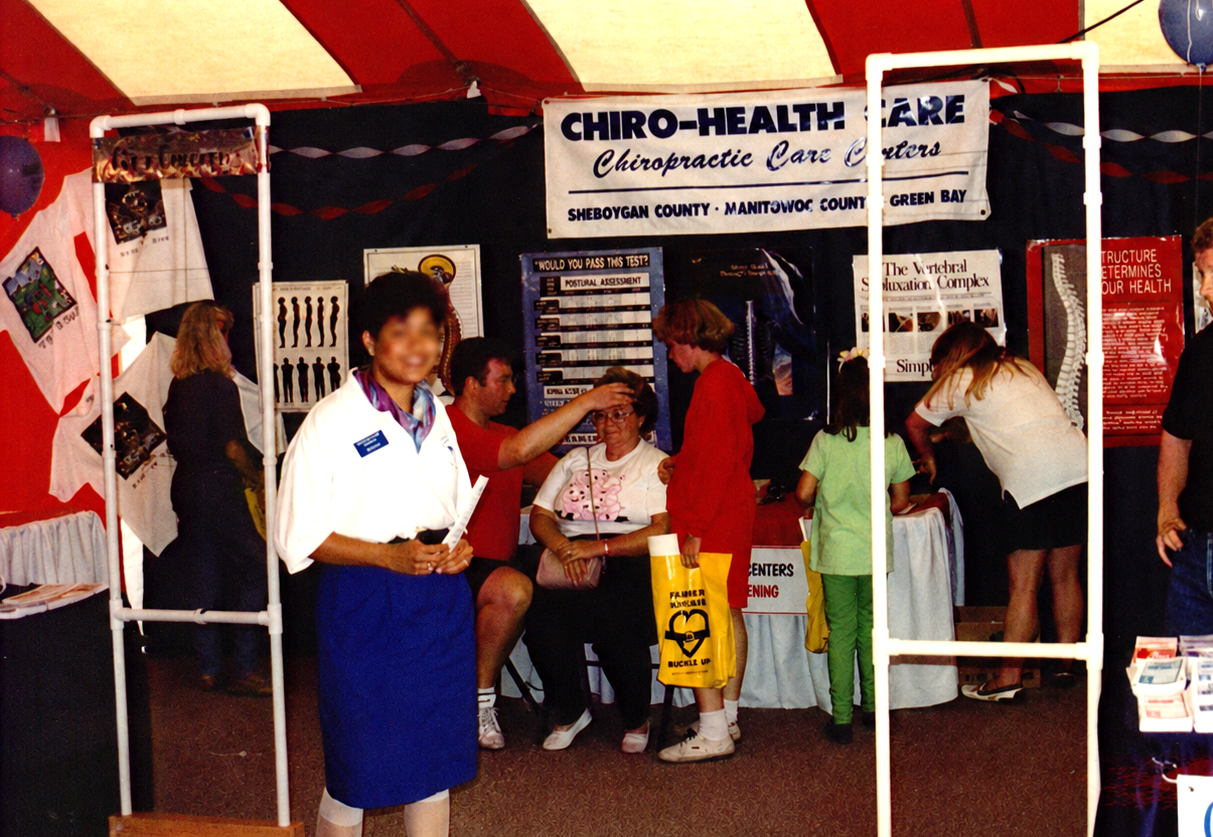
Decades ago, the classic Spinal Care Class (also known by many other names) was an “onboarding workshop” for all new and reactivated patients.

Back in the day, some offices required attendance before accepting a patient. Of course, each patient was advised to bring a guest, as “there will be cooperative exercises” that will require a partner.

The content was simple yet effective:

  • Introduction to chiropractic principles
  • The three phases of care
  • Everyday tips for reclaiming and maintaining health

Time to Bring It Back — With a Twist

If you’re not doing this now, consider it.

If you’ve done it before and have stopped, take it out of the garage, clean it up, update it, and take it for another spin.

You could freshen up the title. For example:

“From Pain to Power: Your Nervous System Reboot”

There are many different actions we have seen over the years that make these classes successful, and I’m not going to include them now. (If you have a tip or two, please post in the comment section below. Share a few!)

But for sure, give some thought to these:

  • Explain in the Report of Findings that you have a health workshop for all new patients.

“We’ve found that patients who attend recover faster and stay healthier longer.”

  • You can have a local organic food store supply some treats. They get free promotion!
  • Keep the workshop active and physical. 60% talk, 50% demo. For example:
    • Range of motion check
    • Trigger point location. (Partner up!)
    • “String of Life” alignment demo
    • Example of a leg length test by a doctor
    • Simple breathing drills
  • Bring in organic pizzas for after-class mingling — guests stay for a no-charge eval invitation, then join the pizza party.

Once the class ends, the magic happens: patients, guests, staff, and doctors all talking, laughing, and sharing. It feels less like an event and more like a community gathering.

Implementation Made Easy

I’d recommend:

  • Delegate one person in the office – “Workshop Coordinator.”
  • Hold the event 2x’s a month.
  • All staff and doctors attend at least 1x per month.

Yea, it takes work. But it’s an old-school marketing program that works and has a great ROI.

You reinforce what makes chiropractic extraordinary: a LIVE, human, heart-centered connection that no algorithm can imitate.

You’re building not just a patient base — you’re creating Health Driven Chiropractic Community Members.

“The more your patients know,

the further they’ll go!”

–Ed

Ask Lisa: Insurance Network Participation: Knowing When to Opt In or Out?

Have you every wished there was an easy way to make sense of the labyrinth of insurance networks out there?

Should you be in? Should you opt out?

Below is a guide for you and your staff to follow to help you decide whether pursuing a specific insurance contract, and staying in, is worth your time and investment.

First, determine which companies you are in network with. Do you have a contract? What are your obligations as a provider? Are you getting reimbursed what the contracted fee schedule says it will reimburse? Do you have a profile set up with the National Council for Affordable Quality Healthcare (CAQH) universal provider database and is the information current, and reviewed and attested quarterly? There is no charge to create and maintain your profile in this credentialing database.

Second, make sure you know if you are currently enrolled in Medicare and if you are a participating or non-participating provider. Are you also currently enrolled as a provider in your state’s Medicaid program? Is your organization/group also enrolled?

Third, audit your patient demographic. Run a report in your practice management software.

  • What percentage of your reimbursement is coming from insurance?
  • What percentage is coming directly from patients?
  • Which payers are you mainly seeing patients from?
  • Are you finding that patients are requesting you be in network with a certain company?
  • Who are the main employers in your area insured with?
  •  Are you enrolled as a provider with the Veteran’s Administration in your area?

Fourth, make a list of Insurance Networks you are with to clarify if questions arise later regarding participation. Review if you have fee schedules and contracts on file.

Once you have a grasp on the above, you’re ready to determine if you need to pursue network participation with additional companies. Treating this like a sales or business venture, you’ll want to have insurance companies coming to you and requesting you to be in their network. Remember, it is to their benefit and their obligation to keep their paying policyholders happy. Patients should feel free to call their insurer requesting you be on their plan. Patients have done this, and outcomes have been successful. Why?

Because the worst phone call that an insurance company can receive is from an upset policyholder who can’t afford to see their favorite doctor who is helping them because the doctor is not on the plan.

Things to consider prior to enrolling in a plan include:

  • What is the reimbursement rate?
  • What percentage of the approved charges are taken out for contract discounts?
  • Is there a fee to join?
  • What are your obligations as a provider?
  • Do they want you to participate in their workers compensation, PI programs? (In our experience, opting in to the WC and PI products means no steerage to you, and cut reimbursements).
  • Are there pre-authorizations required prior to care?
  • Is there a visit limit?
  • What is the initial credentialing and re-credentialing process?

Now, you are on all the plans that are making your pocketbook and your patient happy. What do you need to do to maintain your in-network status? You will need to notify a payer with updated clinic information anytime there is a change in information you submitted at enrollment. This includes address change or adding a new provider to the office.

Many of the larger commercial payers such as Blue Cross, Humana, United Healthcare/Optum Physical Health, use CAQH to approve your re-credentialing. Those who do not will send a written communication via mail or email letting you know your recredentialing is coming due and will include the applications and instructions. Make sure to track these dates in your insurance spreadsheet.

You will also need to make sure you are tracking re-credentialing timeframes for each insurance company. Typically, the recredentialing process for commercial payers is every three years but since your enrollments with each payer fall on different dates, your re-credentialing due dates will vary. Your Medicare re-credentialing is every five years for both individual and group enrollments. Re-validation with Medicaid programs is typically every three to five years, depending on your state’s standards. For example, it is every three years in WI and every five years in MI.

We’ve just touched the surface of network plans and credentialing. Email me for assistance with how these processes work for your practice.

You may reach me at lisa@pmaworks.com

Lisa

Ask Lisa
Increasing your collections through better billing and documentation

The Need for Marketing Never Goes Away

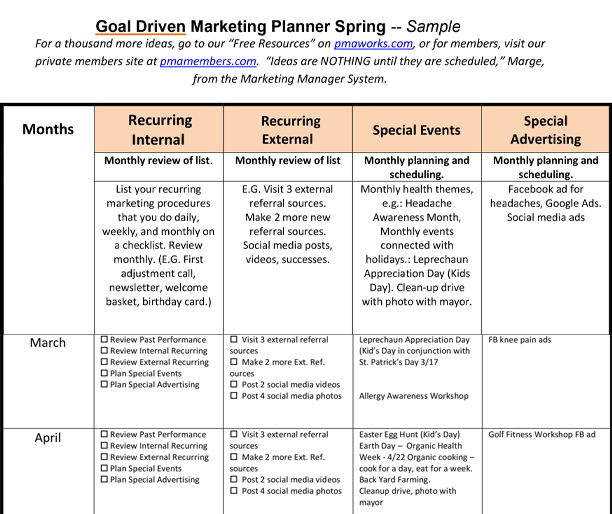
Spring Marketing Calendar

goal driven spring marketing planner for the chiropractic office

(The need for marketing NEVER goes away,no matter how busy you are. So reminders are useful! Updated and reissued newsletter from 2023!)

Daylight Savings Time starts in a week here in the U.S (March 8, 2026). And across the northern part of our Planet, Spring begins in 4 weeks (March 20th). And not to be too pedantic, Meteorological Spring has already started (March 1.) (Guess that would be autumn for you all in the southern hemisphere.)

In any event, now is a great time to plan and “giddyup” (slang – American, move faster, get going) your marketing for these upcoming active months!

The Need for Marketing Never Goes Away

No matter how full your practice is, the need for marketing never goes away.

Marketing is business and business is marketing.

Putting something valuable in the marketplace that other people want and will pay for – that is marketing. And that is your business.

The type of marketing you do varies depending on the condition and circumstances of your business. If you are just beginning a practice, you must spend a large percentage of your time and budget on marketing, especially direct response marketing. If you have built up your business, the focus of your marketing can be more on retaining your patients, creating alliances, and world-class customer service and outcomes.

Marketing covers a broad spectrum of activities, but all are, or should be, designed to generate new patients and keep the ones you have.

Trends for the future indicate that, in the end, the best and surest marketing will be customer services and outcomes. The communication channels are so packed and manufactured that your messages will get lost unless you have millions to spend. And now we have AI marketing – ads that robots put together.

THEREFORE, THE BEST MARKETING WILL ALWAYS BE PERSONAL – relationship based. You and your people — authentic and interested in your patients and the individuals in your community – delivering extraordinary service and outcomes.

Marketing Plan

Practically speaking, it helps to plan your marketing.

Plan your work and then work your plan, right? So, I have attached a sample marketing plan (link below at the end of the blog article) to help you outline what to do. It is a sample and gives structure to managing your marketing. We’ve used one like this for years, and it works. Make your own and customize it to fit your needs.

And stay tuned for a new service we will offer to help you with your marketing.

But for now, Happy Spring!

Spring Forward!

Ed

*Contact me for help! Email: Ed@pmaworks.com, or 414-332-4511.

Download the Spring Marketing Plan  2026 March 3 Spring Marketing Plan

Why Things Don’t Get Done in Your Chiropractic and Healthcare Practice

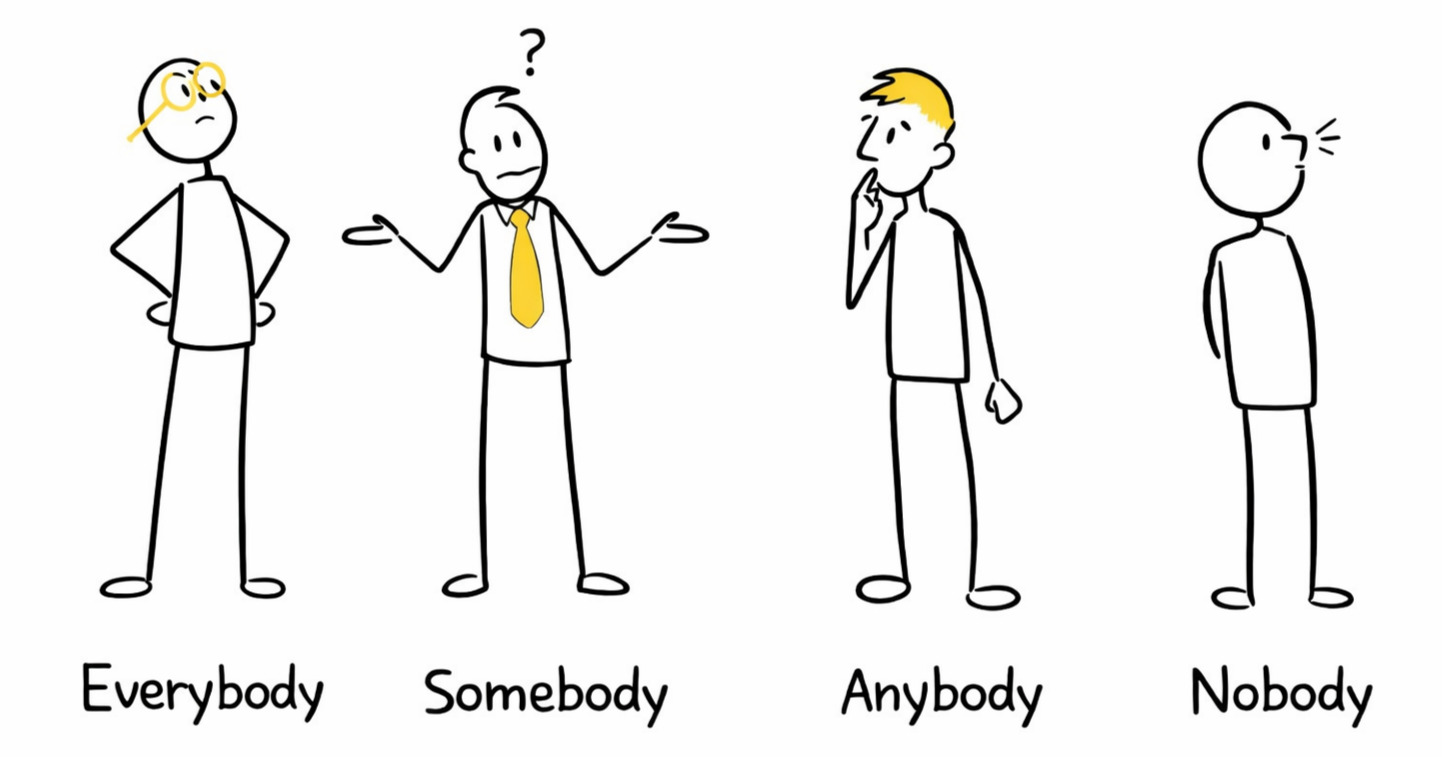
everybody, somebody, anybody, nobody taking responsibility in a chiropractic office

The Importance of Goal Driven Job Checklists

Why don’t things get done in a chiropractic practice – or any professional practice?

It’s rarely laziness. It’s usually just a lack of clarity.

Last week we discussed Accountability — and how it helps grow and sustain a practice.

There is real science behind this, but it is sort of obvious. People perform better when they have something, or someone, giving them feedback!

Like a coach! (Hi! Call me! 🖐️😁)

But in order to be accountable for something, you kinda need to know what it is that you are being accountable for.

That’s where the work activities break down.

We say we want accountability — but we haven’t clearly defined responsibility.

That is why job descriptions matter.

Most of these, the ones I have seen, are so confusing as to be impractical.

A good job description defines what it is that you are responsible for…and why. It defines the purpose of the job, its specific duties, and its outcomes.

And those outcomes…? You can measure them.

With a good job description, a person knows what they are responsible for and they have the stats that shows them how they are doing.

They can be their own manager!

Now the CEO/Clinic Director doesn’t have to police. They get to coach and that’s the culture we want.

Here are the 4 parts of a Goal Driven job description, or what I call a Job Checklists:

  1. Purpose of the job.
  2. Duties of the job.
  3. Outcomes of the job.
  4. Statistics (metrics, Key Performance Indicators) of the job.

Here’s a fast example:

= = =

Chiropractic Front Desk Coordinator

Purpose

  1. Ensure that patients complete their programs by keeping their appointments.
  2. Keep the appointment book full, rescheduled appointments to a minimum, and ensure patient flow is smooth and efficient.

Duties

  1. Always answered the phone with a smile.
  2. Greeted every patient personally when they entered the office with a smile, by their first/last name, as appropriate.
  3. Followed clinic and office policies as outlined in our office manual.
  4. Confirmed appointments as necessary for the next day’s schedule.
  5. Ensured that all patients had a treatment plan and set multiple schedules off them
  6. Ensured that the flow of patients never got jammed or “plugged up.” Got help when needed to “unplug” the flow.
  7. Never let patients wait more than 15 minutes.
  8. Asked for patient referrals each day.

Outcomes

  1. All patients are scheduled for their appointments
  2. All patients keeping their appointments.

Performance Monitors

  1. Percentage of Kept Appointments
  2. Office Visits

This is a sample, but I am sure it comes close to what your front desk does… or should do.

= = =

Review your job checklist with your team monthly. Improve them and use them for training. You can co-coach each other!

But remember: responsibility comes before accountability.

Help others take responsibility for achieving their goals.

  • Define it.
  • Measure it.
  • Coach it.

And stay Goal Driven.

Ed

P.S.

Everybody, Somebody, Anybody, Nobody

“There was an important job to be done and Everybody was sure that Somebody would do it.

Anybody could have done it, but Nobody did it.

Somebody got angry about that because it was Everybody’s job.

Everybody thought that Anybody could do it, but Nobody realized that Everybody wouldn’t do it.

It ended up that Everybody blamed Somebody when Nobody did what Anybody could have done.”

– Charles R. Swindoll

Lisa, Congratulations on 10 Years of Service!

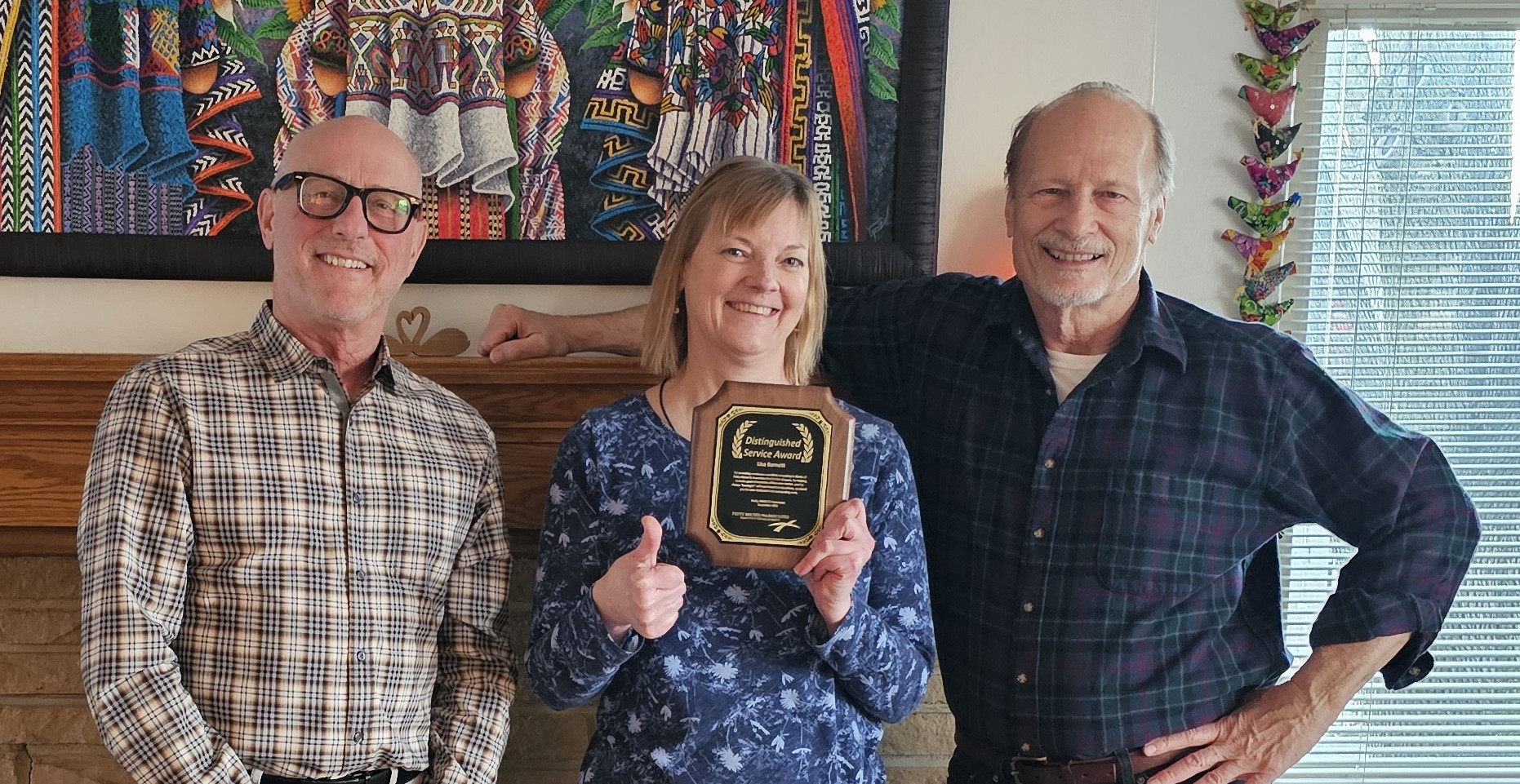
Dave Michel and Ed Petty presenting Lisa Barnett with 10 year service award

Dave Michel, Lisa Barnett, Ed Petty

Dave Michel and Ed Petty recently met with Lisa Barnett to present her with a 10 year service award.

Over the past 10 years Lisa, a “jack of all trades”, has been a valuable consultant assisting clients with troubleshooting billing and collection issues, working with clinics through Medicare audits, and credentialing new doctors among many other tasks.  If it has anything to do with insurance/billing/collections, Lisa is your go to person!

In addition, she also assists clinics with determining the value of their practice.

Please join us in congratulating Lisa Barnett for her 10 years of Service with Petty, Michel and Associates.

If you’d like to learn more about Lisa and the services she provides visit  Lisa Barnett  or call 920-334-4561.

Accountability Can Create a Goal Driven Chiropractic and Healthcare Practice

Practice owner overseeing a goal driven chiropractic business

From Personality-Driven to Goal-Driven

I don’t recall a single doctor — chiropractor, dentist, or podiatrist — telling me they wanted to be chained to their practice so they could never leave it.

Nearly every doctor I’ve worked with wanted a business that was not entirely dependent upon their daily production or constant supervision.

Michael Gerber (The E-Myth) wrote about the system-driven business. Others talk about team-driven practice. I talk about a Goal Driven Practice.

In every case, the objective is the same:

The business should not depend on the personality of the owner.

I make a clear distinction between a Personality-Driven Practice and a Goal-Driven Practice:

An essential difference is accountability.

HOW ACCOUNTABILITY TRANSFORMS A PRACTICE

In a Personality-Driven Practice, results rise and fall with the owner’s energy and oversight. They are the driver of everything.

But a structured accountability system changes this.

A Goal-Driven Practice operates like a team sport. There’s a scoreboard. There are defined positions. Everyone knows their role, and everyone can see the score.

The numbers provide objective feedback. Roles clarify ownership. Goals define what winning means. Regular review keeps the team aligned and improving.

There is a great deal of science, actually, on how accountability improves performance. (See below)

THREE DRIVERS OF A GOAL DRIVEN CHIROPRACTIC PRACTICE

1. Clear Ownership of Outcomes

Every role should have one or two numbers that answer: “What results am I responsible for?”

These are the practical goals that need to be achieved each month.

2. Regular Review and Supportive Feedback

Numbers must be:

  • Reviewed consistently (Monthly, weekly)
  • Shown in trends, not just totals
  • Discussed openly, without blame
  • Action plans and coaching for improvement

We don’t always face, as Jim Collins says in his book, Good to Great, the “Brutal Facts.” Just facing up to them each month is a step forward.

For example, you can look at your bank account at the end of each month. Is the trend going up, or down? Discuss this with your spouse and consider what actions to take to improve what you see. Do this regularly!

3. Clear Purpose

Numbers without purpose become mechanical and soulless.

It is what the numbers represent that counts. When people understand why their role matters and how their outcomes serve patients, performance becomes meaningful.

The purpose is the higher level goal that gives you the reason for everything you do.

A SIMPLE EXAMPLE of CREATING A GOAL DRIVEN CHIROPRACTIC PRACTICE

At a monthly team meeting, each team member reports on their key numbers.

“Cheryl, how did we do at the front desk this month?”

“We beat our goal — 91% kept appointments, up from 88% last month. Visits increased from 1150 to 1204.”

The doctor acknowledges the wins and may ask what was done to improve performance. Then, the next team member gives their report. After everyone is through, the doctor asks each person about their goals for the new month.

Lastly, the chiropractor-CEO discusses some version of the purpose of the clinic. Perhaps with a story or testimonial and ends the meeting.

This process done over and over can help create a goal driven chiropractic practice.

I think the funny thing is… that we are all on scoreboards, we just don’t know it! (Lol) Maybe we look at our numbers now and then, but not on a regular basis! Or get our teams to do the same.

Read this newsletter/article again and put it to work. You’ll see your numbers improve!

And, as always, stay …Goal Driven,

Ed

P.S. If you have questions or would like some help transforming your practice into a Goal Driven business, please contact me. (Ed at goaldriven dot com.)

**References

Goal-Setting and Feedback
Locke, E. A., & Latham, G. P. (2002).
Building a practically useful theory of goal setting and task motivation.
American Psychologist.

Key finding:
Specific goals combined with feedback produce significantly higher performance than vague goals or no feedback.

Feedback Loops Improve Performance
Kluger, A. N., & DeNisi, A. (1996).
The effects of feedback interventions on performance.

Key finding:
Performance improves when feedback is frequent, task-focused, and tied to clear standards. Poorly designed feedback harms performance; structured accountability improves it.

. Scorecards and Visibility
Kaplan, R. S., & Norton, D. P. (1996).
The Balanced Scorecard.

Key contribution:
Organizations that use visible performance metrics aligned to strategy outperform those that rely on financial results alone.

Thoughts on The Goal Driven Business

I WISH I WOULD’VE HAD THIS BOOK 30 YEARS AGO!

Mr. Ed Petty takes his reader on an entrepreneurial safari, complete with a roadmap for success. This is a relatable, actionable business or practice guide for conquering the challenges that come along with business ownership or private practice. I have personally worked with Mr. Petty for years as he has helped me to convert my extremely personality-driven practice to a goal-driven practice. I am so grateful our paths crossed when they did. I wish I would’ve had this book 30 years ago! What an amazing compilation of the process of building a solid, goal-driven business. The author takes you through literally every “phase” of business practice and “chunks” it up into actionable steps. If you own a business, you need to read “The Goal Driven Business.”!!

Ann Metzler, D.C. Group Practice Owner ( 2 offices, 5 doctors) [LINK]

Marketing: The Benefits of Positioning, Football, Food, and Chiropractic

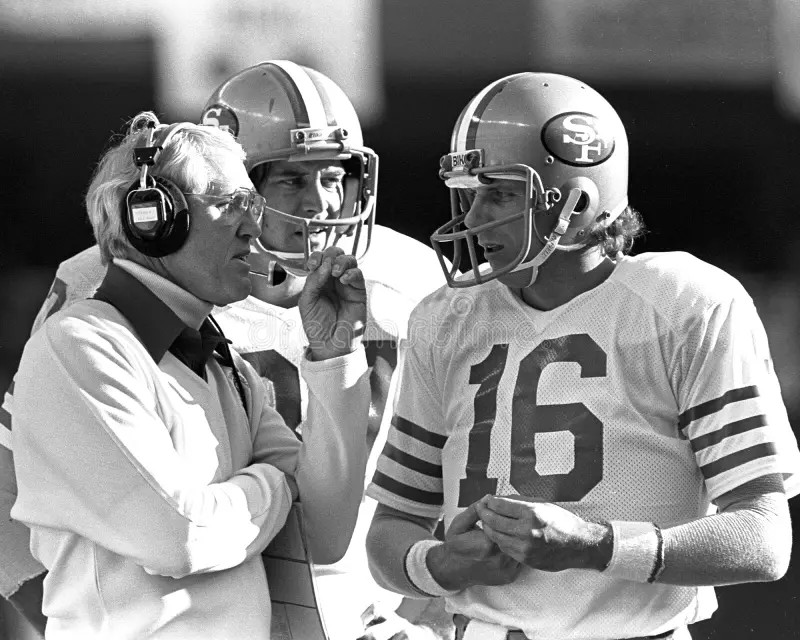
“Chiropractic just makes you feel so much better… as long as I see the chiropractor, I feel like I’m one step ahead of the game.” Tom Brady (7× Super Bowl Champion, 5× Super Bowl MVP, 3× League MVP, 15× Pro Bowler, Considered GOAT.)“Chiropractic just makes you feel so much better… as long as I see the chiropractor, I feel like I’m one step ahead of the game.”
Tom Brady (7× Super Bowl Champion, 5× Super Bowl MVP, 3× League MVP, 15× Pro Bowler, Considered GOAT.)

For those of you who are Patriots fans, Sunday was a tough loss.

But Seahawks fans (the 12s), you’ve got to be feeling pretty good. That was a clinic in defensive strategy.

I enjoyed the game, but here’s what caught my attention – nearly half the country watched the Super Bowl. That’s significant — not because of football, but because of what people pay attention to.

And that brings me to the subject of positioning.

Positioning is a marketing concept that means borrowing meaning from things people already trust, admire, or desire—and letting that meaning transfer to your service.

This weekend gave us two very relevant examples.

2 THINGS PEOPLE CARE ABOUT
(That Relate Directly to Chiropractic)

1. Sports

People of all ages love sports. Sports require physical health, mental focus—and I’d even say spiritual discipline. You must be healthy to perform, and health is your department.

There’s also a reason every professional football team has a chiropractor. If you haven’t looked into it, check out the Professional Football Chiropractic Society:

https://www.profootballchiros.com/


2. Healthy Food: RealFood.gov

During halftime, a public-health PSA aired promoting real food and warning about ultra-processed diets. In the spot, Mike Tyson spoke candidly about his own struggles with obesity and the tragic loss of his sister, who died young from a heart attack linked to obesity.

His line was blunt (and memorable):

“We’re the most powerful country in the world, and we have the most obese, fudgy people.”

The ad was funded by the Department of Health and Human Services, currently headed by RFK Jr., who has attended chiropractic conventions and spoken at chiropractic colleges.

These are not fringe ideas. These are mainstream conversations.

WHAT THE RESEARCH TELLS US

This shift isn’t anecdotal. The data supports it:

U.S. adults using at least one complementary health approach nearly doubled, from 19.2% in 2002 to 36.7% in 2022.*

Among adults aged 50–80, 66% report using at least one integrative health strategy.*

People love sports. Real food is being promoted nationally.

And more Americans are using natural health care.

So the question becomes: How Do You Join the Party?

There are lots of ways. Here are a few proven ones.

1. Be the change.
As Gandhi is said to have put it—be the change you want to see. Exercise. Eat well. Get adjusted.

2. Make it a core value.
Support your team in practical ways to help them move better, eat better, and stay healthy.

3. Communicate it relentlessly.
Table talk. Newsletters. Social media. Don’t assume people “get it.” Repetition builds positioning.

4. Create health allies.
Build relationships with owners of athletic businesses—golf courses, gyms, yoga studios, CrossFit boxes—and with coaches at schools or special programs. Cross-refer appropriately. Relationships matter.

5. Provide workshops.
Education beats advertising.

Include consultations and screenings. Partner with a pro or business owner when possible. Share a couple of success stories—with photos.

For example, we’ve done this successfully with golf workshops, co-hosted with chiropractors and a golf pro. Titles included:

  • Golf and Back Pain – Reducing Back Pain in Golf
  • Generating Increased Power in the Golf Swing
  • Improving Distance and Accuracy

We had strong turnout, immediate new patients, and more followed.

Golf season is right around the corner—and I’ve been told golf is a sport (lol).

Here are other natural workshop opportunities:

  • Gyms
  • Runners / Endurance sports
  • Cycling / CrossFit
  • Recreational & youth sports
  • Organic food stores

Sports. Real food. Good health. Your chiropractic services.

For the win!

Keep Drivin’,

Ed

P.S. If you’d like help applying this in your practice, you know where to find me. 🖐️

References:

https://www.nih.gov/news-events/news-releases/nih-analysis-reveals-significant-rise-use-complementary-health-approaches-especially-pain-management

https://ihpi.umich.edu/national-poll-healthy-aging/national-findings/use-and-interest-integrative-medicine-strategies

https://www.beinsports.com/en-us/american-football/articles/how-many-people-will-watch-super-bowl-lx-2026-02-06

Tom Brady – https://creativecommons.org/licenses/by-sa/3.0/

Ask Lisa: Benefits Verification: Because Guessing Is Expensive

chiropractic assistant verifying insurance benefits for patient

In today’s healthcare landscape, verifying a patient’s insurance benefits is more than an administrative step – it is a critical safeguard for both the patient and you. Benefits verification ensures that coverage details such as eligibility, co-payments, deductibles, and authorization requirements are clearly understood. When done accurately and promptly, this process lays the foundation for transparent care, financial clarity, and trust.

For your patients, unverified benefits can lead to unexpected bills, delayed treatment, or denied claims long after services are rendered. These surprises not only often create stress at moments when patients are already vulnerable, but become a compliance issue with regards to the No Surprises Act. Verifying benefits in advance also empowers patients with accurate information about their financial responsibility, preventing fears about surprise charges.

From your perspective, benefit verification reduces claim denials, improves your revenue cycle management, and supports effective, functional operations. It bridges the gap between clinical care and financial responsibility, ensuring that your services provided align with billing requirements. Ultimately, verifying benefits is not just about reimbursement, it is about protecting patients, strengthening provider-patient relationships, and promoting a more transparent and sustainable practice.

The best time to verify benefits in the chiropractic office is either 1) before the new patient’s Day 1 if you obtained their insurance information when they called or came in to schedule, or 2) After the patient’s Day 1 visit and prior to their Day 2 visit. This fosters continued trust and adequate time for your one-on-one financial consultation. You’ll also want to verify benefits if the patient has a change in insurance during the year.

Best Verification Methods: How to Verify Benefits

  • EHR/Clearinghouse: For a minimal extra monthly fee, verification of benefits feature is available for immediate output through your EHR or clearinghouse.
  • Insurance Payor Portals: Using specific payer websites provides the most up-to-date, detailed, and accurate benefit information, often surpassing phone checks.
  • Phone: The most reliable method for complex or high-cost services, enabling confirmation of specific benefits, authorization requirements, and obtaining a first name and reference number for the call.

Be ready to provide the following information:

  • Patient Name
  • Date of Birth
  • Member ID
  • Group Number (if applicable)

Some Coverage Questions/Criteria:

  • In-network or out-of-network status of provider
  • Annual or visit limits (if any)
  • Deductible amount and remaining balance
  • Co-payment or coinsurance
  • Is prior authorization required
  • CPT codes
  • Effective date of coverage and if calendar year or policy year coverage

If an appeal is needed:

When you need to appeal a benefits verification that mismatches the reimbursement on your EOB, the best method is to call the payer regarding the specific issue and provide the call reference number and representative’s name if you originally called to verify. If you used your EHR/clearinghouse or the payer’s portal, provide the information stated on the printout to the appeals representative. Focus on what you need for resolution, such as, “It appears your claims system miscalculated what we are to be reimbursed. We are expecting $XX remaining, and are requesting you resend the claim(s) to process per the member’s policy coverage.” If they paid correctly on another DOS, let the rep know this.

You may want to inform the patient of your appeal as well. Sometimes the patient will need to ultimately call to sort out a coverage dispute. If they signed your financial agreement, they’ll be more than willing to call their insurance company if they were expecting their insurer to pay a portion for their care.

Need an insurance verification form for use or to compare what you currently use in your office? Click HERE for an insurance verification form. On the house.
Questions? Just Ask… Lisa

The Hidden Power of Patient Testimonials in Chiropractic and Healthcare that Go Beyond Marketing

women healthier and pain free after chiropracticIn this newsletter I was going to show you some neat tricks to improve team accountability. Accountability is a powerful and positive trigger that drives excellent practice performance.

But something happened just before I started the article.

I received a patient success review from a doctor we work with.

It read it and…WOW! What a success! What a Win! (It is below!)

And I thought – boy, this is really good for marketing. But reviews like this also have other practical uses in your practice that may be overlooked.

Mostly, these are marketing tools—patients give reviews to let the community know what you do. They’re legit and one of the absolute best methods to sell your services. I’m sure when you buy products on Amazon, you look at the reviews. Right?

But patient reviews have 2 other very powerful benefits that may be overlooked.

Two Hidden Benefits of Reviews in Your Chiropractic Practice

First, they reinforce wins for your patients. A patient comes in barely able to move. You adjust them. They get better. And then—they start to forget how bad it was. It’s human nature. We adapt to our new normal fast. Or their wins come on so gradually they don’t even notice the change.

When patients write their reviews, they reconnect with where they were and recognize where they are now. That testimonial becomes their documented “why” — why they’re investing in care and why they’ll stick with their treatment plan.

Second, patient reviews keep the WHY in mind for you and your team.

The daily demands and deadlines that are required working in a practice, for the chiropractor and staff, can bury the reason you work in this profession: to help people heal.

Reading chiropractic patient testimonials reconnects you and your fellow team members to your purpose and the purpose of the office. When Mrs. Johnson writes about finally holding her grandson without pain, or the athlete describes returning to their sport—that’s not marketing copy. That’s meaning. That’s impact.

That is the essence of health care.

The Joy of Practice

If you can stay connected to the wins of your patients, I think you’ll find that practice stressors, or “onset burnout,” will start to melt away.

So,

Keep generating patient reviews. And if you aren’t, do so.

Get them posted so your community can see what you do: website, social media, Google Business profile, and your newsletters.

Read them. At weekly team meetings, staff and doctors can take turns reading one or two patient successes. I have seen patients how up at team meetings and at spinal care classes to talk about their wins!

Patient testimonials aren’t just marketing assets. They’re memory landmarks for patients who might take their wins for granted.

They’re purpose statements that remind the entire team what you all are really doing there. They’re the antidote to the sometimes-dreary aspects of practice management.

So yes, get the reviews for marketing. But also share them with each other. Let them be the thing that brings everyone back to why you all do this work.

And stay driven to enjoy the wins,

Ed

The public patient review I just read.:

Doctor Max is an absolute miracle worker. He is the best. I went to him a month ago basically as a last resort. I had tried everything else, and I mean everything. When I went to see him, I could barely walk. I had to use a cane. Getting in and out of vehicles was soooo very painful. I had sciatic pain, lower back and hip pain and could not bend my knee at all. Regular doctors told I would need a knee replacement. Nope..,not doing that. Doctor Max took X-rays of back, neck, hip and knee. Immediately he had a course of treatment. Now, after 1 month of treatments, 3 times a week, the change is a true miracle. I feel like a new woman (and that is tough to do at 80 years old LOL). I’m still going in for treatments to continue healing to make sure my body stays in great condition. I am convinced, if I had not found Doctor Max I would be in terrible shape and facing a knee replacement I did not need to have. Not only is Doctor Max great, but his staff is wonderful.” Cindy B

Kickstarting Your Patient’s Health and Their Referrals In Chiropractic and Healthcare Practices

chiropractic healthy start coupon

A healthy start for 2026 in your chiropractic practice

Now is a perfect time to connect with all your active and inactive patients.

If you haven’t yet, compliment them for working on improving their health last year. Express your gratitude for trusting you with their health.

Then, as their Health and Wellness Coach, encourage them to set some health goals for the first quarter of the year.

You can be a little forward about it…you want them to win! Patients appreciate chiropractors and other doctors who genuinely care about their results.

You can also encourage them to invite their family and friends in to see you if they’re dealing with back pain, headaches, or other conditions you can help with.

Below is a sample coupon you can personalize then use or modify to suit your situation.

Wishing you, too, a healthy start to your New Year — in business and in life!

Ed

== ==

2026 “HEALTHY START” COUPON

We want to help you start your year off as healthy as possible. Use this coupon:

  1. If you are active on your chiropractic program, bring this coupon in to enter a drawing for a [healthy gift, which could be a gift certificate to a local health food store, restaurant, yoga studio, sky-diving, etc.]

  2. If you haven’t been in for a while, bring this in for a free update exam and x-ray if needed.

  3. If you know someone who might benefit from chiropractic care, give them this coupon for a consultation, exam, x-ray if needed, and report of findings for $25 as your guest.

Leaders Like You – in Chiropractic and Healthcare Practices

Doctors and team members of Excel Chiropractic, Lake Geneva, WI

Empowering Others in Chiropractic Healthcare Practice

You are a leader.

You may not consider yourself a leader. But you are. So is everyone on your team.

Not only by the service you provide, but by the example you set.

What is leadership? Let’s take a look to see if you fit:

  • “Leadership is not about who you are or where you sit. It’s about what you do to make a difference in the lives of others.” — Jim Kouzes & Barry Posner, The Leadership Challenge
  • “Leadership is not about being in charge. It is about taking care of those in your charge.” — Simon Sinek
  • “Leaders become great, not because of their power, but because of their ability to empower others.” — John C. Maxwell

I think you’ll have to agree, both you and your team are leaders. Servant leaders in chiropractic and your healthcare practice.

But, as you know, leadership is tough. It isn’t easy.

But you did it in 2025.

You helped others in big ways and small, regardless of your role.

It is possible, quite likely in fact, that you may not have acknowledged the vital role you and your teammates played in the wellbeing of others last year.

Why not? Well (lol) … because of all the #@#% that occurs when trying to get things done. The list can go on and on… there is so much noise and changes that occur in practice that sometimes it is difficult to see the road we are on.

But, you made it through another year. And in your wake, people are better.

All of us at Petty, Michel and Associates are proud to work with you. We appreciate your struggles and celebrate your wins as independent health care leaders!

In this New Year, stay true to you purpose and your role as the servant leader that you are – and your path to your goals in 2026 will be straighter and more certain.

“We never know how far reaching something we may think,
say or do today will affect the lives of millions tomorrow.”
B.J. Palmer’s 1949 book The Bigness of the Fellow Within

Ed Petty

Ask Lisa: Front Desk and Insurance Departments Hook Up for Start of New Year!

balance scale between aesthetics and your bottom line in the chiropractic profession

Balance Between Aesthetics and Your Bottom Line

Greetings!

I’m condominium and cat sitting from December into January and am looking out of a window of natural beauty. If you are familiar with the Kettle Moraine areas of Wisconsin, affectionately referred to as “The Kettles”, you’ll deeply appreciate the beauty balanced with serene livability. The Condo complexes are built on a solid but interesting foundation of intertwining drumlins and kames of deposit sediment from glacial melts, making it challenging to keep your footing if you hike these.

Which brings me to you, and the balance between the sometimes hilly, lose-your-footing areas of your office and the beauty of it when you help a patient return to their own footing. And such is the time for your Front Desk and Insurance Department roles to intertwine at the start of the New Year!

Here is a simple New Year Checklist for your front office and your insurance departments to maintain balance of beauty and your bottom line:

1)  Obtain all patient’s insurance cards and make a copy for scanning into your practice management software. This is also the time to verify patient’s current address, cell phone number, and email address. Both areas of your office – front desk and insurance, need this information, and need it to be current. Maintain a pleasant, aesthetic reception area that is welcoming for patients and creates an amicable environment for patients, who will now be more likely to be kinder in providing you their personal insurance information. I know the difficulty this request can pose.

2)  Team up to discuss and decide who will be holding patient financial consultations post-insurance verifications on new patients or change of insurances. Remember these need to be done at the very minimum, in a semi-private, to fully-private area. Will it be the front desk? Will it be an insurance staff? CT? Will it be you, the doctor, conducting these in the treatment area? We’ve seen it done all four ways and sometimes combined. Whatever works best, with the framework of respecting and staying compliant with the patient’s privacy and finances.  What have you done regarding communicating benefits to patients up until now? Has it worked? If so, keep doing it. If not, how can you tweak this process to make it better for you and the patient? See last month’s article* on process improvement while not necessarily focusing on efficiency improvement.

3)  Working and following up on Patient Receivables. As with financial consultations, it needs to be done. Your prep work is to decide who will do the patient receivables follow-up: front desk, insurance, a combination? Consider updating your office policies to almost always collect at time of service to prevent the need for future follow-up on aged receivables.  Insurance follow-ups are best done by your insurance department. Consider sourcing out your insurance billing to someone who will do the insurance follow ups for you if you do not have internal insurance staff.  And…

4)  Make it a great, serene start to 2026!

And I have more great news for you! Our newly updated Welcome to Wellness* program is ready for purchase. As a special bonus this version includes:

  • 15 minute telephone consultation with the author, Dave Michel, on how to implement this class in your office. This includes sample versions of the most recent classes.
  • 90 Day Subscription to thePMA Members Library of over 500, helpful, customizable documents and articles.  You can read more about it here. [LINK]
  • Additional add on services for the Welcome to Wellness are also available.

We are currently in the process of updating our Patient Financial Consultation Kit for early Spring delivery.

Just Ask…

Lisa
920-334-4561
lisa@pmaworks.com

Pain is the Last to Show and the First to Go in Chiropractic Healthcare

Previously published on The Goal Driven Business

pain level of a subluxation

An Important Chiropractic Patient Education Tip

I recently visited a highly successful practice that had its usual issues and wanted to expand to the “next level.”

What did they need? More marketing, more staff training, more associates!

Sure.

But they also needed to tend to the basics, and here is one that is simple but easily overlooked:

Chiropractic Patient Understanding of Symptoms

I learned this early on: subluxations and other dysfunctions of the spine and joints can be present long before pain or other symptoms show up.

Finally, the individual drags themselves in to see you, and you begin care. After a few visits, the pain subsides. Yahoo!

Are they fixed? Probably not.

They have moved from acute care to corrective care. (You may call it something different, but the idea is the same.)

Your patient may not be familiar with this distinction. Hence, the report of findings and the importance of future patient education.

“How are You Feeling?”

So it was with some dismay that, visiting this office with excellent doctors, I kept overhearing them greet the patients with “how are you feeling?”

What!! What did you say?

Nooo!

Patient thinks, “Hey, I’m feeling pretty good. No need to come in anymore. Bye!”

Two months later, they hobble back in: “Doc, I have the same problem.”

So, what should you say? You want to be nice and show interest. You do care, and would like an update, right? So what do you say?

Just be genuinely interested and ask them how they are doin’? Or better, try these:

  • “How are you moving this week?
  • “What improvements have you noticed?”

I am not a doctor and would not presume to suggest care procedures. But this is a matter of patient education, marketing, and business development.

You want to improve their function, structure, and health. Maybe their mindset as well.

And of course, you want them pain-free.

Just remember that pain shows up last, and usually leaves before your work is done.

Get this on your chiropractic and healthcare patient care checklist and for a reminder, review it often. I bet you’ll see an improvement in outcomes and retention. Even a 10% increase in patient retention can significantly impact your practice outcomes and bottom line.

If your goal for your patients includes pain relief AND better function, this can help.

Stay Goal Driven,

Ed

2025- Health Never Takes a Holiday – Complimentary Posters

health never takes a holiday signature promotion for december in chiropractic offices

Health Never Takes a Holiday is our signature holiday post for many years.  It has proven to be very helpful for many offices to keep their patients on schedule during the holiday hustle and bustle.

For this program we offer free downloads of posters and tent posters you can use in the office to remind patients that we believe “Health Never Takes a Holiday” and it’s important to keep their schedule of care to stay well.

Please visit https://www.goaldriven.com/post/health-never-takes-a-holiday-in-chiropractic for this year’s complimentary posters.

Ask Lisa: It All Goes Back to the Goal!

theory of constraints the goal by Eliyahu M. Goldratt for the chiropractic office

I recently took a book off my bookshelf to re-read …

The Goal by Eliyahu M. Goldratt is one of my favorite business books. I love that Eli drives home being human, while at the same time having great capacity to improve systems and procedures in the workplace. As a business owner this relates directly to you.

Keep reading to learn how.

A few key takeaways from the book and how this ongoing process can help YOU improve your collections and income include:

Keeping in mind that the true goal of any for-profit company is to make money now and in the future. Two features of this are:

All operational decisions are evaluated based on whether they help achieve this goal.
Performance measurement is framed around three metrics:

  1. Throughput, or productivity (Service productivity is reflected in your NP, PV, charges, and collections stats)
  2. Inventory (making purchases intended to sell, such as supplements, pillows, exercise rehab supplies; and
  3. Operational Expense, which is money you spend to turn your inventory into productivity. This can include your practice management program and billing program’s monthly payments, maintaining and enhancing the office space, and maintaining functional chiropractic equipment such as your adjusting tables.

So, what specific actions can help you achieve the true goal for your business?

1. Identify constraints or bottlenecks in the office.

a. Look at time studies of the doctor(s) and staff. Can scheduling be done differently to open up blocks of time for more patients and/or paperwork.

b. Look for a breakdown in policies and procedures. How can it be done more effectively with better results?

2. Second, maximize and support the constraint,

a. decrease interruptions;

b. delegate tasks that are not directly clinical;

c. work on office flow for greater capacity.

3. Take note of variables. When a variable is presented such as doctor or staff
vacation and holidays , make adjustments to accommodate and still maintain your
goals.

4. Repeat steps 1 through 3, and you’ll find another constraint/bottleneck to work
through.

It may not feel good at first, but each time you cycle through the steps, according to the theory of constraints, you actually are improving the quality of your practice and its value!

Want to learn more about specific action steps for identifying bottlenecks and improving your collections and income? Give us a call. We’ve got your back. Just Ask . . .

Lisa
lisa@pmaworks.com

PS: Another great book that directly relates to this topic is “The Goal Driven Business” by Ed Petty.

Ask Lisa: Actions you can implement now to reach your Goals in 2026 and Beyond!

It All Goes Back to the Goal!

Greetings!

I recently took a book off my bookshelf to re-read …

The Goal by Eliyahu M. Goldratt is one of my favorite business books. I love that Eli drives home being human, while at the same time having great capacity to improve systems and procedures in the workplace. As a business owner this relates directly to you.

Keep reading to learn how.

A few key takeaways from the book and how this ongoing process can help YOU improve your collections and income include:

Keeping in mind that the true goal of any for-profit company is to make money now and in the future.  Two features of this are:

  1. All operational decisions are evaluated based on whether they help achieve this goal.
  2. Performance measurement is framed around three metrics:

1)  Throughput, or productivity (Service productivity is reflected in your NP, PV, charges, and collections stats)

2)  Inventory (making purchases intended to sell, such as supplements, pillows, exercise rehab supplies; and

3)  Operational Expense, which is money you spend to turn your inventory into productivity.  This can include your practice management program and billing program’s monthly payments, maintaining and enhancing the office space, and maintaining functional chiropractic equipment such as your adjusting tables.

So, what specific actions can help you achieve the true goal for your business?

  1. Identify constraints or bottlenecks in the office.

a.  Look at time studies of the doctor(s) and staff.  Can scheduling be done differently to open up blocks of time for more patients and/or paperwork.

b.  Look for a breakdown in policies and procedures. How can it be done more effectively with better results?

2.  Second, maximize and support the constraint,

a.  decrease interruptions;
b.  delegate tasks that are not directly clinical;
c.  work on office flow for greater capacity.

3.  Take note of variables. When a variable is presented such as doctor or staff vacation and holidays , make adjustments to accommodate and still maintain your goals.

4.  Repeat steps 1 through 3, and you’ll find another constraint/

bottleneck to work through.

It may not feel good at first, but each time you cycle through the steps, according to the theory of constraints, you actually are improving the quality of your practice and its value!

Want to learn more about specific action steps for identifying bottlenecks and improving your collections and income? Give us a call. We’ve got your back.  Just Ask . . .

Lisa

lisa@pmaworks.com

PS: Another great book that directly relates to this topic is “The Goal Driven Business” by Ed Petty.

Keep Hope Alive in Chiropractic and Healthcare Offices

Previously published at GoalDriven.com

two young teens visiting an older gentleman with thanksgiving dinner.

A Message from the “Head Office” ?

Early Thursday morning, I drove to a suburban high school with two of my grandkids. We were participating with others involved with a service organization called Community Projects for Seniors here in Milwaukee.

When we pulled into the expansive parking lot, we saw hundreds of cars and people driving through designated stations, receiving boxes of hot Thanksgiving dinners to deliver to seniors across Southeast Wisconsin.

The loading was well organized and ran smoothly, despite everyone being volunteers. Everyone looked to be having a good time, smiling and high-fiving in the early morning, freezing temperatures!

The two grandkids and I delivered 51 meals to residences in a low-income section of Milwaukee. It was a good experience for them, knocking on apartment doors, wishing seniors a happy Thanksgiving, and sometimes offering short expressions of care and interest or best wishes for the Packers (professional football team) later in the day.

As we were getting to the end of our route, a senior gentleman, must have been 6′ 4″ or more, after accepting the meal, looked dead at my grandkids and said, “Keep Hope Alive.”

Keep Hope Alive

“Keep Hope Alive” was a phrase Rev. Jesse Jackson often used when he ran for president in 1988. Jackson participated in the Selma marches in 1965 and became a close aide to Dr. Martin Luther King Jr.

The Selma marches included Bloody Sunday, when 600 unarmed peaceful civil rights protesters were violently attacked and beaten, some unconscious, by state troopers in March of 1965 in Selma. The Voting Rights Act of 1965 was signed into law by President Johnson, guaranteeing the right to vote for African-Americans, especially in the South.

But here we are in 2025. What did this resident mean when he said “Keep Hope Alive” as he accepted the Thanksgiving dinner? Why did he say it to two suburban kids this Thanksgiving?

Unlike most of the other people we handed dinners to, he was the most cheerful. Perhaps, for him, an elder and certainly not well-off, he had hopes for a better future.

A better future for himself — and maybe for others.

Keep Goals for Your Chiropractic and Healthcare Practice Alive

The word “hope” is defined as the feeling of trust that something wished for can or will happen. The derivation of the word “hope” traces back to Old English “hopian,” meaning to expect, or look forward with confidence in a positive outcome.

Hope is more than just wishing… it is expecting what you want will happen.

Kinda sounds like a goal, doesn’t it?

You know, you can receive messages that are meant for you – from others.

Someone I know calls these “Memo’s from the Head Office!”

I think that, for me, the “message” from the senior gentleman was that any hope, or goal, for a better future must be actively kept alive.

That means, your dreams and goals for the New Year, including your chiropractic and healthcare practice, can’t be made and then parked.

They need to be kept alive.

Maybe his message was meant — for you too!

😊

Keep Hope — and Your Goals — Alive.

Ed

How the Gratitude Attitude Helps Healing in Your Chiropractic and Healthcare Practice

Previously published on Goal Driven

gratitude with attitude thanksgiving message from pmaworks

The Gratitude Attitude: Proven to Speed Healing and Grow Chiropractic and Healthcare Practices

I don’t know about you, but I just like saying…” Gratitude…Attitude.”

There are plenty of studies on this subject – how just being grateful can improve health outcomes.

Here are just a few highlights:

  • Fewer aches and overall better health – Grateful people report less pain and are more likely to take care of themselves (exercise, regular checkups, etc.) (Emmons & McCullough, 2003 – UC Davis. My old alma mater!)
  • Heart failure patients who kept a gratitude journal for 8 weeks showed reduced inflammation, better heart-rate variability, and improved sleep (UC San Diego, 2015)
  • Lower blood pressure in grateful individuals (Teixeira et al., 2024)
  • Reduced depression and anxiety (Seligman et al., 2005)
  • Better sleep quality (Wood et al., 2009)
  • Improved diabetes management (multiple studies, 2010s–2020s)
  • Stronger immune function (University of Utah & others, 2003–2021)

The list can go on and on.

Two Simple Ways To Use This In Your Practice Right Now

  1. With patients – At the end of a visit, ask your chiropractic and healthcare patients to name 3 things they’re grateful for today (family, a sunny day, the fact they can walk into your office, etc.). Studies show this tiny habit alone can accelerate their healing.
  2. With your team – End your next team meeting by going around the room: everyone shares one thing they’re grateful for in the practice. I have seen this done, and the practice has grown as a result!

The benefits of gratitude may seem obvious and something we already know, but they can be easily overlooked. We focus on our daily challenges and can take for granted the people who support us, and who have done so in the past.

Faced with patient and practice demands, we can under-appreciate the opportunity we have to live an extraordinary life helping others.

So it is good to take time – right now — to give thanks.

Best wishes to you this week, wherever you are.

All of us at Petty Michel & Associates are truly grateful for you – and all you do to make the world and your community a better place!

Sincerely,

Ed

P.S. (On the other hand, you have to be careful!- You know you’ve overdone the Gratitude Attitude when you stub your toe and automatically think, “I’m so grateful I have toes to stub! And a chair to stub them on! And nerve endings that let me feel pain! Pain is a gift. This is so much amazing!” Ha-Ha! A little humor for ya! 🙂

More P.S. Here’s an old-fashioned poem:

Thanksgiving (Edgar Guest 1881 – 1959)

Gettin’ together to smile an’ rejoice,
An’ eatin’ an’ laughin’ with folks of your choice;
An’ kissin’ the girls an’ declarin’ that they
Are growin’ more beautiful day after day;
Chattin’ an’ braggin’ a bit with the men,
Buildin’ the old family circle again;
Livin’ the wholesome an’ old-fashioned cheer,
Just for awhile at the end of the year.

Greetings fly fast as we crowd through the door
And under the old roof we gather once more
Just as we did when the youngsters were small;
Mother’s a little bit grayer, that’s all.
Father’s a little bit older, but still
Ready to romp an’ to laugh with a will.
Here we are back at the table again
Tellin’ our stories as women an’ men.

(The rest of the poem.)