
Marketing: The Benefits of Positioning, Football, Food, and Chiropractic

“Chiropractic just makes you feel so much better… as long as I see the chiropractor, I feel like I’m one step ahead of the game.” Tom Brady (7× Super Bowl Champion, 5× Super Bowl MVP, 3× League MVP, 15× Pro Bowler, Considered GOAT.)“Chiropractic just makes you feel so much better… as long as I see the chiropractor, I feel like I’m one step ahead of the game.”
Tom Brady (7× Super Bowl Champion, 5× Super Bowl MVP, 3× League MVP, 15× Pro Bowler, Considered GOAT.)

For those of you who are Patriots fans, Sunday was a tough loss.

But Seahawks fans (the 12s), you’ve got to be feeling pretty good. That was a clinic in defensive strategy.

I enjoyed the game, but here’s what caught my attention – nearly half the country watched the Super Bowl. That’s significant — not because of football, but because of what people pay attention to.

And that brings me to the subject of positioning.

Positioning is a marketing concept that means borrowing meaning from things people already trust, admire, or desire—and letting that meaning transfer to your service.

This weekend gave us two very relevant examples.

2 THINGS PEOPLE CARE ABOUT
(That Relate Directly to Chiropractic)

1. Sports

People of all ages love sports. Sports require physical health, mental focus—and I’d even say spiritual discipline. You must be healthy to perform, and health is your department.

There’s also a reason every professional football team has a chiropractor. If you haven’t looked into it, check out the Professional Football Chiropractic Society:

https://www.profootballchiros.com/


2. Healthy Food: RealFood.gov

During halftime, a public-health PSA aired promoting real food and warning about ultra-processed diets. In the spot, Mike Tyson spoke candidly about his own struggles with obesity and the tragic loss of his sister, who died young from a heart attack linked to obesity.

His line was blunt (and memorable):

“We’re the most powerful country in the world, and we have the most obese, fudgy people.”

The ad was funded by the Department of Health and Human Services, currently headed by RFK Jr., who has attended chiropractic conventions and spoken at chiropractic colleges.

These are not fringe ideas. These are mainstream conversations.

WHAT THE RESEARCH TELLS US

This shift isn’t anecdotal. The data supports it:

U.S. adults using at least one complementary health approach nearly doubled, from 19.2% in 2002 to 36.7% in 2022.*

Among adults aged 50–80, 66% report using at least one integrative health strategy.*

People love sports. Real food is being promoted nationally.

And more Americans are using natural health care.

So the question becomes: How Do You Join the Party?

There are lots of ways. Here are a few proven ones.

1. Be the change.
As Gandhi is said to have put it—be the change you want to see. Exercise. Eat well. Get adjusted.

2. Make it a core value.
Support your team in practical ways to help them move better, eat better, and stay healthy.

3. Communicate it relentlessly.
Table talk. Newsletters. Social media. Don’t assume people “get it.” Repetition builds positioning.

4. Create health allies.
Build relationships with owners of athletic businesses—golf courses, gyms, yoga studios, CrossFit boxes—and with coaches at schools or special programs. Cross-refer appropriately. Relationships matter.

5. Provide workshops.
Education beats advertising.

Include consultations and screenings. Partner with a pro or business owner when possible. Share a couple of success stories—with photos.

For example, we’ve done this successfully with golf workshops, co-hosted with chiropractors and a golf pro. Titles included:

  • Golf and Back Pain – Reducing Back Pain in Golf
  • Generating Increased Power in the Golf Swing
  • Improving Distance and Accuracy

We had strong turnout, immediate new patients, and more followed.

Golf season is right around the corner—and I’ve been told golf is a sport (lol).

Here are other natural workshop opportunities:

  • Gyms
  • Runners / Endurance sports
  • Cycling / CrossFit
  • Recreational & youth sports
  • Organic food stores

Sports. Real food. Good health. Your chiropractic services.

For the win!

Keep Drivin’,

Ed

P.S. If you’d like help applying this in your practice, you know where to find me. 🖐️

References:

https://www.nih.gov/news-events/news-releases/nih-analysis-reveals-significant-rise-use-complementary-health-approaches-especially-pain-management

https://ihpi.umich.edu/national-poll-healthy-aging/national-findings/use-and-interest-integrative-medicine-strategies

https://www.beinsports.com/en-us/american-football/articles/how-many-people-will-watch-super-bowl-lx-2026-02-06

Tom Brady – https://creativecommons.org/licenses/by-sa/3.0/

What is Special about L.L. Bean and How Does it Compare to Your Chiropractic or Healthcare Practice?

“Originally published on Goal Driven.com – republished with permission.”

LL bean womens boot
The Key to Building a Chiropractic and Healthcare Practice that Lasts

L.L. Bean. You’ve probably heard of them.

I just received a Christmas shopping catalogue from them (hard copy!). They are a clothing company out of Maine. Founded in 1912 by Leon Leonwood Bean. I probably bought something from them years ago, and I am on their Christmas list.

We also receive a catalogue from Patagonia each year. It is another clothing company. It was founded more recently, in 1973 by a rock climber, Yvon Chouinard.

I like both companies and I will tell you why – in a minute.

= = =

Recently, I saw an ad of a young man (chiropractor) coming off a stage saying that he just sold his practice for “seven figures.” It was a bit of brag and sounded like he wanted to help other doctors reach that level. He said he was able to grow his business quickly and sell it thanks to his marketing.

I’m all for marketing, and I truly hope he can help with other chiropractic practices.

But it made me think: aren’t there significant financial advantages to owning a business in the long term that compound?

When you own a practice for 10-20 years, you’re not just collecting a salary — you’re able to take advantage of tax benefits that can add $30-50K annually to your real compensation! These can include vehicle expenses, health insurance, retirement contributions, continuing education, and equipment depreciation. These can all reduce your tax burden.

Over 20-25 years, these ownership benefits can add $500K-$1M in value that disappears the moment you sell.

And beyond tax advantages, long-term ownership allows your business equity to compound alongside your income. A practice worth $500K in year 5 might grow to $2M by year 10 or $5 -10M by year 25 – or more — IF you have good management, create a strong reputation, and even bring on other providers, or add other locations. And all the while — taking profit distributions, building retirement accounts, and enjoying the flexibility that ownership provides.

The doctor who sells early gets one payday; the doctor who builds strategically gets decades of tax-optimized income plus a potentially much larger exit.

Back to L.L. Bean and Patagonia

Now, back to those Christmas catalogues! Both show how patient, long-term ownership and excellent management, products, and services can build generational wealth over decades of brand-building and customer loyalty.

L.L. Bean, a billion-dollar empire, is still family-owned. Patagonia, now worth billions, wasn’t sold at all. Chouinard transferred ownership to the Patagonia Purpose Trust to ensure profits protect the planet in perpetuity.

Both companies show how owners who focus on purpose-driven growth and lasting customer relationships can build enduring companies that dwarf what any early buyer would have paid.

Purpose and Values of Your Healthcare and Chiropractic Practice

But here is what does not show up in the spreadsheets of these two companies: their values and purposes.

And, their discipline to stick to them!

Selling your business earlier rather than later can be a valid choice. However, if you ensure it remains focused on its purpose and values, you’ll enhance its profitability and make it more valuable for whoever takes ownership next.

L.L. Bean built its reputation on an unconditional guarantee and commitment to customer satisfaction. “At L.L.Bean, we design products that make it easier for families of all kinds to spend time outside together.”

Patagonia’s environmental purpose became so central that Yvon Chouinard ultimately gave away his $3 billion company. “We’re in business to save our home planet.”

The lesson is that a business rooted in purpose beyond profit attracts loyal customers and dedicated employees and creates a brand that competitors can’t copy.

Your purpose — and the discipline to stay creatively and positively true to your goals — pays off.

So…

Stay Goal Driven!

Ed

P.S. And have fun doing so – maybe fishing, camping, or just outside and enjoy the fall. (Or spring, if you’re Down Under.)

Ask Lisa – Compliance 201: Your Shield Against Bad Risk

compliance in the health care field for chiropractorsAs a follow-up to our previous compliance articles, I thought what I’d do this month is put together a FAQ list for my dear readers and call it Compliance 201. Keep reading to learn about upcoming new requirements in the compliance/cybersecurity world to keep you at least safe-guarded when you are hit with a cybersecurity incident. Special thanks and credit goes out to ChiroArmour and Dr. Scott Muensterman for his research and presenting at the Chiropractic Society of Wisconsin Fall Experience last month on some of the content in my FAQ.

Q: What is HIPAA and HITECH?
A: HIPAA is the acronym for Health Insurance Portability and Accountability Act of 1996, in which uniform standards and requirements for the electronic transmission of certain health information were put into place and made into law. HITECH is the acronym for Health Information Technology for Economic and Clinical Health Act of 2009, a countrywide adoption and standardization of information technology to securely support the sharing of clinical data.

Q: What is Cybersecurity?
A: Cybersecurity is the practice of protecting digital systems, networks, and data from malicious attacks, damage, and unauthorized access.

Q: Is there a checklist available to ensure we are in compliance?
A: Yes. Current and Active PM&A clients have access to our HIPAA/HITECH compliance checklist, on the PMA Members Site, and compliance services are included upon request from the client.  If you are currently inactive or not a client, we can provide you with the checklist for a nominal fee. Please keep in mind your staff are already very busy, so ask yourself who is going to take on ensuring compliance at your office and going through the checklist? We can help.

Q: Isn’t it a matter of IF a cyberattack at my office occurs, not WHEN as you stated above?
A: On average there are 11 to 12 cyberattacks happening per minute in the US. So in today’s world yes, it is a matter of when, not if. And after research, it has been found that small businesses are more of a target for an attack than large organizations mainly because large organizations can put more dollars into security measures.

Q: What does Windows 10 and Windows 11 have to do with compliance?
A: Windows 10 no longer supports the security patches it used to support, effective 10/25/2025, so all of your computers must be operating on Windows 11 at minimum by this time. You CAN extend your Windows 10 protection for 1, 2, or 3 years at a significant price, but your software vendor may not honor the upgrade.

Q: I heard that there is something called an OIG Exclusions report – what is this and does it affect me and my practice?
A: The OIG Exclusions database is a reporting site listing every individual who is prohibited from seeing Medicare/Medicaid patients due to prosecution of a criminal activity, which can include being found guilty of fraud against Medicare/Medicaid, non-compliance of court-ordered child support payments, and illegal drug convictions. It is and will be a requirement to run a report MONTHLY on every person in your office including owners, subcontractors, and upon a new hire.

Here’s the link to check names: https://exclusions.oig.hhs.gov/
If you don’t see your name, that’s a good thing. Some of you are already running and checking this report due to insurance contract requirements. Save or print and file the results page.

Q: How can I confirm if my practice management program is fully compliant?
A: The website for verifying compliant healthcare software programs is down as of this writing, so for peace of mind if you are not 100% certain, call your software company or IT person.

Q: When do changes/new requirements occur?
A: As of now, no date has been set by HHS, but if you are doing the above steps and have written policies in place, you should not worry, but watch for future communications. You can subscribe to HHS email notifications here: https://cloud.connect.hhs.gov/subscriptioncenter

Q: What does Medicare documentation have to do with cybersecurity?
A: To avoid a documentation audit and subsequent potential visit from the OIG to further audits on compliance with HIPAA and your cybersecurity policies, keep your documentation and billing practices solid per Medicare chiropractic documentation standards, and make sure to securely send your notes to Medicare upon audit (and any other payer group who requests) to ensure you are staying HIPAA compliant.

Q: Can my staff be our Security officer?
A: By law, yes, but you as the doctor owner are always ultimately responsible for any attack or breaches, and payments to the government, so it is strongly recommended that the doctor owner be the compliance security officer for the business.

That concludes our FAQ for now. I know you’ll have additional questions. Feel free to reach out with those we’ll respond within three calendar days!

Stay Secure,

Lisa

References: ChiroArmour


cards

Powered by paypal

Fun and Effective Promotions for November and December

food drive grocery cart for chiropractic and healthcare facilities

Spark Some Magic in Your Chiropractic Practice This Season!

Special Promotions for November and December 2025! These are loud and lively events that engage the entire team!

Why do them?

  • Increase new patients with great offers.
  • Energize less active patients and get them back.
  • Build greater team spirit for a shared purpose.
  • A reason to promote your office and let patients and your community know how active you are!
  • Increase your presence as the Health Hero’s in your community.

Even without an offer, just the fun of giving back will boost your visits and instill greater loyalty.

Read the full Goal Driver Newsletter at Goal Driven.com and checkout the fun, festive promotions that will spark magic in your office this holiday season!

2026 Marketing Habits for Your Chiropractic and Healthcare New Year

social media marketing for consistent marketing in the Chiropractic Practice for 2026

2026: The Year to Make Your Healthcare Practice Thrive

2026 will be a make-or-break year for healthcare business owners—potentially your best ever. More details in future newsletters, but for now: build unbreakable marketing habits starting today.


Trust: The Core of Healthcare Marketing

“We are what we repeatedly do. Excellence, then, is not an act, but a habit.” – Aristotle (via Will Durant)

You’re selling the invisible—outcomes patients can’t see upfront. That’s why trust is everything. Build it through:

  • Consistency
  • Empathy
  • Proven Results

Your brand = how you consistently show genuine care and deliver excellence.


The #1 Killer of Momentum?  Stopping What Works

I’ve seen it repeatedly:
Q: “What were you doing when patient numbers were high?”
A:

  • “We sent newsletters.” → Not anymore.
  • “We called new patients post-visit.” → Nope.
  • “We did thorough financial consultations.” → Are you kidding? No!”

Stopping proven tactics = death by roller coaster.
You lose trust, momentum, and the systems that made it effortless.


Your Fix: The Recurring Marketing Checklist

Discipline is hard—but checklists make it stick. Systems atrophy without them.

Monthly Discipline Hack:

  1. List your top 10 internal + external marketing actions (70–80% of your total efforts).
  2. Assign ownership to your manager.
  3. Review at every staff meeting.
  4. Grade % completed—full accountability.

Layer In: Special Promotions

With recurring actions locked in, plan 2–3 months ahead for:

  • Facebook ads with a partner
  • Food drive with a local pantry (especially needed now)
  • Health talk at a yoga studio

Deliverable:Monthly Marketing Planner
→ % of recurring actions completed
→ # of special promotions scheduled


Let’s Make 2026 Your **Best Ever**

Download Free Tools:[LINK]
— Ed

The 4-Hour Fix for the Chiropractic Healthcare Practice Roller-Coaster

the ups and downs of the Practice Roller Coaster stay Goal Driven to stay up

One Simple Role to Streamline Chiropractic Marketing and Growth**

Chiropractic practices often face inconsistent growth due to a Practice Roller Coaster, where marketing drives patient numbers up, but attention shifts to patient care, staff management, and other tasks, causing marketing to stall. This leads to fluctuating growth. To address this, assigning a trusted staff member as a part-time Marketing Coordinator (4 hours/week) can ensure consistent marketing efforts. Their role is not to handle all marketing but to keep systems like recalls, referrals, and metrics tracking active.

The Marketing Manager System, developed by Edward Petty in the early 2000s, emphasizes four key issues: marketing fails when it’s not done, no one is in charge, insufficient time is allocated, and the coordinator needs support and accountability. To succeed, the clinic director should schedule weekly marketing time, hold monthly planning meetings, track metrics with charts, and ensure accountability through written plans and reports. This approach eliminates marketing bottlenecks, sustains momentum, and reduces stress, helping practices grow steadily.

Note: A Monthly Marketing Manager Program to support coordinators with training and systems is planned for launch soon.

Building a Practice Through Relationships

a happy bus driver like a chiropractor with happy people on their bus

Advertising has always been important. When we grew our Wisconsin network to 25 offices, we invested heavily in newspapers, shared mailers, radio, and even TV. Today, the focus has shifted to social media, SEO, and now Artificial Intelligence — positioning your practice for AI discovery will soon be essential (more on that later!).

But advertising is expensive. What truly sustained our growth was relationship marketing — connecting authentically with patients, referral sources, and our own team.

What Is Relationship Marketing?

Relationship marketing involves creating trust-based relationships with patients and referral sources, generating loyalty and organic referrals through genuine care and ongoing connection.

Examples:

  • Host a community event like a holiday food drive — invite patients and their families to participate and offer consultations in exchange for donations.
  • Encourage patients to refer loved ones with a personal touch (“Let’s check your spouse before their next soccer game!”).
  • Build partnerships with local professionals — massage therapists, trainers, or nutritionists — and support each other through referrals or shared promotions.

Your Most Important Relationships

Don’t overlook your team. When doctors and staff work together with shared purpose and positive energy, patients notice. It’s almost magnetic — phones start ringing and old patients return.

As Stephen Covey reminds us in The 7 Habits of Highly Effective People, success comes from empathy, communication, and a win-win mindset that creates synergy — or, as some might say, Universal Intelligence at work.

GETTING AND KEEPING PEOPLE ON YOUR BUS

As a doctor and clinic director, you are like a bus driver. You aim to make sure you are on time and complete your shift according to schedule.

One day, you turn around to look at the back of your bus and wonder why there are so many empty seats. “Where is everyone?”

Well, maybe you missed some stops and the people never got on! Or, you didn’t take time to say “hi” when they boarded, so they all left at the next stop. Or, you were so busy driving, you didn’t ask about your assistant’s new workout routine.

Take time to connect with people.

More than anything, you are in the people business.

Enjoy the ride!

Ed

Why Clear Roles Build a Stronger Chiropractic & Healthcare Practice

team players wearing staff hats front desk billing promotion marketing

Better teamwork, smoother operations, and improved patient care all start with clarity.

Years ago, I visited a chiropractic office where the doctor was frustrated: patients weren’t keeping appointments, and he blamed his front desk staff, “Sue.” The problem wasn’t effort—Sue was polite and friendly—but she had no clear job description, no checklist, and no real understanding of her responsibilities.

Once we clarified her role, outlined simple procedures, and scheduled regular reviews, the practice quickly improved. Patients kept their appointments, and both the doctor and Sue felt more confident and motivated.

This is a common issue: when roles are vague, results suffer. But when roles are clear, teams thrive.

The Three Elements of Every Role

According to the Goal Driven System, each role should include:

  1. Purpose – Why the role exists.
  2. Outcome – The measurable result it should achieve.
  3. Procedures – The specific actions to reach the outcome.

Example – Front Desk Role:

  • Purpose: Help patients achieve health goals by ensuring they stay on schedule.
  • Outcome: Patients consistently keeping appointments.
  • Procedures:
    • Greet every patient with a smile.
    • Answer the phone warmly.
    • Confirm each patient leaves with their next appointment scheduled.

 Action Steps for Your Practice

  1. Have every team member list their roles.
  2. Define the purpose, outcome, and 5–10 key procedures for each.
  3. Add measurable indicators (e.g., % kept appointments, total visits).
  4. Review and rehearse roles regularly, just like a winning sports team practices.

Clear roles create accountability, boost morale, and drive better patient care. Keep it simple, keep it consistent, and keep it fun.

Stay Goal Driven,

Ed

Want More New Patients in Your Chiropractic or Healthcare Practice? Start Here.

chiropractic team going over stats to improve care and service

Most doctors think the first step to getting more new patients is marketing. But that’s not always true.

Years ago, a large chiropractic office asked for help because their new patient numbers were slipping. After analyzing their situation, it was clear their promotions were weak—but the real problem went deeper.

The senior doctor, in practice for 20+ years, had become bored. Patient visits felt routine. Long-time staff were stuck in old habits. Meanwhile, the two younger doctors had enthusiasm but lacked confidence and experience.

We started by focusing on quality of care, not ads. The senior doctor began coaching the new doctors on cases and patient communication. Staff refreshed their service procedures and rehearsed ways to create a stronger patient experience.

The result? Without launching a single new promotion, new patients and visits went up. Only after that did we create a marketing calendar—because now they had something truly worth promoting.

The Lesson

Before you spend time and money on external promotions, make sure your practice delivers the kind of care that inspires patients to return and refer. Quality care and continuous improvement are the foundation of real growth.

As Stephen Covey said, “Sharpen the Saw”—renewal and improvement keep the drive alive.

Stay Goal Driven

Ed

Read the full article here: Goal Driven Blog

Preventing Procedural Atrophy in Your Practice

eroded asphalt highway

In any business, routines and procedures can slowly be shortened, skipped, or abandoned. When this happens, quality slips, and the practice begins to decline. I call this Procedural Atrophy, a key concept from The Goal Driven Business.

When results falter, doctors often try new approaches. These may work temporarily, but without consistent systems, the same decline sets in again. This creates the Practice Roller Coaster—a cycle driven more by personality than by clear goals and structure.

Think back to what you did when your practice was thriving. Did you call new patients after their first visit? Hold morning team huddles? Run patient education classes, progress exams, or referral drives? Chances are, when numbers dip, it’s because those proven actions have slipped away. The solution is often simple: return to what worked before.

 Solution 1: Set the Standard – Quality

Stand out in a noisy world by being consistent and excellent. Define exactly what a successful patient outcome looks like—for example, a patient who pays, stays, refers, feels healthier, understands their care, and is happy with their results.

Then, create brief checklists that outline the essential procedures needed to achieve this. Examples include:

  • Day 1, Day 2, and ongoing patient steps
  • Collections
  • Internal and external marketing
  • Team communication and coordination
  • Leadership and management

These checklists keep your practice systematic, repeatable, and reliable.

 Solution 2: Accountability Reviews

Consistency requires feedback. Use monthly statistics, chart trends, and review them with your team or a coach. This ensures everyone stays focused and motivated. Just like in life, accountability keeps us on track.

Bottom line: What you provide for your patients, team, and community is valuable. Don’t let your practice erode through neglect of the basics. Stay consistent, keep improving, and remain Goal Driven.

Ed

What Do You Stand For In Your Chiropractic and Healthcare Practice?”

grandfather and grandmother reading a book to a toddler and coddling another

In your chiropractic and health practice, it’s not what you do, it’s why you do it.

In chiropractic and healthcare practices, defining your brand hinges on your “Why”—the core purpose or passion driving your work, as emphasized by Simon Sinek’s Golden Circle concept.

While most can explain what they do and some how they do it, articulating why you do it sets you apart and inspires others.

Your “Why” stems from deep motivations like justice, love, or curiosity, not just analytics. To build a strong brand, identify what makes your practice unique compared to competitors, as Roy Spence suggests in It’s Not What You Sell, It’s What You Stand For.

Know your patients, yourself, and your competition to highlight what you offer that others can’t. Stay connected to your purpose to avoid burnout, as Jon Gordon notes, and boldly define and discuss your unique qualities with your team regularly to maintain a distinctive, meaningful brand.

Jump here to read the Goal Driven Newsletter in it’s entirety.  [LINK]

Ed

References:

* Virgil, a Roman poet, 19 B.C.
Simon Sinek – Golden Circle

Engage Your Chiropractic Practice with Your Community

Get Out and Connect with Your Community

Summer brings farmers markets, parades, festivals, and run/walks—perfect opportunities for your chiropractic or healthcare practice to engage with your community. Community events are a powerful way to build relationships through networking, a form of relationship marketing.

As Ivan Misner, founder of Business Networking International, says in The World’s Best Known Marketing Secret  “You have to be visible in the community… It’s called networking. You have to work at it.” But with the right attitude, it’s fun, not just work.

Why Community Engagement Matters

Whether your practice is established or new, staying active in your community is crucial. Markets evolve, and without consistent marketing, your practice’s momentum can quietly fade, leading to unexpected drops in patient numbers. For newer practices or those needing a boost, community involvement is even more essential.

How to Engage

  • Join Local Events: Participate in festivals, car shows, or races. For example, one clinic sponsors the “Cheesehead Chase,” providing T-shirts to patients who join, creating a visible group of “ChiroHealth Cruisers.”
  • Set Up Booths: Offer consultations, screenings, or giveaways like pens, and greet people with friendliness.
  • Wear Your Brand: Sport clinic polo shirts and share your “Get to Know Me” attitude.
  • Plan with Your Team: Discuss upcoming events, schedule participation, and practice positive marketing attitudes (downloadable resource linked in original).

Build Trust Through Familiarity

People choose businesses they know, like, and trust. Break out of your routine, as Misner notes, and connect face-to-face. Community engagement makes your practice familiar and approachable, fostering lasting patient relationships.

Stay Goal-Driven

Get out there, have fun, and keep your practice thriving by staying active in your community!

Ed

Community Engagement Guide for Chiropractic Practices

Why Engage with Your Community?

  • Build Relationships: Networking at local events fosters trust and familiarity, encouraging patient loyalty.
  • Stay Competitive: Consistent marketing prevents gradual declines in patient numbers, especially in evolving markets.
  • Boost New Practices: Community involvement is critical for new or struggling practices to gain traction.

How to Get Involved

  1. Identify Local Events:
    1. Farmers markets, festivals, parades, or charity runs (e.g., “Cheesehead Chase”). Check your town’s calendar for events like Olive Festival or Pioneer Days.
    2. Participate Actively:
      1. Set up booths for consultations, screenings, or giveaways (e.g., branded pens).
      2. Offer incentives, like clinic T-shirts for event participants.
    3. Be Visible:
      1. Wear branded apparel (polo shirts or T-shirts).
      2. Share business cards and a friendly, approachable attitude.
    4. Plan with Your Team:
      1. Discuss upcoming events at team meetings.
      2. Schedule participation and practice positive marketing attitudes (resource: 8 Marketing Attitudes).
    5. Follow Up:
      1. Track event outcomes and plan for future involvement.

Key Quote
“You have to be visible in the community… It’s called networking.” — Ivan Misner, The World’s Best Known Marketing Secret

Action Steps

  • Research local events for the next 3 months.
  • Assign team roles for event participation.
  • Order branded materials (T-shirts, pens, etc.).
  • Stay goal-driven and make networking fun!

Using offline and online tactics to grow your chiropractic practice

mothers day greeting with floral bouquet

Grow Your Chiropractic Practice with Online and Offline Strategies

Many chiropractic offices see success with online advertising, especially on social media. While effective, it often requires digital expertise, so many chiropractors hire agencies—some with better results than others. If you’ve worked with a good agency, sharing your recommendation could help others.

Online promotion isn’t new to chiropractic. B.J. Palmer, one of the profession’s pioneers, was a relentless advertiser who played a major role in chiropractic’s growth during the early 20th century. His legacy reminds us that consistent promotion is key.

However, in today’s tech-saturated world, offline engagement is more valuable than ever. Creating relationships with patients is critical. The relationship business in a chiropractic office revolves around building trust, fostering patient loyalty, and creating a community that supports long-term engagement and referrals. Chiropractic care is inherently personal, as it involves hands-on treatment and addressing patients’ pain, mobility, and wellness goals. The success of a chiropractic practice often hinges on strong relationships with patients, staff, and the broader community.

Your practice is essentially a network of relationships, sustained through communication and service. So:

  • Nurture current and past patient relationships
  • Use those to expand to new connections

Some effective offline tactics include:

  • Sending personal email newsletters with stories, health tips, and a touch of personality
  • Hosting in-office events (e.g., Mother’s Day giveaways or posture screenings for National Correct Posture Month)
  • Organizing a patient appreciation picnic or monthly spinal health talks
  • Visiting local businesses to give brief wellness presentations
  • Setting up a booth at local fairs for visibility and patient reactivation

Combining digital and personal outreach creates a powerful, sustainable marketing strategy. As Woody Allen once said, “80 percent of success is showing up.”

“80 percent of success is showing up” (Woody Allen)

Stay Goal Driven,

Ed

References:

*(B.J. Palmer, Achievers Magazine, 1989)
*Brad Glowaki
*(Woody Allen (Quote Investigator)

Master Your Craft First: The Key to Success in Chiropractic, Healthcare, and Service Businesses

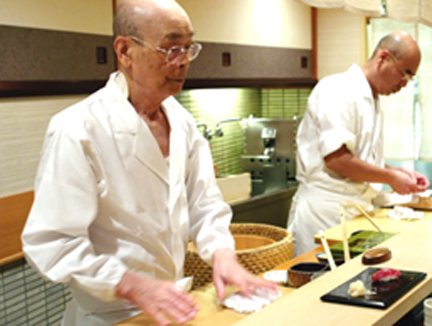
chef Jiro Ono, mastering the skill of making sushi

Marketing Starts with Service Quality

A chiropractic clinic once asked for help boosting patient numbers and improving their marketing. While we did touch on marketing strategies, the real game-changer was getting back to the basics—refining the way they practiced.

Each visit, we reviewed patient interactions, discussed specific cases, and role-played challenging scenarios. This hands-on, continuous learning approach helped the doctors improve their confidence and communication. The result? Within a few months, new patient numbers nearly doubled, and total visits increased by 50%, driven by better retention and reactivations.

When Business Slows Down, Go Back to the Fundamentals

If your numbers are dipping, the first step isn’t better marketing—it’s better service. Start with yourself and your team. Are you genuinely present with each patient? Do you “really” listen and connect?

One of the most successful doctors I worked with approached every patient with deep empathy and curiosity. She didn’t rush into treatment—she listened, observed, and connected both emotionally and physically. Her retention and referrals were outstanding.

On the other hand, her associate, while friendly, lacked that same depth of connection. As a result, her performance—and the clinic’s growth—suffered. Unfortunately, without proper training or mentorship, her skills never reached the necessary level.

Excellence Is Contagious

Great service isn’t just about the doctor. Every team member needs to be aligned in delivering exceptional care. It’s a group effort.

Consider sushi master “Jiro Ono”, whose small Tokyo restaurant had a waitlist over a year long. He dedicated his life to perfecting every element of sushi, constantly refining and improving. His commitment to excellence became his best marketing tool.

As Jiro said: “You must immerse yourself in your work. You have to fall in love with your work. That’s the secret of success.”

The Takeaway

Before pouring energy into marketing tactics, ask yourself: “Have I mastered my craft? Are my team and I truly delivering top-tier care?”

A good business, like a good restaurant, eventually fills itself up—because mastery, presence, and consistent quality attract people naturally.

Keep mastering your skill

Ed

The Cobbler’s Children Have No Shoes

shoe cobbler sitting with 4 children telling a story.Are Your Chiropractic Staff on Health Programs?

You may recall the proverb about the cobbler’s children not having shoes, which illustrates how people often neglect their own needs while helping others. This happens in various fields—like a laundromat where the employees wear dirty clothes or a car repair shop with poorly maintained cars.

Recently, many offices we work with have had staff missing work due to illness, which can be costly. As the saying goes, “An ounce of prevention is a pound of cure.” Health should be a core value for your team, something everyone strives for, not just a business mission. It should be like a fun quest—finding ways to get healthier.

Unfortunately, some teams aren’t on health programs or aren’t as informed as they could be. Your staff should be the healthiest and fittest in town, with strong immune systems and natural remedies to boost their health during flu season.

While taking care of patients is a priority, it’s equally important to focus on improving your own team. This includes training your employees to enhance their skills and knowledge of your services. A trained, motivated practice manager can support both your people and your practice.

If you’re interested in having someone trained as your manager, sign up for our waitlist, and I’ll send you details about the upcoming program starting March 31.

In the meantime, encourage your team to start their mornings with planks, Vitamin D, and green drinks—and maybe a little dancing!

Take care of your people, including yourself, and stay goal-driven.

Ed

Read the full article here [LINK]

Sign up for Waitlist

Overcoming the Barrier to Consistent Marketing

4 month marketing calendar The biggest challenge in marketing is inconsistency. There are a few key reasons for this:
  1. No one is in charge of marketing.
  2. Time constraints. Many businesses struggle to find time for marketing.
  3. Uncertainty about how to plan. It can be difficult to know where to start or how to structure marketing efforts.

The Community Education Program addresses these issues, drawing from the experience of managing over 20 offices in Wisconsin. This program provides a clear, actionable framework for marketing your services consistently.

Marketing Principle: Newton’s Third Law

Marketing works like Newton’s Third Law of Motion: for every action, there’s an equal and opposite reaction. This means that when you promote something, you will get a response. By setting up a monthly marketing plan in advance, you ensure something is always going out, even if you add extra activities later.

How the Community Education Program Works

  1. Project Manager: Assign someone (typically the marketing coordinator) to oversee marketing efforts, ensuring everyone is involved.
  2. Central Theme: Select a theme for the upcoming months, focusing on proven marketing tactics and common health concerns your services address.
  3. Targeted Promotions: Tailor your efforts to different groups:
    • Active Patients: Use word-of-mouth, posters, coupons, and workshops.
    • Inactive Patients: Reach out via newsletters and social media to re-engage them.
    • Community Referral Sources: Engage gyms, dentists, and other local professionals with emails, flyers, and direct contact.
    • Non-Patients: Use ads to attract new patients.

Example for a Chiropractic Practice

February: Neuropathy Awareness Month

  • Event: $29 screening exam and consultation.
  • Workshop: “Nature’s Remedies: Six Holistic Approaches to Easing Neuropathy” at your office and senior centers.

Marketing Channels:

  • Active Patients: Posters, coupons, word-of-mouth.
  • Inactive Patients: Success story newsletters.
  • External Referral Sources: Posters at senior healthcare facilities and workshops.
  • Advertising: Social media.

Fun Future Themes

  • March: Kids Health Month – “Leprechaun’s Health Month.”
  • April: Summer Fitness – Include a golf workshop.
  • May: Women’s Health – Focus on pregnancy and new baby care.
  • June: Back Pain Awareness Month.
  • July: Headache Awareness Month.
  • August: Athletics for Kids – Concussion prevention and recovery.

By planning monthly themes in advance, you can ensure consistent marketing, even if other programs are running throughout the year.

Marketing Principle: Quantum Physics

While Newtonian physics explains marketing’s action and reaction, Quantum Physics suggests that we are all connected and that our emotions and energy influence our outcomes. Stay positive, stay energized, and keep a good vibe in your marketing efforts!

Where Is Your Chiropractic Marketing Department?

two business women discussing marketing

Excellent Service in Your Chiropractic Practice is Marketing

Here is a little exercise that can boost your new patients and improve the quality of your patient care. And create a little more excitement in the practice in the bargain.

First, let’s review a couple of wise words about marketing:

1. Jay Levinson, from his book Guerrilla Marketing.

Marketing is everything you do to promote your business, from the moment you conceive of it to the point at which customers buy your product or service and begin to patronize your business on a regular basis. The key words to remember are everything and regular basis.

2. Peter Drucker, Management: Tasks, Responsibilities, Practices (p68)

Marketing is so basic that it cannot be considered a separate function (i.e.,a separate skill or work) within the business, on a par with others such as manufacturing or personnel. Marketing requires separate work, and a distinct group of activities. But it is, first, a central dimension of the entire business. … Concern and responsibility for marketing must, therefore, permeate all areas of the enterprise.

What Levinson says is that marketing is EVERYTHING you do consistently.

Drucker says that while there are specific marketing activities, marketing is too fundamental to have its own department. It is a “central dimension of the entire business.”

Yes, there are specific marketing activities to help your chiropractic and healthcare practice, some of which you delegate to advertisers, such as Internet marketers. Larger offices hire field representatives. I have hired and trained practice marketers who effectively generated new patients from external activities.

However, most of your practice marketing comes from the actions you and each team member take in the office. This is true in ANY business, but especially in chiropractic or smaller independent healthcare offices.

A common misconception is that some vague or distant marketing department or advertising company takes care of marketing and is not a “central dimension” to each person’s job.

Every position in your office has a marketing component. It comes with the role of a team member. Doctor, front desk, billing and patient accounts, therapy, rehab, and anyone who is on the team, is a marketer.

So, where is the marketing department? It’s your entire office! Here are a few marketing activities each team member can do:

  • Be genuinely interested in each patient.
  • Honestly care for how each patient is doing.
  • Do your very best with each patient with Present Time Consciousness.
  • When and if appropriate, invite your patient to bring in a family member or friend for a scheduled consultation or event.
  • Congratulate patients for any success.

Then, there is a list of specific marketing activities you can do: newsy newsletters, internal and external events to the office. You can find many of these suggestions on our blogs.

HEALTHCARE TEAM MEMBER MARKETING EXERCISE

In your team meeting, have each team member present at least two types of marketing actions they can do from their position every day.

Help them with this. If you have time, have your team practice their marketing procedure with each other.

As an added emphasis, consider that now that we are in the world of AI, real-life human interest and live communication is more valuable than ever. Believe it or not, one of your key marketing “niches” is just your plain ol’ non-hyped interest in the other person. Never fake that. In our ever-increasing sterile and digital world that is becoming more robotic, less human, and less spiritual each day, genuine human communication is more valuable than ever.

Don’t ask for where the marketing department is,

For it resides within thee!

Always selling health,

Ed

P.S. By the way, I left out telling jokes as a marketing action! One office up “nort” here in Wisconsin, I swear, generates new patients with the doctor’s Ole and Lena jokes! This may not be appropriate for your office though! (lol)

OLE AND LENA (A favorite!)

Ole and Lena got married.
After a beautiful ceremony and a fun but modest reception, they got in Ole’s car and headed out on their honeymoon.
When they reached Saint Paul, Ole put his hand on Lena’s knee.
Lena said, “Ole, we’re married now. You can go farder den dat.”
So Ole drove to Duluth.

========================

If your practice-building efforts aren’t taking you to your goals, there are reasons — many of which are hidden from you.

Find out what they are and how to sail to your next level by getting and implementing my book, The Goal Driven Business.

the goal driven business by edward petty

The Goal Driven Business
By Edward Petty

order now button

Use the Learning Pyramid for a Better ROI in Your Chiropractic Healthcare Practice

three generations of women cooking in a white kitchen

Don’t complain. Just train

“Over the long run, superior performance depends on superior learning.”
— Peter Senge

As the Clinic Director of your chiropractic and healthcare practice, you instinctively know that if you are not continually improving the service to your patients and potential patients, they will go to practices that are.

In fact, if you do not provide the BEST outcomes and service in your area, patients and potential patients will look for other practices that are the best, or at least better than you.

The BEST health care practice wins in the long run.

So, how do you get to be the best?

By constant improvement!

This was the concept the Japanese pushed in the 1970’s with their cars. They called it Kaizen.

Speaking of Japan, there was a study that showed how many hours employees trained over a 6-month period. Japan spent an average of 364 hours, Europe averaged 178, and the U.S. a paltry 42.* I discuss this more in my book, The Goal Driven Business. (pg 156)

The formula for improvement is simple: study and train.

The purpose and goal of training is improvement. This is why professional athletes and musicians constantly train. They do this for improvement and, ultimately, to bring about a good return on their investment.

Improvement has a definite ROI! A study by the Associate for Talent Development found that companies offering comprehensive training programs have 218% higher income per employee compared to those without formalized training.*

But what are the best methods for training — reading, listening, podcasts, seminars?

USING THE LEARNING PYRAMID TO TRAIN YOUR CHIROPRACTIC TEAM

The Learning Pyramid* illustrates the percentage of knowledge retained through various learning methods. Here are the typical percentages associated with each method:

  1. Lecture: 5%
  2. Reading: 10%
  3. Audio-Visual: 20%
  4. Demonstration: 30%
  5. Discussion: 50%
  6. Practice by Doing: 75%
  7. Teaching Others: 90%

This model emphasizes active participation in the learning process. Teaching others or practicing by doing, leads to higher knowledge retention rates compared to passive methods like listening to lectures or reading.

If you take your team to a seminar, do it for camaraderie and the sense of being part of something bigger. It can be motivational. But then, ensure that they take notes from one of the presentations and then teach it to the rest of the team at the next staff meeting.

Another angle is to have team members select a chapter from a book you all are reading (from your Lending Library!) and then have them teach it to the rest of the team a month later.

Train on your procedures every month. For example, you could demonstrate how you would like a patient to be positioned on a therapy table. (Get it recorded for future reference!) Then, have a staff member demonstrate the procedure back to you. You can also pair people and role-play the procedure. Do this for any of your office procedures. For those of you in group practices, doctors can practice their procedures.

BALANCING INFORMATION WITH PRACTICAL APPLICATION

The idea is that there are two sides to the learning coin: the information side and the practical application side. You can’t learn how to throw a fastball from reading a book. You must find a baseball and someone brave enough to catch your pitches and practice throwing hundreds of times. However, a book may have useful information on improving your throwing technique from those who have done it more than you.

It is best to go over the idea of training and improvement with your team first so they understand what you are doing and why.

Keep training fun. Your manager should ensure that training occurs every month.

And like Clarence Gonstead said:

“Practice. Practice. Practice. Never stop.”
“Our future will be our results.”

Keep training,

Ed

P.S. Who was Clarence Gonstead, D.C.

References:

ROI on training. An Evidence-Based Look at the ROI of Investing in Training (mentorgroup.us)

Clarence Gonstead https://www.gonstead.com/

The Learning Pyramid the learning pyramid – various percentages of retention. (thepeakperformancecenter.com)

========================

If your practice-building efforts aren’t taking you to your goals, there are reasons — many of which are hidden from you.

Find out what they are and how to sail to your next level by getting and implementing my book, The Goal Driven Business.

the goal driven business by edward petty

The Goal Driven Business
By Edward Petty

order now button

How to Make Better Use of Patient Reviews

goald driven healthy woman succeeding

In Chiropractic and Healthcare Clinics, Patient Reviews Are More Than Marketing

One of our chiropractic clients just sent me a patient review.

It expressed a profound improvement in the patient’s life. It was moving!

I am sure you have similar reviews.

Patient testimonials are useful in marketing and demonstrating your credibility. There is software that captures and encourages positive reviews, and you can just ask patients to write something about their wins. You can also record the patient talking about their health success in a short video. These can be included on your website, social media, and in your newsletter.

MORE THAN MARKETING

But testimonials and reviews are more than marketing.

FIRST, they are a personal statement sincerely expressed by your patient. Your patients courageously express their wins so other people can learn about them. They are standing up for themselves and the doctors and staff that helped them.

This is not a small thing — you should personally acknowledge any review you receive.

SECOND, you and your team may not always see or appreciate the outcomes of your combined work. Aside from providing clinical services, there is also scheduling, payments, note-taking, patient communication, and marketing. Plus, everyone shares a hundred other administrative tasks. All of this eventually results in a great result for your patient.

In college, one summer, I worked in a cannery. I was a “tray boy,” I put trays of empty cans on a stand and then took them off once the cans were filled with fruit (pineapple) from a conveyor belt that never stopped. That’s all I did. I never saw the completed canned products, their labeling, or even enjoyed eating them. I was basically a robot, a cog on an endless conveyor belt.

Similarly, team members can focus on their specialties and not always see the transformative results they are helping to create with patients. Work can become routine, just an assembly line that never ends.

LASTLY, the testimonial describes your WHY.

The idea of “Why” was popularized by Simon Sinek and his Ted Talk and posted on YouTube in 2009. He uses a 3 ringed circle to illustrate this idea.

the golden circle, how what and why by simon sinek

The outside circle describes WHAT the business does. The next inner circle describes HOW the business does what it does. And the innermost circle describes WHY the business does what it does.

“Every single person, every single organization on the planet knows what they do, 100 percent.

“Some know how they do it … But very, very few people or organizations know why they do what they do. And by “why” I don’t mean “to make a profit.” That’s a result. It’s always a result.

“By “why,” I mean: What’s your purpose? What’s your cause? What’s your belief? Why does your organization exist? Why do you get out of bed in the morning? And why should anyone care? … the inspired leaders and the inspired organizations — regardless of their size, regardless of their industry — all think, act and communicate from the inside out.” *

Everyone in your office, patients, staff, and perhaps people in your community, know WHAT you do. You provide health care. Some of your team members might know HOW you do it – what procedures you use and how they work for patients.

But to have a fully engaged and motivated team, and even a patient community, you need to keep connecting them to WHY the offices does what it does. And not just the office “mission statement,” but WHY this is your mission.

IN YOUR OFFICE

  1. Thank each patient for their review.

  2. Connect team members and their work with the clinic outcomes and patient successes.

  3. Connect everyone, including yourself, with the WHY of your services.

Ed

P.S. IN OUR OFFICE:

When the doctor sent me their patient’s review, I realized that, for all of us at Petty Michel & Associates and our Goal Driven Training, this was our WHY as well.

—————————————————-

If your practice building efforts aren’t taking you to your goals, there are reasons — many of which are hidden from you.

Find out what they are and how to sail to your next level by getting and implementing my book, The Goal Driven Business.

goal driven business www.goaldriven.com
The Goal Driven Business
By Edward Petty
goal driven business buy now button