Goal Driven Time Management Skills

chiropractic or small business time management skills calendar

You may delay, but time will not.
Benjamin Franklin

Time is your most precious resource.

How you use it makes all the difference in your progress toward your practice goals.

I still remember my father remarking on my 5th-grade report card. On the back of the card was a space for comments from the teacher. The comment was something about: “Edward would do better if he did less daydreaming.”

This “comment” has haunted me all my life. I daydream. I admit it. Sometimes, this is good – I learn something new. But the challenge is not wasting the time I need to complete projects.

Goal Driven time management procedures allow us to get more done during our day’s working hours. And even though we all are familiar with the principles and techniques of time management, it helps to review them occasionally.

Here are a few techniques I have learned from others that help me. Maybe they can help you too.

GOAL DRIVEN TIME MANAGEMENT PROCEDURES IN YOUR
CHIROPRACTIC HEALTHCARE PRACTICE

Breaks. Don’t feel guilty. We all need to take breaks — a short one every couple hours or so, longer ones every day, longer ones even still every week, and so on. Breaks are a physiological and mental requirement discussed in an insightful book called The Power of Full Engagement by Jim Loehr. Just schedule your breaks.

Scheduling blocks. As a chiropractor and health care provider, you naturally block off time periods to see patients. You can use the same concept for team meetings, individual conferences, and “paperwork.”

Goal Driven. Each time block should have a goal. The work you must do and the procedures you use should all focus on the desired outcomes.

No interruptions. As harsh as this may sound, unless there are emergencies, don’t allow yourself to be distracted during the block of time dedicated to doing your work. Schedule a brief period during the day to return to the unplanned issues.

Cluster booking. Schedule blocks of time for similar activities close together. The general idea is to keep you doing what you are doing until you are done. For example, seeing 3 patients and then waiting for 10 minutes before seeing 3 more slows you down and takes you out of the Flow. The idea of Flow is not new but recently refreshed by Mihaly Csikszentmihalyi in his book, FLOW. Flow is a mental experience when you are so lost in your work that nothing else matters – you are in the Zone. It is when you are “Lost in Service.”

Cluster booking can also be applied to other services: specific therapies or rehab, a Thursday morning for seniors, or a Mom’s Saturday morning with kids. Once you are in the Flow, you become more productive.

Prioritize: Take care of the Important and Urgent tasks as you must, of course. But do not neglect the Important but Not Urgent projects. This comes from Stephen Covey’s book, The 7 Habits of Highly Successful People, and Eisenhower before him. Covey notes that the more time spent on Important but Not Urgent projects, the less time needed for urgent matters.

Sort out the tasks – The 4 D’s. As you review your inbox or new tasks that come up, sort them along these guidelines:

  • Do them now.
  • Delegate them.
  • Delay them.
  • Dump them.

Many of these points, and others, are covered in my book, The Goal Driven Business. We also worked these over in our Practice MBA program.

Yes, I still daydream. I recommend it. But now, I just schedule it!

Seize your future,

Ed

—————————————————-

If your practice building efforts aren’t taking you to your goals, there are reasons — many of which are hidden from you.

Find out what they are and how to sail to your next level by getting and implementing my new book, The Goal Driven Business.

goal driven business building methodology

The Goal Driven Business,  By Edward Petty

goal driven business buy now button

Optimizing Chiropractic Front Desk Procedures for Patient Retention

patient reception in chiropractic office

What kind of check-in and check-out procedures do you have?

How you do these procedures can make an enormous difference in your patient retention, referrals and office visits.

Your health care front desk needs to schedule patients and collect their payments, but when should they do this – when the patient checks in — or leaves?

If your chiropractic practice is insurance-centric, the front desk can become an extension of the insurance department. When this is the case, collections and scheduling are often done first.

I have seen this occur in many offices.

I recently visited a practice office where patient retention had been declining. I noticed that the patients came in, stopped off at the front desk, made payments, and were confirmed for the next appointment. Then, they waited to see the doctor. After their adjustment and treatment, they often zoomed out of the office, headed to their next destination with an occasional “bye” from the front desk.

I thought there were several weaknesses to this approach, but I wanted to see what other successful practices were doing. We asked other practice managers how they handled their check-ins and check-outs.

Chiropractic Manager Surveys

One manager from an established 2-doctor chiropractic office said:

“We have a check-in/check-out system but scheduling and payments are done together at check-out. This works better for our office flow. The patient walks in, heads right on back and grabs a table for their appt, unless they have an exam or something similar that we need to take them into a different room. Then when they check out, they schedule their next appt, or several future appts at once, and we collect payment if they owe anything.”

Another manager of an office with multiple doctors said they preferred to collect patients’ payments and update their scheduling when the patient checked out.

  1. You give them the feel that their care is more important than the money.
  2. The last thing they hear when they leave the office is ” we’ll see you on such and such a day at such and such a time”! “And by the way bring your kids in.”
  3. What happens if their services are more or less than what you collected for??? Now you have to alter their charges.
  4. If you have pre-scheduled them and they need additional or less services you are now going to have to change the scheduling.
  5. #3-4 causes confusion and messy records.”

I think this only makes sense. Let’s zoom in:

The check-in. The front desk needs to be welcoming to your patients who endured challenges just to make it into your office that day. This is a win for everyone, and the initial greeting acknowledges the patient’s effort to make it in. Then, any and every barrier should be removed to get the patient back to see their doctor and provider on time.

The check-out. Here are a few vital transactions that can take place:

  • Validating the benefit of their recent adjustment and treatment. “So glad you made it in today for your care. Every visit helps and builds on the last one.”
  • Confirm their schedule, or schedule them for the next month, or longer.
  • Go over any payments that might be needed.
  • Quality control. Should the patient mention any doubts or concerns, the front desk can either direct the patient to the doctor for a fast consultation, or to Patient Accounts, if there is a finance concern, or note it to be addressed on their next visit.
  • Marketing. Encourage the patient to schedule an appointment for a family member or friend to come in for a no-charge consult or an upcoming event, such as a new patient lecture or special promotion.

Every office is different and you should always customize procedures to best suit your situation.

But, the following applies in all cases:

  • Your patients are your guests. You invited them.
  • Treat them as you would a friend visiting your home — with a warm welcome and then, when they leave, a thank you for coming and a sincere wish to see them again soon.

Keeping the goals in mind,

Ed

—————————————————-

If your practice building efforts aren’t taking you to your goals, there are reasons — many of which are hidden from you.

Find out what they are and how to sail to your next level by getting and implementing my new book, The Goal Driven Business.

goal driven business building methodology

The Goal Driven Business,  By Edward Petty

goal driven business buy now button


Build a Better Chiropractic and Healthcare Practice by Serving Kids

How and Why to Develop Your Chiropractic and Healthcare Pediatric Practice

Anyone who does anything to help a child in his life is a hero! – Fred Rogers

Last week I talked about the importance of caring for our children’s health.

Not only is it needed like never before, but the evidence is clear: chiropractic helps kids. For example, one study in 2019 of 2001 mothers showed that 82% reported definite improvement of their infants, and 95% reported feeling that the care was
cost-effective. *

The evidence is out there, and even more, so is the personal testimony of so many grateful parents.

But in addition, promoting better health for children in a chiropractic or independent healthcare practice can create positive effects on generating new patients and retaining existing ones.

Regardless of the demographics or niche of your practice, including care for kids can enhance your practice and attract new patients.

Here are some suggestions on how and why to do so:

1. Family-centered care. Emphasizing pediatric care creates a family-friendly image for your practice. Parents are more likely to choose a healthcare provider who can address the health needs of their entire family, including children.

2. Community engagement. Engaging with the local community through educational workshops, seminars, or events focused on children’s health can position your practice as a community leader. This involvement helps raise awareness about your services and can attract families seeking comprehensive healthcare.

3. Word of mouth referrals. Happy and satisfied parents are likely to recommend your practice to other families. Positive word-of-mouth referrals from parents who appreciate your focus on children’s health can improve new patient acquisition.

4. Specialized services for children. Offering specialized services or programs tailored for children’s health needs can set your practice apart. This could include services for issues such as:

o Posture

o Sports injuries

o Musculoskeletal development

o And other concerns, such as earaches, bedwetting and issues from toddler tumbles!

5. Educational Content. Share educational content on your website, social media, or through newsletters that focus on children’s health and wellness. Most people just don’t know how effective chiropractic can be for children. By providing valuable information, testimonials, and case studies, you position your practice as an authoritative source and can attract parents seeking reliable healthcare information for their children.

6. Collaborate with schools, daycares, and mother’s groups. Partnering with local schools, daycares, or community organizations to provide health screenings, workshops, or informational sessions for parents can create valuable connections and increase visibility in the community.

You might consider tying a kid’s promotion with a monthly observe or holiday. Each promotion could include a posture check or a free screening. For example:

  • February 7th is National Girls and Women in Sports Day. Provide a special screening for girls in sports, or a workshop from a local athletic coach and yourself.
  • March 17 is St Patrick’s Day. This is a great time to have a Leprechaun Appreciation Day. Bring the kids in for a screening and provide contests.
  • April is Foot Health Month. For those of you that provide orthotics, you can have a foot scan.
  • May. May is National Correct Posture Month. Offer posture screenings for the entire family.

There are many possibilities, and these are just a few. Work with your team and have your marketing assistant put together a plan for this spring.

And if you don’t have a marketing assistant or manager, you should! Please contact me and I can give you some ideas on how to develop this essential position.

Carpe Deum,

Ed

References:

*Maternal Report of Outcomes of Chiropractic Care for Infants: https://www.sciencedirect.com/science/article/abs/pii/S0161475418301453

Pediatric and Prenatal Chiropractic Research
https://icpa4kids.com/research/

https://nationaltoday.com/national-girls-and-women-sports-day/

How is Your Chiropractic Head Game?

chiropractic goal driven to strike out batters.

The Hidden Game of Practice Success
‘Baseball is 90 percent mental. The other half is physical’ – Yogi Berra

Hello Sports Fans!

For my 13-year grandson’s birthday, I bought him a book on sports: Ninety Percent Mental: An All-Star Turned Mental Skills Coach Reveals the Hidden Game of Baseball by Bob Tewsksbury.

I haven’t finished reading the book, but I know the subject – how the mind affects performance. I figure any tips I can give to my grandkids, the better chance they will have.

And I figure this also applies to myself, and perhaps to you.

In my book, The Goal Driven Business, I cover the 5 Engines to practice success. These are:

  1. Clinical outcomes and service
  2. Leadership
  3. Management
  4. Marketing
  5. Personal Power

No matter how competent you are as a chiropractic doctor, healthcare provider, or business owner, how inspiring you are as a leader, how consistent and enterprising you are as a manager, or intelligent as a marketer… if you don’t have the positive energy to make things happen, your practice will falter.

Personal Power is the “Hidden Game” of practice success.

The first chiropractor Dave and I worked with had multiple doctors and together saw over 2,000 visits per week. (I still have the stats!) A recurring theme he would tell his associates was that practice success was an “inside job.” This meant success was dependent upon their mental attitude.

But one’s mental attitude is dependent upon something much deeper. You can always “fake it till you make it,” which might sometimes be necessary. But it is not authentic.

What is authentic is your happiness. Happiness underlies your mental attitude. Your Personal Power comes out when you are happier.

So, how do you become happier?

Using Your Signature Strengths In Your Chiropractic and Healthcare Practice

One method that has been proven to improve a person’s happiness is to focus on your strengths – what you are good at – and less on what you are not so good at.

Martin Seligman, Ph.D., is a strong proponent of Positive Psychology. In his book Authentic Happiness, he discusses common virtues that all people in all cultures have agreed upon over time. These virtues can be translated into specific Character Strengths. Each of these strengths has 3-5 subcategories for a total of 24-Character Strengths.

We all have a different set of more dominant strengths, which Seligman calls our Signature Strengths. For example, one person may be strong in humor, gratitude, and fairness, while another person’s Signature Strengths could be creativity, curiosity, and gratitude.

“I do not believe that you should devote overly much effort to correct your weaknesses. Rather, I believe that the highest success in living and the deepest emotional satisfaction comes from building and using your signature strengths.”

I cover this in practical detail in my book, The Goal Driven Business, and it is part of our upcoming Management and Leadership Training course, our 11-week intensive training especially for practice managers beginning on Sept. 18.

We all have our confusions and apprehensions — our mental monkeys that get in the way of our happiness and limit our Personal Power. You see this in your patients and staff, and I am sure you notice it now and then in yourself.

But a legitimate goal is to be happy, and in so doing, you can unleash your power and win at the “Hidden Game” of practice success.

By focusing on what you do best, and allowing your team to pick up all the rest, you can go a long way at winning the “Hidden Game” of practice development.

Having your team pick up “all the rest” requires good management. So I recommend you consider our Management and Leadership training for your manager this Sept.

Stay strong in your strengths,

Ed

You can take a survey and discover your Signature Strengths at
www.viacharacter.org

For more information about our Management and Leadership Training. www.GoalDriven.com/mba

Image: Wikipedia

Tribal Knowledge Can Improve Your Practice

teams, management, chiropractic, knowledge

Mining the Underground Innate Knowledge of Your Team

You may not have run into this term before… maybe you have. It was new to me before I began putting together the notes for The Goal Driven Business.

In any case, it is a concept worth knowing and one you can use to improve your business. I’ll give you an example and then define it.

It was spring years ago, and I was meeting with a motivated practice owner who was already doing well. We were discussing marketing plans for the next several months, and some of our programs ended in June. We needed something that would work for July. So I said, “Why don’t we ask the staff for some ideas?”

We were scheduled for a team meeting anyway, which I attended. After the usual topics were covered, the doctor asked the staff for some ideas for marketing in July. Now, the doctor was relatively new to the community, and the team was long-time residents. Various ideas were thrown around, and one seemed to percolate and draw enthusiasm from the staff. A popular promotion that they had experienced as local consumers in their town was “Christmas in July.” Since their community was familiar with this promotion, they were sure it would work well if it were tied to a patient referral program.

Both the doctor and I thought it was a dumb idea. However, the staff was already in high gear planning the promotion by the end of the staff meeting. I suggested to the doctor that he let them run with it. He did, and as it turned out, it was a big hit. They had one of their best new patient and office visit months ever… in July.

At another office, some years later, I was helping the doctor work out her mission statement for the practice. She and her associate were hitting speed bumps trying to come up with a simple definition. I recommended putting it to the staff to see what they might come up with. At the next team meeting, the doctor discussed the idea of a global statement for the WHY of the office and its higher goals and asked them if they could work it out as an office mission by next week.

And that is what they did. The following week, the manager and staff presented the mission statement to the doctors. The doctor emailed it to me.

I didn’t really like it as it was long and too mushy, at least for me. But the doctor approved it and posted it in the reception area. The staff loved it. It fit their compassionate attitudes towards the patients and captured their existing relationship with them. They memorized it, and it was recited after every staff meeting. Their stats haven’t come down since. They are a happy and Goal Driven group!

In our consulting, we routinely encouraged the wisdom of veteran staff to be integrated into the management and marketing of the office. We didn’t have a definition for this knowledge, but it was effective nonetheless.

Here is the definition of Tribal Knowledge according to Leonard Bertain in his book, The Tribal Knowledge Paradox:

Tribal knowledge is the collective wisdom of the organization. It is the sum of the knowledge. It is the knowledge used to deliver, to support or to develop value for customers. But it is also knowledge that is wrong, imprecise and useless. It is knowledge of the informal power structure and process, or how things really work and how they ought to. … But more importantly, it is the untapped knowledge that remains unused or abused.

There is much more to this, of course. A valuable management and leadership skill is how to elicit tribal knowledge, decipher it, filter the practical from the impractical, and put it to use.

I try to keep these newsletters as short as possible. If you want to set up a time to discuss this subject more, just make an appointment (link below). No charge for subscribers to this newsletter.

Not everything can be put on job checklists. Job checklists are very useful, but there is a wealth of knowledge just under the surface with your team, even your spouse, that can be accessed and put to good use.

By creating a culture where it is safe to contribute learned experiences in team meetings, coaching sessions, and other opportunities, improvements in your practice can be made faster.

Seeking and honoring the tribal knowledge gained from the experience of your team respects them, whether the information is useful or not. This is the essence of creating a synergistic office – where team members help each other — to help more people become healthier.

Carpe Future (Seize the future)

Ed

Want to discuss how to uncover the Tribal Knowledge in your practice, schedule a short call with Ed here.

She Wanted to Teach Chiropractic Staff

Greater Prosperity through Goals, Leadership, and Teaching.

woman teaching to a crowdEffective leaders are, first and foremost, good teachers.

We’re in the education business. — John Wooden

Greater Prosperity through Goals, Leadership, and Teaching

A highly productive and prosperous chiropractic clinic always has a goal driven team for support.

Motivation is directly linked to goals and leadership. When anyone pushes their way towards their goals, they are leaders. And one of the primary methods of leading is through teaching.

This is how you lead your patients to their health goals – you educate them at the initial report, the progress report, and each visit where you Table Talk!

In a Goal Driven Practice, eventually, everyone takes a leadership role. And leaders teach.

Teaching, in and of itself, is motivational.

She Wanted to Teach

I will never forget an outstanding example of this, though disappointing in some ways.

One of our clients hired a woman to be his office manager. She had big goals while working at another chiropractic office but was not encouraged to pursue them. So, she found an office, one that we worked with, where the doctor supported her mission.

She was a powerhouse on the front desk, but also worked with the staff and the doctor on improvement projects. She told him that she would work with him for one year, and if the numbers reached a certain level, she would replace herself, receive a substantial bonus, and move on. However, she had a bigger goal in mind. She wanted to begin a team training program for other chiropractic staff throughout the state.

We worked together on this plan for the entire year. The office was already busy and doing well. But after she started, we saw the volume increase significantly. She was a great team trainer, and after a year, she won her first game. The numbers increased on a sustained basis by over 20%. The owner was very pleased.

The disappointment occurred when she visited doctors around the state to encourage them to have their staff train with her. She also promoted her services to the state association. The reception in all cases was mild. She could not convince the doctors or the association of the advantages of having their staff on a professional training program.

She eventually took a high-paying position at a corporation in another state.

Teaching is Leading

As the chiropractor, and the Clinic Director, you are a leader – and a teacher.

In a Goal Driven Practice, you also want each team member to be a leader. The fact is, in their own way, they want to be leaders. Maybe not on the stage or in front of an orchestra, but leading by actively pushing their way to their goals and the office’s goals as well.

Each one of your team members has professional and personal goals. Just like you do. These goals should align with the goals of the office. You can help to unleash the power of these goals, for yourself, and for each team member, in the following ways:

1. Accept the fact that pursuing goals is leadership. And a function of leadership is teaching.

2. Do your own in-office seminars. Teach your team how to achieve the goals of the office, and especially, why.

3. Meet with each team member and help them write down their professional and, optionally, their personal goals. Then, help them achieve these goals.

4. Have them teach. For example:

a. At occasional staff meetings, one team member can give a presentation on some aspect of their job, a core value of the office, or a chapter in a book or a video.

b. In one year (or two) after they are hired, require all staff to help you give the first half of a lay lecture.

A Goal Driven Practice is not dependent upon the doctor. Instead, it is dependent upon goals and, as such, is more profitable, provides better service, and is more fun to work in.

Seize the future and your goals,

Ed

Contact us on the link below if you are interested in discussing how we can help you create a Goal Driven Practice.

Also, read my book! 😊

*https://www.expressionsofexcellence.com/ARTICLES/wooden_interview.html

Contact Us

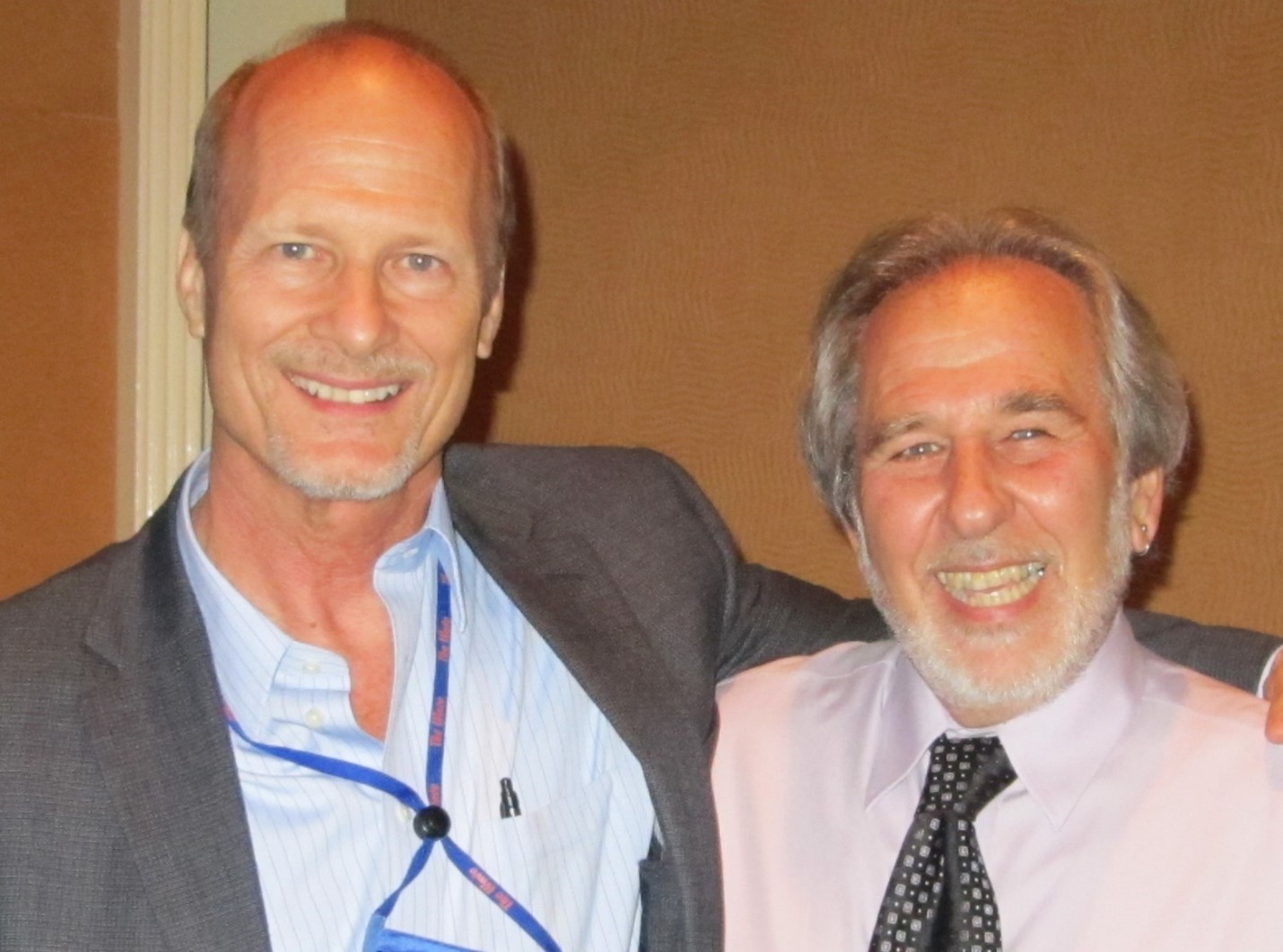
Bruce Lipton and Physician Health Thyself

Edward Petty with Bruce Lipton, PhD GoalDriven.com petty Michel and associates

Edward Petty with Bruce Lipton, PhD – GoalDriven.com – Petty Michel and Associates

Why doctors should stay Innately positive and healthy

Chiropractic is more than a mechanical act to improve a patient’s health.

I remember years ago attending a Parker seminar when Dr. Jimmy was still alive and seeing a large drawing describing “Innate to Innate.” A concept I believe he may have learned from Thurmond Fleet who developed Concept Therapy.

Bruce Lipton, PhD, is a cellular biologist, has taught at University Wisconsin Medical school, at Stanford, as well as Life Chiropractic College West. I have heard him speak on several occasions, read his books (Biology of Belief) and consulted with him personally about my book (The Goal Driven Business.)

I think Dr. Lipton expresses the concept of Innate scientifically:

There’s a concept in quantum physics called “entanglement,” which is when one energy source entangles with another so that they interfere with each other. This interference can be positive and harmonious, as with energy healing, or it can be negative.

Physicist Amit Goswami published an article in a physics journal showing that entanglement affects people. He had two people meditate together and then separated them into two chambers where they couldn’t see or hear one another. When one person had a light strobed by his eye, it caused the firing of a certain frequency in the brain. Remarkably, at the same moment, the other person’s brain also fired, even though he never saw the light. This proves what we intuitively knew, that the energies of people can affect one another.

What Goswami’s study demonstrated is that when two people become entangled, one person will conform to the energy of the other person. When one of them is a healer whose cells are vibrating at a higher level, the client’s cells become entangled, and their energy is lifted. That’s why that old saying, “physician heal thyself,” is so important, even though most don’t understand it: If the physician’s energy is going to influence or, in scientific terms, “entrain” the patient’s, the doctor’s must be higher. (source on blog)

I have seen examples of this in many of my office visits over the years. You might have an interesting discussion with your staff at a team meeting about how the “vibes” of the office affect the patients.

Has anyone pulled a patient file and the patient suddenly called? Have you ever had a great team meeting the phones start to ring? Have you seen a patient improve just because you felt connected to them?

So, please stay healthy and stay positive, in alignment with your greater purposes and greater powers.

And pass it on.

😊

Ed

Lipton: https://www.huffpost.com/entry/healing-over-the-phone_b_1011510


The Future

It is a peculiarity of man that he can only live by looking to the future.
(Viktor Frankl)

Traditionally, the first of any New Year is an excellent time to take stock of the prior year and make plans for the year to come.

Goals

In business, there are two (three, but for now, we will look at two) types of goals for your business:

  • Production Goals
  • Organization Goals

Setting production goals for where you want to be 12 months from now is the easy part of goal setting. The hard part is working out the organizational support you will need to achieve your production and collections goals. It could be more than you think!

But keep this in mind:

chiropractic and your services are never the primary barriers to practice success.

It is always management. It is the administrative issues connected with organization, including marketing, that gum up the work, gets in the way, slows your business down and holds you back.

Motivation

Part of management is managing your motivation. Yep… motivation needs to be managed. Keeping your spirits high and your drive strong is necessary for an organization to flow.

And this takes us back to your goals.

Visualizing achieving your goals will stimulate your motivation – and your drive. If you can’t see any way to your goals, well, that can be depressing. But if you can… if you can envision accomplishing your future goals, you will be motivated.

Viktor Frankl

I reference Viktor Frankl in my book, The Goal Driven Business.
Speaking of his experience in a concentration camp, “As we said before, any attempt to restore a man’s inner strength in the camp had first to succeed in showing him some future goal…”

He also said, “Even when it is not fully attained, we become better by striving for a higher goal.”

For your goal setting for the New Year, I recommend you start with your higher goals, the 3rd type of goal, which are beyond production and organization. For example, what brings you bliss? What gives you meaning?

  • Time with family and friends?
  • More vacations to more interesting places?
  • Going for the WIN of your best production and collections year ever?
  • Building a church?
  • Getting a diplomate in nutrition?
  • Improving patient outcomes?
  • Speaking out about health issues more?

Begin with these goals – the higher, wilder, richer ones. Then, look at your production goals, then your organizational goals.

I encourage you to dream just a bit and look at next year as your playground. What higher, richer, and wilder adventures would you like to accomplish?

Have some fun considering these types of goals and all the ways you would like to achieve them. This will add zest and a special spirit to your production and organizational goals.

Help with Your Future

We want to help you with your future. Your work is important, and helping you achieve your goals has been a driving force and a higher goal within our company for over 30 years.

For 2023, we have a few openings for our Private Client status on our Goal Driven Program.

If you are interested in working with us, please reply to this email, and we will schedule a time to talk.

All of us at Petty Michel & Associates want to help you achieve your goals in 2023

Seize the Future! (Carpe Future)

Happy New Year

Ed

Reference. More information on this is covered in sections in The Goal Driven Business, starting at page 19 and page 116.

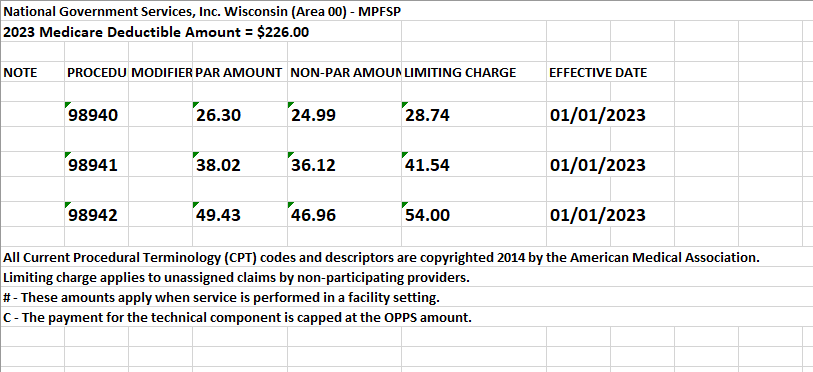
2023 Medicare Fee Schedule

Shown below is information regarding the 2023 Medicare Fee Schedule for Wisconsin Providers only provided by NGS Services and also a link to  CMS.gov for fee schedules in other states.

Wisconsin Providers:  Here is the 2023 Medicare Fee Schedule for your perusal.  Please make this accessible to you and your staff.


Practice Fundamentals – Communication and Control

“Get the fundamentals down and the level of everything you do will rise.”
— Michael Jordan

It’s always the basics. The fundamentals.

This is what all efforts to improve performance – and health — go back to.

All of your efforts in practice management boil down to communication and control.

All the books on procedures, patient management, and practice management can be distilled down to communication and control. Those are the basics you need to get to your goals and those of your patients.

  • Doctors, and staff, that have excellent communication with their patients have many referrals and a busy practice.
  • Doctors who communicate well with their staff have a happy and full practice.
  • Doctors that have positive control with their patients see their patients succeed.
  • And business owners that have proactive control over the office – are prosperous.

Of course, the inverse of these facts is also true. Whether out of fear, confusion, or fatigue, when these fundamentals are not administered, things don’t go well.

Communication

I was recently helping a doctor and the practice manager improve their patient financial consultations. The manager and doctor had worked out what to say that they liked. They called it a “script.”

A few months passed, and I noticed their patient retention had not improved. Neither had collections or other metrics. When we did some training on how the patient consultations were performed, we found that the staff focused on the memorized script, not the patient. Their communication was robotic, and they never got to know the patient. We replaced the script with a simple outline and let the staff get to know the patients. Visit average and collections improved.

Good communication is alive, interested, and empathetic. It results in understanding.

Control

Another office we worked with complained about low collections. They had plenty of new patients — the veteran doctor got great results. After investigating, we found that the report of findings and treatment plans were rarely completed, and scheduling was hit-and-miss at best.

And that’s not all. The doctor and staff often came to work just a few minutes before patients came in. Sometimes they came in late.

This office was out of control — and so were the patients.

Positive control is moving a project, patient, or condition from one status to a predetermined goal. This is what a procedure does. A well-run business has procedures, protocols, and systems that it adheres to achieve its daily and weekly goals.

Management

Management is implementing effective procedures, with excellent communication, to achieve goals.

In all your practice improvement efforts, check first if the procedures are being done, and then if they need to be improved or removed. Then, look at the quality and quantity of communication used to implement the procedures.

Improve the fundamentals — your patient and team communication and control — and you will have a prosperous and happy 2023.

Seize your future – with a smile!

Ed

Grateful for the Future

Gratitude is not only the greatest of virtues, but the parent of all others.


(Cicero, Prolancio, 100 BC)

As many of us in the U.S. prepare for our annual Thanksgiving events, I wanted to offer a short perspective.

Daily events challenge us, and we struggle to deal with them as best as we can. Events in our offices as well as in our communities, country, and the world can be daunting.

So, it helps to pause, more often than we do, and appreciate the advantages we have from those who have come before us. Likewise, to be grateful for the people we know: our family, friends, and those with whom we work. And, of course, our patients. In small ways and large, we all help each other.

But I also want to mention our future and the opportunity it gives us all.

As we move through the Holidays and winter sets in up here in the Northern Hemisphere, the New Year comes at us again too soon. We live in uncertain times, but as business owners and health mavericks, now is not the time to hunker down as if to hibernate and hope that any storms that occur may pass us by.

They won’t. But we can prepare and seize the opportunities that lie ahead.

Forward-minded entrepreneurs always find a few new approaches to making things better while many business owners remain on the sidelines, wary of jumping into the game and fully committing.

The future offers us the opportunity to play and enjoy the thrill of creatively making a difference, however difficult.

So, enjoy the Holidays, and all those close to you, near and far, in the present and respects to those who have passed. Take time to nourish yourself and those around you. There truly is much to be thankful for!

But while doing so, also appreciate the freedom we all have to make a better practice and a better life in the years to come.

Seize the Day and Seize the Future. (Carpe Diem, Carpe Futurum)

With Gratitude for all you do,

Ed, and all of us at Petty Michel

Chiropractic Patient Education Prompters – Table Talk Grows Your Flock

Imagine this scenario:

Written on a white board near the chiropractic patient adjusting area:

Last to show and the first to go.

Patient: Hey Doc, what does that mean, written on the white board there?

Doctor: Hi Sam, glad you asked. Just a reminder for me to explain that pain usually shows up after a health problem is present for a period of time, and usually goes away or lessens during the early part of our program of care. In other words, the pain can go away but the issue that caused it can still be present.

Patient: Oh, I got you! So, even though I am feeling much better, I better stick with the program, is that it?

Doc. Yep!

===

You know patient education is important. It improves outcomes. It improves retention. It improves referrals.

This is a simple procedure to improve your patient education: Assign a creative staff member the task of writing images or sayings that prompt the patient, or prompt you, to talk about a health subject. That’s it!

It prompts TABLE TALK.

Table talk is the BEST form of patient education and, for that matter, promotion. It comes from you, the doctor, during the most transformative time in your office.

Here are a few sample subjects you could post on a white board near your adjusting table:

  • How does chiropractic work?
  • Above Down Inside Out
  • Dr. You
  • Does chiropractic help with headaches?
  • Last to Show First to Go
  • Time, Repetition, Effort! [It takes time to restore your health, it has taken a long time for you to get into this condition. It takes repetitive work, like orthodontics. We will give you our best effort, you will have to do the same,]

Add a drawing now and then:

  • How is pain like an iceberg? (Draw an iceberg. [Iceberg Symptoms on top of the water, cause below in the water.]
  • How is spinal health like a rusty hinge? [This is when your vertebrae wears away when it becomes stuck.]
  • What happens to your tires when they are out of alignment? [Disks wear out faster like tires out of alignment.
  • Car Parked a garden hose. [When the hose is stepped on or kinked the water does not flow 100%. The same is true when you have a subluxation and your nerves are impinged. This affects everything your nerves are connected to.]
  • Safety Pin.
  • Orthodontics.

Just so you don’t get too serious, add a joke now and then:

  • I had to turn down the landscape company today…

****They wanted too mulch

  • The bartender says “Sorry, we don’t serve time travelers in here.”

****A time traveler walks into a bar.

===

This procedure doesn’t cost you. Like chiropractic (or our consulting!), it pays!

But only do it for two months at a time, otherwise it will lose its novelty for you, the staff, and patients. Run it 2- 3 times each year.

Once a month, meet with your team and come up with some new patient education prompters. This is also another way to educate your team in the process.

Keep the conversation going.

The more they know, the further they’ll go.

And seize the future.

Ed

Reactivation: Fast, easy, and healthful promotion.

This promotion has rarely failed. It is simple, fast, and not gimmicky. It is aimed at patients who have not been in for a while.

Patients drift off, and life gets in the way, but your patients still know you, like you, and trust you. And, like all of us, they could now use a nudge to improve their health.

So why not send them a personal letter? In your own words, tell them to get their rear back in here so they can stay in the best of health for the winter months.

Special promotions work best if they are linked to a genuine cause. In this case, the cause is National Chiropractic Month and also the fact that you have a sincere desire to ensure that people you have seen in the past continue to do well.

Special promotions also have an offer. It could be a free service or a discounted service, or the fact that your payment will serve as a donation to a worthy charity. It could also just be special Halloween organic pumpkin cupcakes from your local bakery (give the business a plug for a discount!) when they come in.

Make the offer for the entire month of October, or perhaps just for the last week.

Headline the letter with something like

It’s Chiropractic Checkup Time

October is National Chiropractic Month

You can then, for example, use your own words to say:

Our records indicate that you may not have been in to see us for a while. If that is the case, I’d (for multiple doctors – we’d) love to see you and like to offer you…[your offer.]

Remember, postural and spinal problems are often present long before any pain occurs. Therefore, getting a periodic chiropractic exam is good health insurance to ensure you remain healthy. Chiropractic is great for helping with back pain, headaches, arm and leg pain, and many other problems.

But even if you aren’t experiencing pain now, don’t wait until you have a problem. I sincerely believe the old saying, “An ounce of prevention is worth a pound of cure.”

You can also encourage them to make appointments for their family and friends.

Even if you have all the patients you can handle, this is still a good reminder for those you have seen to stay healthy.

Because that is their goal as well as yours.

Seize the future,

Ed

Going Public or Going Purpose

Be like a juvenile delinquent!

The chiropractic model for care follows three main stages, according to many patient educational articles. These are 1) Relief, 2) Correction and 3) Maintenance and Wellness.

I am sure it could be nuanced into other levels or worded differently, but these three make sense to me — so much that it inspired me to write a book – The Goal Driven Business.

But I had another inspiration.

I read a book about a young French-Canadian rock climber who lived in Southern California and was not finding the equipment he needed. So, he became a blacksmith and started making his own. In the late 1950s and ’60s, he started the Chouinard Equipment Co and made climbing gear for other climbers. He also wanted better outdoor gear, and so founded Patagonia, a clothing company.

The name of the book was Let My People Go Surfing. It was by Yvonne Chouinard and tells the story of how he grew Patagonia.

Patagonia, now a 50-year-old company, has done very well financially. It has also done very well for the quality of its products and services and its employees. But it is also driven by the goal of making Earth healthier.

Patagonia demonstrates three goals I believe every business has: 1) profit, 2) expert service and people, and 3) higher purpose. In my book, I reference examples of how the best companies focus, knowingly or unknowingly, on these three goals.

The best offices I have worked with over the years have also been committed to these three goals. They cared about providing the best service to their patients, but also to their staff. They were committed to helping as many people as possible be healthier. And, of course, they insisted on profits.

Chouinard, with his family, own Patagonia.

That is until this month. Valued at 3 billion dollars, Chouinard announced that they are giving the company away. He could have sold it to … Amazon, for example, or they could have made it a public company. Instead, he donated it to a fund called the Patagonia Purpose Trust. He says, “Earth is now our only shareholder.”

“Instead of “going public,” you could say we’re “going purpose.” Instead of extracting value from nature and transforming it into wealth for investors, we’ll use the wealth Patagonia creates to protect the source of all wealth.”

I encourage you to look into Chouinard’s lessons on business, which he acquired through trial and error as we do! I have some links over on the blog (see below.) There are many business lessons to learn by studying the trials of other business owners in different types of businesses.

But I guarantee you that if you commit to these three goals, in the long run, just like with your patients, your business and your life will thrive.

And one other note!

I think ol’ Yvonne would have been a natural chiropractor. He reminds me of you guys. In an interview in 2017, he says:

“One of my favorite quotes is if you want to understand entrepreneurs, study the juvenile delinquent because they’re saying, you know, this sucks. I’m gonna do it my own way. And that’s what the entrepreneur does. They just say this is wrong. I’m gonna do it this other way. And that’s the fun part of business actually.”

So, have fun, and seize the future,

Ed

For links and other references, go to our blog here: Goal Driven

Ed Petty in front of Chouinard Equipment Company, Ventura California


Patagonia home page
https://www.patagonia.com/home/

Interview with Chouindard
https://www.npr.org/2018/02/06/572558864/patagonia-yvon-chouinard

News articles
https://www.reddit.com/r/climbing/comments/xebzib/yvon_chouinard_gives_patagonia_to_charitable/

https://www.inc.com/yvon-chouinard/patagonia-ceo-let-my-people-go-surfing-why-company-mission-is-not-profit.html

Book
https://www.barnesandnoble.com/w/let-my-people-go-surfing-yvon-chouinard/1124064053?ean=9780143109679

Are You Ready For Flu Season?

Are ready for flu season?

Big Pharma is.

If you haven’t seen the ads yet, you will soon. And so will your patients and potential patients.

It’s just business. “The global influenza vaccine market size was valued at USD 7.02 billion in 2021. The market is projected to grow from USD 7.54 billion in 2022 to USD 13.58 billion by 2029.” (Market Research Report, Fortune Business Insights, Sept 2022)

So, what does this have to do with practice and business development?

Your Unique Selling Proposition

In a practical sense, you are the uncola of the cola healthcare world.

You are health doctors – not disease doctors or drug doctors. However you want to frame it, you can define what you do as different than the pharmaceutical alternatives in such a way that you stand out from the crowd.

Remember, it is not necessarily what you do that counts. It’s what you stand for.

You stand for natural health. As Simon Sinek reminds us, “People don’t buy what you do; they buy why you do it. And what you do simply proves what you believe.”

Better Service and Better Health

In my book, the Goal Driven Business, I reference how consumers want more information about their services and products. Especially in this age of abundant and ready information. Patient education is not a chore, it is a service that, if it is well presented, patients appreciate.

But even more, you know about the immune system and what improves it. But natural approaches to boosting the immune system are not emphasized by the medical “information” that is promoted and posted. But you know better: adjustments, exercise, vitamin D, C, and all the rest. Acupuncture too!

It does take a little more time to educate your patients and community. But think of it as a clinical service that makes you unique and special. Think of it also as a marketing expense.

Pride and Purpose

There might be another reason to educate your community on natural approaches to viruses, one that is more personal.

You might feel that your patients and neighbors are being misled and that vital information is being kept from them. You may want to right this wrong!

And lest anyone tries to reframe you as unscientific, the leading cause of death is errors in medicine.(2)

So… the Flu Season is on its way. Go for it!

Enter the race and position yourself and your team as the good guys, the Natural Health Clinic that gets results. And by the way, don’t overlook that you all need to practice what you preach!

There is a very large portion of the population that is seeking a more natural lifestyle. Google search terms show strong interest in natural remedies. You will appeal to them — they are just looking for a health-oriented team to help them maintain and improve their healthy lifestyle.

Seize Your Future,

Ed

Links to the above references and others on the blog, here:

Learn how to create a Goal Driven practice that is more profitable and fun – get The Goal Driven Business

Staff as Support Professionals and Experts

staff experts as professionals“No company, small or large, can win over the long run without energized employees who believe in the mission and understand how to achieve it.”

Jack Welch, former CEO Boeing

There is a direct relationship between motivation, skill, and the outcomes achieved in your practice.

One doctor we work with told me that, after being in practice for over 30 years, he is now getting better results than ever before. I have watched him continue to train, study, and practice his skills over the years. As a result, he feels he is on a whole new level of expertise. He has discontinued most of his external marketing efforts. He routinely sees 100 visits per day and has brought in another doctor to help.

But you, as the doctor, are only ½ of the equation. The other half is your staff. Even if you are the best in your state, if your team is not equally as skilled and motivated in their areas, the quality and quantity of your services will be impacted.

You want everyone on your team to be professionals on the road to becoming experts.

They may not know that this is what is expected. Perhaps they consider their job is, well, just a job. Some doctors refer to their staff members as secretaries or girls. I know! The early 1960’s still lingers.

A Big Shift from Employee to Expert

Make a shift in how your employees view themselves and how you view them as well.

I have been recommending to doctors that when they interview potential employees, they let them know that in 1 year, they are expected to give part of the lay lecture to patients on health care.

I also recommend that staff study and report what they learned at staff meetings. This lets them know that they ARE professionals, should be knowledgeable and need to take responsibility for what they know.

Also, teaching is another approach to learning, as in the adage: “To teach is to learn twice.”

To stress the importance of training, I sometimes ask a staff member to answer some basic questions about chiropractic when I am at a team meeting. For example, I might ask them to define “subluxation,” or “what are the effects of a subluxation,” or what does “pain is the last to show and the first to go” mean? Often, the staff member stumbles or can’t answer. After a tense moment, I lower my head and look at the doctor. Then, I help the staff member with the answer so they don’t feel bad.

I teach a specialized exercise program part-time. Have for years. I have learned that the student’s performance is directly linked to how well I have taught them.

Your Employees are Your Students

Your employees are your students. This is often overlooked by clinic owners and here is why: they are focused on just 2 roles — doctor and owner/entrepreneur.

However, there is a 3rd role most doctors are reluctant to fulfill, which is the manager or CEO.

As CEO, you are responsible for the training and coaching of your team and hence, their performance. This is a style of management sometimes called Servant Leadership or Servant Management.

You want and really need an expert support team. A team of experts support the doctors will greatly improve the quality and quantity of services and make your life much easier. To achieve this, you’ll need to take on the CEO role. At first, this may seem to add extra work to your already busy week. But in time, things improve.

Done right, you will have a Goal Driven Practice driven by a Goal Driven Team. Still, there are real barriers to becoming a Practice CEO and creating a support team of Goal Driven experts.

Look for our new program in 2023 where I will teach the Fast Flow CEO System as part of several Goal Driven trainings for next year.

And if you haven’t purchased The Goal Driven Business yet, do so. Required reading!

Seize your Future,

Ed

If you are interested in being part of a limited number of offices trained in Goal Driven Management and the Fast Flow CEO System, click here for updates in the months to come.[ special email category]

The Value of Creating a Practice Community

Where everybody knows everybody else’s name

Do your patients consider your practice so cool that they want to hang out with you more?

Do they come in early just to soak in the vibes and chat with other patients?

Do you have a practice club?

There are sizable benefits to creating and sustaining your own practice community. The fact is you probably loosely have one already. It is a rich resource that, if better organized and cultivated, can improve patient retention and referrals.

People want to be part of something larger than themselves. This includes belonging to a group whose values they share. Edward Deci, Ph.D., says it is an intrinsic, innate motivation we all have.

A practice club, or organized community relations program, strengthens your connection with each patient. But in addition, it builds relationships between your patients and even non-patients who are supportive of your practice.

I grew up in a small farm town. We had a very busy barbershop. It was always full of men, smoking cigarettes and talking to the barbers – and each other – about the comings and goings of our small town. I think my dad dropped in at least every other day. The barbershop had created its own interactive and slightly exclusive club.

As a more organized example, the motorcycle company Harley-Davidson established the Harley Owners Group, nicknamed HOG. You must own a Harley motorcycle to belong, and then you are eligible to attend many events the company sponsors and receive discounts on all its products. I know a few HOG members, and they are loyal to the brand and share a bond with each other. And they are active, servicing their bikes and using Harley products.

Organizing Your Community

You can sponsor your own “rallies” and probably have. Patients attend, see you and your staff outside the office, and get a chance to talk. But even more, they can connect with other patients. This is how your practice network strengthens.

You can better organize your community by delegating someone to be your Community Services Coordinator for a few hours every month. They would plan and implement various events, with everyone on staff would participating.

In addition, they could start an online club, such as a private Facebook Group. Your patients would be invited to join, as well as local businesses who share your values.

In my experience, most community-building efforts rarely amount to much because there is no one in charge to keep the group energized. Events are “one and done,” with little follow-up. This contributes to the Practice Roller Coaster effect. They do work at generating referrals and improving retention, for a while, but the energy created ebbs away.

Authentic newsletters, events, phone calls, a social media group, success stories, and special bonuses help keep the community humming along.

Network Effects

Network Effects is an economic term. It simply means that the more people use a company’s product or service, the more valuable it becomes. The larger your network becomes, the better the service improves. And the better your services improve, the larger your network becomes.

It is momentum related. Think of a flywheel or pushing a car with a dead battery. (ugh). Once you get it going, the going gets easier.

From my favorite HOG advertisement:

“It’s a free country. Live like it.
Screw it, let’s ride.”

And also,

Seize your future,

Ed

Want to improve your community building? Schedule a call and we can look at options. To schedule, go here.

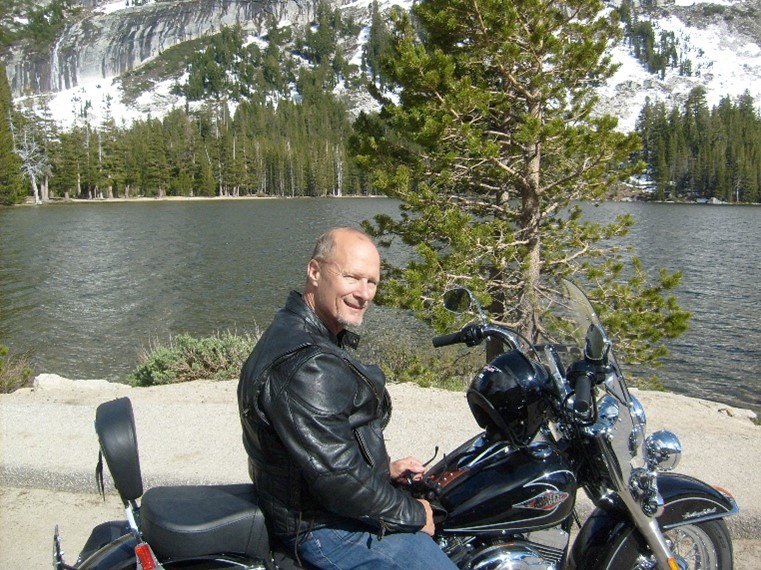
In the Sierra’s

Just Gabbing


I was once hired by a dental clinic years ago. Numbers had been headed the wrong way (down). Visiting the office, I discovered that no one talked to one another. This was the doctor’s policy. The staff didn’t talk to each other, or to the doctor, and the doctors only talked with the patients. Patient communication was limited, short, and almost brusk.

For about 3 months, I worked with the staff and two doctors to get them together and communicate. No marketing, no policies, no strategies… just gabbing. They got to know each other better. They also discussed issues in the office and started having ideas for improving things.

Also…stats went up!

The doctor was not happy and accused me of not working, just talking! Despite my urging, he didn’t manage by the numbers, just by some old-school idea of working on an assembly line where no one was allowed to talk.

The work ethic of the Industrial Age was that you “clock in,” leave your life behind you, work like a machine for 8 hours, and then “clock out.” You worked at a machine as a machine.

But people aren’t machines.

Minor confusions and then disagreements can accumulate in any relationship. Imagined or real offenses occur. It does in any family, for example. Relationships stiffen when this happens, like a hose in winter with summer’s water frozen.

Relations can be warm and friendly or deteriorate to a cool façade. The internal relationship within the office team ultimately affects both the quality and quantity of the clinic’s performance.

Relationships can be difficult, no doubt. People are complicated, and life is constantly throwing each one of us different curve balls. This is why relationships need regular maintenance. Your family relationships, for example, require time for communication and working things out when there are differences. Planning vacations, reviewing budgets, children’s school and sports activities, and much more takes work.

The same goes with your office family.

A practice is a network of relationships that is created and sustained through communication and service.

I have used this definition for years. I am sure there are other definitions, but this has worked.

This definition applies to your patients. Give them great service, engage in meaningful and empathic communication. They will get better, and they will stay with you longer.

This definition also applies to generating new patients: Expand your network. Get people to know you and how your services can help them.

But this definition also applies to your staff: create and maintain a great relationship with your teammates – and support them.

You must schedule time each week for each other. Staff meetings, training sessions, marketing meetings, lunches, one on one meetings, square dancing (good exercise!) – whatever the venue, make the time to communicate and support each other. This simple act with your staff will help you provide the best service and outcomes to your patients. And help you reach and stay at full capacity.

Keep dancing and …Seize your Future,

Ed

If your practice building efforts aren’t taking you to your goals, there are reasons — many of which are hidden from you.

Find out what they are and how to sail to your next level by getting and implementing my new book, The Goal Driven Business.

Take a Stand: Define and Promote Your Brand

Using your brand to generate more patients, increase retention, and recruit top talent!

Promoting your brand has not been an important or even viable method of marketing for most chiropractors.

But that is no longer true.

Brand marketing needs to be part of your marketing mix. I will tell you why, but first, let’s define our terms:

Brand marketing is different from direct response marketing. Brand marketing focuses on generating awareness of your office, while direct response aims to generate new customers.

A smaller business with limited resources must focus on direct marketing rather than brand marketing. This is especially important when you begin.

Once your practice is maturing, your patients know you. You are the brand. You probably don’t plan on growing the business any further so there doesn’t seem to be any real need to promote your brand in the community.

But now there is.

More competition for patients

Franchise health companies are stepping up their activities. For example, the Joint Chiropractic, which filed with the SEC for around $35 million 10 years ago, and is a public traded company, acquired an additional 7.5 million in funding just two years ago. Their website says they have more than 600 locations, and I have seen their marketing activities in Wisconsin.

Physical therapy franchises are spreading, such as FYZICAL. According to its website, it has grown to more than 448 locations in 7 years as of 2021. In addition, acupuncture franchises, massage franchises, and dental franchises are on the rise.

Competition for Qualified Employees

You can also see increased competition if you have been recruiting doctors, providers, or support personnel lately. Job seekers can acquire a startling amount of information about you and what it is like for employees to work with you. They are interested in your culture, benefits, and values – which are all part of your brand.

What Makes You Different and Better

It could be said that your brand is: what makes you stand apart — and better – from all the comparable alternatives.

It is your Unique Selling Proposition.

A well-defined and promoted brand will help you:

  • Generate pride and loyalty in your patient base
  • Encourage more patient referrals
  • Improve team morale
  • Generate referrals from external referral sources
  • Improve marketing recruitment efforts for top employee talent

How to Define Your Brand

Once again, it all goes back to goals. (Doesn’t everything?)

What is the mission of your office? What are its values? What are its valuable outcomes?

This Is a Distillation Of Your Story: why you are a doctor, why you are in business, and what brings you joy daily?

Answer this for yourself, and then ask your staff:

What makes us special?

Survey a few of your patients: what makes us special from other providers? Why did you choose us?

Your brand showcases all this into an identity that people can know, like, and trust.

It can be somewhat symbolized with a logo and tag line, like the Nike “shoosh,” and the tag line: “Just Do It.” It can be represented in your newsletters, your office decor and cleanliness, the appearance of you and your team, and in all aspects of your promotions on social media.

But primarily, it must be demonstrated each day by you and your team living up to your values, your commitment to your mission, and providing world-class service and outcomes.

The world is moving faster, and we all have to work to stay ahead. And if we do it right, not only will it be rewarding but also fun.

Carpe Posterum (Seize the Future)

Ed

Need help with your branding strategy? Schedule a call and let’s have look at the best strategic options
SCHEDULE NOW


Capacity Constraints: Hidden Practice Barriers

Fixing the weakest links.

Your practice should flow smooth, fast, and uninterrupted, like a clear mountain stream.

Most offices, unfortunately, have hidden dams that slow or even block the flows within their office. This limits growth and increases stress.

For example, I have often seen the front desk so clogged with paperwork that new and active patients were inadvertently discouraged from coming in.

Every department and function of your practice is vulnerable to innocuously seeming events that add friction that choke production. Interruptions in the billing department, poor note-keeping systems for doctors, too many therapies to choose from, insufficient space, staff unclear of their goals, staff driven into apathy by being micromanaged… there are many potential opportunities for roadblocks.

Generating more new patients to increase your patient volume is usually a good idea. But often, the increase in volume is short lived because the office had too many hidden log jams and wasn’t set up for the higher patient volume. Even the doctors, while saying they want more new patients, can become fatigued by the end of the day and privately look forward to lighter days.

There are several remedies for these clogged flows.

First, clear up the goals and outcomes of each department. For example, the goal of the front desk is not “completed paperwork.” (A “Fully Scheduled Day” would be better!)

Second, you can review and refine the flow of patients into, through, and out of your practice. Draw a patient flow chart. Start with your new patients. List the sequence of actions your new patient goes through on their first day at your office. Later, you can do this for their second and third day. You can later work out a flow chart for reactivated patients, re-injured patients, and different types of cases.

Then, you and your team can rehearse the entire sequence to see what is missing or what needs to be eliminated.

I cover this in The Goal Driven Business:

Broken flow patterns that remain invisible “clog up” the system and slow down everyone’s best efforts to produce valuable outcomes and excellent service. These are bottlenecks. Discovering and eradicating them is a significant function of the Goal Achievement Process.

In his 1984 book, The Goal, Eliyahu Goldratt introduced what has come to be known as the “Theory of Constraints.” By making a chart outlining the flow of your customers, for example, you’ll better identify “leaks” or constraints which lessen your ability to achieve high quality and quantity customer outcomes.

As Goldratt states, “Since the strength of the chain is determined by the weakest link, then the first step to improve an organization must be to identify the weakest link.”

Every three months or so, do a “walk-through” with your entire team, where someone takes on the role of customer. This rehearsal will bring to light many duplicated or omitted functions. You’d be surprised to discover that many of the tasks you assume are done for your customer are actually skipped or poorly linked in. Sometimes you find tasks from decades ago, that no longer apply, are still being done.

Be an engineer to your goals and discover the constraints holding your office back, and remove them.

Be…… A Goalineer!

Ed

PS For those of you who have purchased my book, The Goal Driven Business, you are welcome to schedule a no-charge consultation to see how you can remove your bottlenecks and achieve your goals. SCHEDULE NOW

If you haven’t purchased the book yet, please do so here.  BUY THE BOOK